
Frequently Asked Questions
Ear balance problems, often known as vestibular disorders, can cause dizziness, vertigo, or a spinning sensation that interferes with daily life. These issues typically stem from the inner ear, where the body’s balance system resides. When this delicate system is disrupted by conditions like infection, Meniere’s disease, or even head injuries (such as a concussion that can also lead to hearing loss), you may experience recurring episodes of instability or trouble standing upright.
Determining the best treatment starts with a thorough evaluation of your hearing and inner ear health. A comprehensive hearing test can reveal whether the balance problem is linked to an undetected hearing issue, which in some cases may be part of a broader concern involving concussion and hearing loss. If hearing loss is contributing to your symptoms, addressing it may help reduce feelings of disequilibrium. Scheduling a hearing test is a practical first step in understanding the underlying cause and identifying the right solution. Beyond hearing assessments, other diagnostic methods might include vestibular function tests, physical exams, and a medical history review.
Treatment for ear balance problems often involves a combination of strategies. Vestibular rehabilitation therapy (VRT) is a specialized form of physical therapy that uses targeted exercises to retrain your brain’s response to balance signals. By performing guided movements and stability exercises, you can gradually reduce vertigo episodes and regain coordination. In some cases, certain medications may help alleviate dizziness and nausea, while procedures like Epley maneuvers can reposition displaced crystals in the inner ear, providing prompt relief for benign paroxysmal positional vertigo (BPPV).
If hearing loss is a factor, advanced hearing aids can help restore clarity and minimize strain on your inner ear system. Lifestyle adjustments such as reducing caffeine, managing stress, and staying hydrated can also support overall balance health. Ultimately, a multidisciplinary approach that includes audiologists, physicians, and physical therapists ensures you receive well-rounded care tailored to your specific needs. Taking the step to explore a hearing test is key, as it can guide you toward effective solutions that help stabilize your balance and improve your overall quality of life.
A concussion is a type of mild traumatic brain injury that can affect various parts of the body, including the sensory systems responsible for hearing and balance. Immediately following a concussion, some individuals notice an uncomfortable sensation of ear fullness or the feeling that their ears are “clogged.” This issue can be linked to changes in the inner ear or disruptions in the way the brain processes auditory signals. While every concussion is unique, it is not uncommon for people to experience ear-related symptoms such as tinnitus (ringing in the ears), heightened sensitivity to sound, or even temporary hearing loss. In most cases, these symptoms resolve within a few days or weeks, but they may persist or worsen if not properly addressed.
Ear fullness after a concussion may involve fluid buildup or inflammation in the middle ear, as the trauma could affect the Eustachian tube and lead to pressure imbalances. Additionally, the vestibular system—located in the inner ear—plays a key role in balance and spatial orientation. If the concussion causes swelling or damage in this area, you might notice dizziness, vertigo, or ongoing ear pressure that makes things sound muffled or distorted. These symptoms can significantly impact your day-to-day activities and may require individualized attention from a qualified healthcare professional.
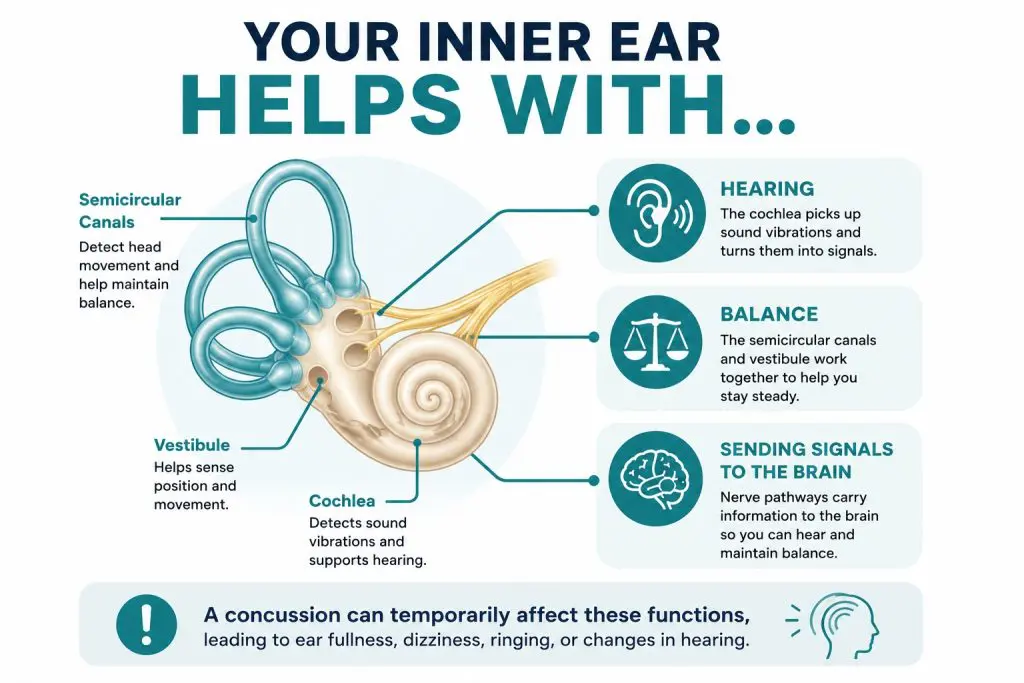
If you suspect a concussion has led to ongoing ear congestion, it is essential to seek prompt evaluation. Beyond immediate medical care, a hearing assessment can be beneficial. A comprehensive hearing test may help identify whether the injury has impacted your hearing levels and provide insight into any temporary or lasting changes. Early detection of hearing issues can be vital, as it allows specialists to recommend possible treatments—ranging from simple ear pressure management techniques to more involved therapies—before the problem becomes more complicated.
If left unaddressed, persistent ear fullness and other post-concussion symptoms may make daily conversations challenging and reduce overall quality of life. By being proactive and discussing these concerns with a medical professional or hearing specialist, you increase your chances of a smoother recovery. While most cases of concussion-related ear clogging improve over time, staying informed and prioritizing follow-up care can ensure you receive the right guidance for long-term well-being.
The inner ear is a delicate system responsible for both hearing and balance. When these structures sustain damage, it’s natural to wonder how long the healing process will take. While every individual’s recovery varies, many people experience improvement within a few weeks, whereas others may need several months. In certain cases, complete recovery may not be possible due to severe trauma or age-related changes. Nevertheless, knowing what can influence your healing and how to best support recovery can offer reassurance and clear direction.
Unlike other parts of your body that may recover more predictably, the inner ear contains highly specialized cells within the cochlea and vestibular system. These cells help convert sound waves into signals your brain interprets, and they manage your sense of balance. Because of their sensitive nature, even minor injuries or inflammation can disrupt normal function. For example, repeated exposure to loud noises, sudden head injuries, or infections can seriously affect these cells.
It’s important to remember that once inner ear hair cells are damaged, they don’t regenerate in the same way as other tissues. This means that although inflammation might subside, restoring full hearing or balance isn’t always guaranteed. That said, the body’s ability to adapt can still yield meaningful improvements over time. By practicing caution and seeking professional guidance, you can help promote your inner ear’s best possible recovery.
The causes of inner ear damage are wide-ranging. Understanding them can help you and your hearing care professionals target the best approach to healing:
By identifying the root cause, you can work toward preventing further harm and bolstering your overall hearing health. Simple interventions, like avoiding loud environments, can reduce stress on the inner ear and allow vital healing to occur.
Given the complexity of the inner ear, healing may occur in stages. Early on, inflammation and swelling might dominate, especially if the injury is linked to infection or head trauma. During this phase, you may notice muffled hearing or temporary bouts of dizziness. Over the next few weeks or months, swelling can gradually lessen, sometimes leading to improved hearing clarity and steadier balance. Nerve pathways may also adapt, helping compensate for lingering damage.
Patience is crucial. Although some people regain a great deal of function, others experience partial improvements. For instance, if cochlear hair cells are irreversibly harmed, you might not recoup your original hearing thresholds. However, with the right strategies, support, and tools—like hearing aids—you can still enjoy better hearing and less ear-related stress.
Every ear injury tells a unique story, so healing times can differ significantly from one person to another. However, a few primary factors often influence speed or extent of recovery:
Ultimately, the body’s capacity to heal is extraordinary, but you can’t rush the process. Consistent, mindful care will help maximize the benefits of every step you take.
During recovery, it’s normal to experience symptoms like tinnitus (ringing in the ears), vertigo, ear pain or pressure, and reduced hearing clarity. While it can be unsettling, various solutions exist to manage or minimize these challenges:
Combining these healthy habits can help mitigate symptoms and create a calmer atmosphere in which your inner ear can recover. Having patience with yourself is essential. Small lifestyle changes can lead to significant long-term benefits.
Concussions often involve forceful blows to the head or neck, potentially disrupting the inner ear’s delicate balance. As a result, many people notice ear-related symptoms such as muffled hearing, short-term hearing loss, or persistent dizziness. If you’ve had a concussion, it’s smart to explore resources to understand your situation and potential outcomes. For example, you may wonder can a concussion affect a hearing test? or can a concussion cause ear damage?
Head injuries can also lead to more persistent conditions. You may be curious about whether a concussion can cause inner ear problems, or even permanent hearing loss. Some people also note that concussions can make your ears feel clogged. If you continue to experience these types of symptoms, it’s best to consult a registered hearing aid practitioner or other qualified experts so you can better understand the connection between your brain and your ear health.
If persistent symptoms—like chronic dizziness, tinnitus, or sustained hearing loss—don’t fade, a qualified hearing professional is your best ally. A thorough evaluation helps clarify whether any lasting damage occurred, while also pointing you toward support that can ease your struggles. One key tool is a comprehensive hearing test. This assessment reveals whether any hearing thresholds were lost, how severe the changes might be, and whether you might benefit from hearing aids or other solutions.
Should a hearing professional recommend hearing aids, you can explore different types and styles to find a good match for your comfort and lifestyle. By reintroducing clarity in communication, hearing aids reduce the strain of listening in group settings and help maintain meaningful connections. You can also discuss protective measures to keep your ears safer in noisy work or recreational environments.
Many people who’ve experienced inner ear damage learn that healing is not necessarily a one-and-done process. Even if your symptoms subside—or you see considerable improvement—the ear can still be prone to future problems. Scheduling routine checkups with a hearing care provider allows for early detection of new issues. If you live in or near a major city, you may have convenient access to dedicated clinics. For instance, Melody Hearing Clinic supports patients across several locations, including Downtown Edmonton, Mill Woods, South Edmonton, Sherwood Park, St. Albert, Calgary, and Windermere. Approachable, patient-first care ensures that any changes in hearing or balance can be pinpointed quickly and addressed effectively.
Follow-up appointments also provide the time to fine-tune treatments or make certain adjustments to hearing aids. By staying vigilant, you can maintain a higher quality of life and keep your ear health on track.
Beyond waiting for your inner ear to repair itself, you can actively safeguard your hearing to decrease the likelihood of further injury. Consider these practical suggestions:
While many people recover either completely or partially from inner ear damage, others must adapt to ongoing hearing challenges. This adaptation can happen with practical tools or new listening habits. Hearing aids are a popular solution—not just for restoring clarity but also for helping you stay connected with loved ones, co-workers, and the world around you. Some individuals find that additional measures, like visual cues and mindful communication strategies, help immensely in group conversations.
It may also be worth seeking trusted support from local hearing care providers who offer personalized care. They can design programs or exercises aimed at reducing the effects of vertigo, tinnitus, or decreased balance. Thanks to a combination of solutions, many people experience an improved quality of life, even if they don’t return to how they heard before the injury.
Inner ear healing is rarely an overnight event, but that doesn’t mean you have to manage it alone. Whether your symptoms stem from loud noise exposure, a head trauma, or age-related changes, a combination of expert guidance and thoughtful self-care can make a significant difference. Embracing healthy lifestyle habits, protecting your ears, and staying observant of any symptom changes are all positive steps toward better hearing health.
For extra clarity on your situation, consider reaching out to a hearing care professional for a hearing test or a consultation about hearing aids. You can also explore resources that shed light on related concerns, like how concussion injuries may affect hearing or balance. By staying informed and attentive, you set yourself up for a smoother recovery and a stronger sense of control over your ear health.
In the end, an inner ear injury does take time to mend. While it’s normal to feel impatient or concerned during the process, remember that gradual improvements, combined with personalized care, can yield meaningful results. Stay proactive, rest when needed, and keep your ear health a priority. With patience and proper support, many people learn to navigate lingering symptoms and return to a fuller, clearer world of sound.
Concussions are a form of traumatic brain injury, often caused by falls, sports injuries, or other sudden impacts that jolt the head. While many people associate concussions only with headaches or cognitive symptoms, they can also affect the ears. In particular, a concussion may contribute to ear damage by disrupting the complex connections between the brain and the auditory system. Individuals who experience such disruptions may notice ringing in the ears (tinnitus), sensitivity to noise, or varying degrees of hearing loss. These effects can develop immediately following head trauma or arise gradually over time.
One reason a concussion can cause ear-related symptoms is that the inner ear and the auditory nerve rely on stable blood flow and nerve signals. When a concussion occurs, inflammation and biochemical changes in the brain can interfere with these processes. This distress may lead to temporary or long-term issues such as muffled hearing, dizziness, or persistent buzzing or ringing noises. Because the inner ear is responsible for both balance and hearing, a person might also experience vertigo or unsteady movement. If these symptoms are left unaddressed, they can impede daily activities and reduce overall quality of life.
If you suspect that a concussion has caused hearing difficulties or other ear-related issues, it is wise to seek an evaluation. Early assessment can be key to detecting concussion and hearing loss connections. A comprehensive hearing test can help identify any loss of hearing, tinnitus, or balance problems that stem from head trauma. Audiologists and other hearing care professionals use specialized equipment to measure hearing thresholds and the function of the inner ear, ensuring any underlying complications are not overlooked.
In cases where a concussion has led to permanent hearing changes, various solutions may be available to improve sound clarity and reduce discomfort. Hearing aids fitted with advanced technology can help minimize the impact of tinnitus and enhance speech comprehension in noisy environments. Regardless of when symptoms appear, consulting a hearing care specialist as soon as concerns arise is an essential step. Prompt attention can safeguard your hearing and guide you toward strategies that restore confidence and allow you to move forward without the lingering effects of concussion-related ear damage.
Permanent hearing damage, whether it affects both or just one ear, often develops gradually, making it challenging to identify at first. Common signs include persistent difficulty understanding normal conversation levels, a noticeable reduction in overall volume, or the sensation that others are mumbling. People experiencing permanent hearing damage may also find themselves turning the television or radio volume higher than before, or straining to hear over background noise. These symptoms can sometimes be accompanied by tinnitus, which involves ringing, buzzing, or hissing sounds that do not come from an external source.
In many cases, temporary hearing loss, such as that caused by ear infections or certain medications, can improve once the underlying issue is resolved. However, if you suspect that your limitations in hearing may be more permanent, it is advisable to watch for any consistent challenges in daily communication. For instance, if you notice that your ability to hear soft sounds has not returned to normal over time, or if you constantly feel off-balance when listening in one ear, these may be key indicators of lasting damage. Loud work environments, concerts, or power tools can also contribute to hearing decline by damaging the delicate structures within the ear, sometimes irreversibly.
A professional evaluation is one of the most effective ways to determine whether your ears have suffered permanent damage. Modern diagnostic tools can measure how well you perceive different frequencies and identify any persistent decline in your hearing ability. If you are concerned about potential hearing loss, scheduling a comprehensive hearing test is a proactive step toward understanding the extent of your condition. Early detection and intervention can prevent further deterioration and help you explore helpful solutions, such as hearing aids designed to amplify specific sound ranges.
Taking action sooner rather than later is crucial, as untreated hearing damage can have a lasting impact on your quality of life. If you notice any persistent changes in your hearing—whether in one ear or both—consider consulting a hearing professional to discuss your options. By finding the right support and guidance, you can reconnect with life’s many sounds and reduce the potential long-term effects of permanent hearing damage.
Hearing loss or fluctuations in just one ear can be disorienting, especially when you rely on both ears working together for balanced sound. It might feel like certain conversations sound muffled, voices seem distant, or it takes extra effort to understand speech on that side. Understanding why this happens and knowing the potential causes and solutions can give you confidence to address any changes quickly. In this guide, we explore several reasons why hearing might change in a single ear, how it may impact your life, and what steps you can take to stay on top of your hearing health.
Healthy, balanced hearing is vital for everyday life and maintaining meaningful connections. When both ears work in harmony, you can locate the source of a sound, follow conversations with ease, and enjoy the subtle nuances of your favorite music. A shift or drop in hearing in one ear can disrupt these experiences, making conversations and daily tasks more tiring. In some situations, people might notice they turn their head more often in order to compensate for the reduced hearing in one side. This extra effort can eventually lead to fatigue and frustration. While changes in one ear can be alarming, early detection and straightforward solutions—like a comprehensive hearing test—can often help you preserve clear sound and stay connected to the people and moments you love.
There are many potential reasons behind changes in hearing that affect just one ear. Some are temporary and easily addressed, while others require a bit more attention. Below are some common culprits:
These causes are relatively common and can often be resolved or managed through professional care. If you would like more details on potential triggers, our FAQ on what can cause hearing loss in just one ear? offers further insights.
Aside from earwax or fluid buildup, there may be more unusual factors that result in one-sided hearing changes. Conditions that affect the inner ear or auditory nerve—such as Meniere’s disease—can trigger episodes of decreased hearing accompanied by dizziness or a persistent ringing in the ear. Abnormal growths, often called acoustic neuromas, may also have a similar impact by placing pressure on the auditory nerve. Although these are less common, it is important to keep an eye on any persistent warning signs, like severe dizziness or sudden changes in hearing, and seek guidance from a registered hearing aid practitioner or ENT to ensure you receive the care and support you need in a timely manner.
Even if hearing differences are mild, you may notice yourself struggling to pinpoint the location of sounds or feeling more tired after social gatherings. Over time, unaddressed hearing changes in one ear can lead to social withdrawal, misunderstandings in conversations, and heightened stress. If you’d like to learn more about how these changes can influence your daily well-being, you may find our FAQ on how does losing hearing in one ear affect quality of life? helpful. Clear, simple, and reassuring language can make it easier to understand how single-sided hearing loss might affect you now or in the future. Taking action early can reduce frustration and help you maintain a more active and engaged lifestyle.
Many people wonder if it’s normal to detect subtle day-to-day variations in hearing between the two ears. While slight differences can be expected—just like you might have a dominant hand—noticeable changes that linger for more than a couple of days can signal an underlying problem. If you suspect your hearing is uneven on a more persistent basis, our dedicated FAQ on is it normal for one ear to be weaker than the other? explores this question in more detail. Remember that early detection is often the key to nipping hearing concerns in the bud.
If you’ve noticed a persistent or sudden change in one ear, it’s wise to have a thorough hearing evaluation. This is especially true if you experience any of the following:
Often, a comprehensive hearing test performed by a registered hearing aid practitioner is the first step in identifying possible causes for changes in hearing sensitivity. An in-depth evaluation can help pinpoint whether your symptom is the result of simple earwax buildup, temporary fluid, or something that requires further attention. If appropriate, you may also be referred to an ENT for added support.
While not all forms of hearing changes are preventable, there are steps you can take to create a more hearing-friendly lifestyle. Limiting noise exposure, for instance, can greatly reduce the risk of worsening hearing. If you’re frequently around loud environments, use protective equipment such as earplugs. Avoid playing music or movies too loudly in headphones or home entertainment systems. You can also take breaks from noise whenever possible, giving your ears a chance to rest. If you are curious about whether your ears can heal after exposure to loud noise, our FAQ on can your ears heal from loud noise exposure? covers potential recovery options and best practices for ear protection.
An in-depth hearing test offers a clear, practical solution when you suspect changes in one ear. Registered hearing aid practitioners use specialized equipment to measure your ability to hear different pitches and volumes. They also conduct speech testing to confirm how well you recognize words in a quiet or noisy environment. This evaluation provides a simple, comprehensive snapshot of your hearing health and guides next steps if one-sided hearing issues appear. Should results confirm that intervention is needed, personalized care—ranging from earwax removal to a possible fitting for hearing aids—ensures you receive solutions that fit your lifestyle. By taking this proactive approach, you can catch potential hearing problems early, preserve clear sound, and stay connected to the world around you.
If you do receive a diagnosis of single-sided hearing loss or something similar, you can still expect plenty of ways to engage in everyday conversations and activities. Assistive devices such as contralateral routing of sound (CROS) systems can route sound from the weaker ear to the stronger one, enhancing overall awareness. Individuals with single-sided hearing loss might also find success using specialized hearing aids designed to boost clarity on the affected side. If you’re curious to explore this topic further, be sure to check out our FAQ on what is single-sided deafness? to learn about the possible ways to cope, including tips for communication and potential treatment approaches. Seeking trusted support can help you take charge of your hearing health in a straightforward, guided manner.
When you notice one-sided hearing changes, the first step is recognizing that you don’t have to endure the uncertainty alone. You can speak with a hearing professional who will listen to your concerns and perform a thorough yet relatively simple exam. This process doesn’t need to be intimidating. In fact, many individuals find reassurance by simply gaining a clear view of their hearing health. Early detection and timely solutions can help you enjoy crisp sound, stay connected, and preserve a high quality of life. By routinely monitoring your hearing, you can catch changes while they’re still minor and more easily addressed. If one-sided hearing changes persist, don’t ignore them—seek out comprehensive hearing tests and the personalized care you deserve.
Whether you need help with earwax removal, better strategies to protect against noise, or guidance on hearing aids, support is available to guide you every step of the way. Many clinics, including Melody Hearing Clinic, strive to create an accessible, no-pressure environment where you can learn about potential solutions at your own pace. If you’d like to schedule a free hearing test (for those 55 and older) or simply discuss your symptoms further, you can find a convenient location—in areas such as Downtown Edmonton, Mill Woods, or South Edmonton—to get started. The goal is to ensure you feel confident and empowered when it comes to your hearing health.
For some people, taking this initial step can mean a big difference in how they enjoy daily interactions, family gatherings, and their favorite pastimes. Comprehensive hearing tests are straightforward, and most visits wrap up with helpful insights you can use right away. Along with addressing your immediate concerns, many hearing professionals emphasize ongoing, trusted support to help you maintain better hearing for life. There’s no need to wait until the change in your hearing has a major impact—early action truly can preserve the rich tapestry of sounds that shapes your everyday adventures.
No one should have to cope with single-sided hearing changes in isolation. Reaching out for help is the first step in getting clarity, relief from worry, and practical solutions for better hearing. Whether it’s through limiting loud noise exposure, exploring hearing aids, or simply learning more about your individual risks, staying informed allows you to take control of your hearing health. With the right guidance and proactive approach, you can make the most of every conversation and experience. If you’re noticing unexpected hearing shifts on one side, remember: it’s never too early to seek friendly, professional advice and take your first step toward clearer sound.
Yes, children can experience hearing damage symptoms, and recognizing these symptoms early is crucial for their overall development and quality of life. Common symptoms in children include difficulties in understanding speech, frequent requests for repetition, inattentiveness, and issues with academic performance. In younger children, you may notice a lack of response to sounds or delayed speech and language development.
Early detection and intervention are key. Regular hearing tests are recommended, especially if there’s a family history of hearing loss or other risk factors. At Melody Hearing Clinic, we offer comprehensive hearing protection and consultations for children, including specialized screenings and behavioural audiometry to accurately assess and address their unique needs.
In addition to diagnosing and treating hearing issues, our team provides hearing protection consultations to prevent further damage. Our custom hearing protection solutions are designed for all age groups, ensuring the best fit and maximum protection. If you suspect your child may be experiencing hearing damage symptoms, schedule a consultation with Melody Hearing Clinic.
Hearing damage is a common yet often overlooked issue that can affect people of all ages. While it’s natural to assume hearing problems only develop later in life, factors like significant noise exposure, certain medical conditions, and even everyday habits can contribute to gradual hearing changes. Recognizing the early signs of hearing damage allows you to seek proactive care, improve your quality of life, and preserve your ability to connect with loved ones and the world around you. In this guide, we’ll explore the common symptoms of hearing damage, discuss tips for safeguarding your hearing health, and explain how professionals at Melody Hearing Clinic can offer guidance and solutions tailored to your needs.
By paying attention to changes in your hearing, you can address issues early and potentially prevent further progression. Even if you feel uncertain about whether your hearing has changed, it’s wise to stay informed and prepared. After all, early detection often brings simpler solutions and better outcomes. Let’s take a look at the signals your ears may be sending you, and the practical steps you can take to protect and nurture your hearing for years to come.
Tinnitus can show up as a ringing, buzzing, hissing, or even humming sensation in your ears. Some people describe it as a constant sound, while others notice that it fluctuates or appears only sporadically. Even though tinnitus can be a symptom of underlying hearing changes, it’s important to note that it is not always a direct indicator of permanent hearing problems. However, if tinnitus persists or becomes bothersome, it’s a sign to investigate further.
Why Tinnitus Occurs: Tinnitus often arises after exposure to loud noise, such as concerts or workplaces with high sound levels. Other possible causes include earwax buildup, stress, or certain medications. Although tinnitus can sometimes vanish on its own, ongoing cases or those with recurring intensity warrant an evaluation to determine if any hearing damage might be contributing to the issue.
What You Can Do: Consider scheduling a comprehensive hearing test if you experience tinnitus on a frequent basis. A thorough exam will show whether you have underlying hearing loss or if another factor is responsible for the ringing. If you’re searching for relief, custom ear protection or strategies like sound therapy might help.
Another sign of hearing damage is struggling to follow conversations in crowded, noisy environments. It might seem like everyone around you is mumbling, or you have to ask people to repeat themselves more often. This problem often becomes most obvious when you’re in a busy restaurant or at a family gathering with background chatter.
Why Speech Understanding Suffers: When hearing damage occurs, certain frequencies and pitches may become more difficult to process. This is particularly clear with higher frequencies, where many consonants like “s,” “t,” or “f” live. When these sounds get harder to hear, words can become muffled or incomplete, making it challenging to keep up with rapid speech patterns in noisy spaces.
What You Can Do: If you’re noticing that background noise routinely makes conversations confusing, a hearing evaluation can reveal whether there’s detectible hearing loss. Early intervention—whether via hearing protection in loud contexts or personalized devices—can help you maintain social engagement and reduce communication frustrations. Melody Hearing Clinic’s Hearing Test is a great first step for assessing your current hearing level and identifying any areas of concern as soon as possible.
Although not every instance of ear pain indicates hearing damage, discomfort can sometimes suggest a problem rooted in noise exposure. If you notice pain during or after loud events (like concerts or sporting activities), your ears might be responding to damaging sound levels.
Understanding the Discomfort: The human ear can be sensitive to sudden or overpowering noise. Prolonged exposure can lead to temporary or permanent changes in your hearing range. This kind of pain can also indicate an ear infection or issues with earwax, which can complicate the ear’s normal functioning.
What You Can Do: Pay attention to the environment that might be causing the pain. If it’s consistently triggered by loud noise, you may want to invest in custom hearing protection. Melody Hearing Clinic offers various solutions to help shield your ears from harmful sound levels. A hearing check can also rule out other ear-related issues that may be causing discomfort.
If the world around you sounds fuzzy, or you find yourself frequently turning up the TV volume, you could be experiencing early hearing damage. Muffled hearing often gives the feeling that sounds are much quieter or somehow “far away.” This might come and go, or it might be ongoing and consistent.
Why Sounds Become Muffled: Muffled hearing can occur due to blockages (like wax), fluid in the ear, or actual sensorineural damage within the inner ear. Long exposure to loud sounds can damage the hair cells responsible for picking up and transmitting sound waves to the brain. Once affected, these cells cannot be restored. Hence, early identification and prevention are vital to preserving as many healthy hair cells as possible.
What You Can Do: If you notice more than the occasional moment of muffled hearing, schedule a hearing evaluation to explore potential causes. Solutions can be as simple as removing wax buildup or using hearing aids to enhance sound clarity. The key is determining what approach works best for your unique situation, and there’s no one-size-fits-all. Receiving a professional evaluation early helps you maintain your connection to everyday sounds.
Your inner ear plays an essential role in balance. When hearing damage includes issues in the inner ear, it can also affect your sense of equilibrium. Sometimes, people who experience sustained dizziness or vertigo find that these symptoms are linked to underlying hearing concerns.
Balance and Hearing: While not all cases of dizziness trace back to hearing changes, inner-ear disorders—like Meniere’s disease or advanced ear damage—can disrupt both your hearing and your balance. Symptoms can be intermittent or chronic, resulting in a decreased sense of security in everyday situations, such as walking in a crowded place or navigating stairs.
What You Can Do: Because dizziness can stem from a variety of causes, consult a hearing professional for a thorough examination. Understanding whether a hearing issue is contributing to your balance concerns is the first step in choosing the right treatments or management strategies. If needed, your hearing practitioner can collaborate with other medical professionals to address more complex balance problems.
Though it’s impossible to remove every source of loud or damaging noise from your life, there are ways to reduce the effects. Small actions can make a big difference to preserve your hearing for years to come:
Implementing these habits can help you minimize the risk of long-term hearing damage and stay connected to the people and experiences that matter most.
When it comes to preserving better hearing, early detection is a key factor. Many individuals may sense changes in their hearing but tend to dismiss them as normal signs of aging or mild inconveniences. However, undergoing a comprehensive hearing test can bring clarity about whether you’re dealing with a temporary issue or an early stage of hearing damage.
Moreover, hearing tests can create a baseline for your hearing performance. With regular monitoring over time, you can track any decline that occurs and address it promptly. Melody Hearing Clinic offers thorough hearing assessments at multiple locations in Edmonton and surrounding areas, ensuring you receive a professional evaluation that’s both comprehensive and accessible. By spotting signs of hearing loss sooner, you can explore more options for management, whether that includes hearing aids, coaching on communication strategies, or custom protective devices.
Today’s hearing aids are far more advanced and discreet than they used to be. If you do need extra assistance with sound clarity, these devices significantly improve how you interact with friends, family, and daily life in general. Because they are expertly adjusted to individual hearing profiles, well-fitted devices help you feel comfortable and supported. At Melody Hearing Clinic, specialized Hearing Aids are recommended only after a careful review of your test results, lifestyle, and personal preferences, ensuring you find the right fit.
It’s tempting to rely on personal observation or online resources alone, but consulting a registered hearing aid practitioner is an important step for accurate insights. Professionals have the tools and expertise to evaluate your ear health thoroughly. They can also detect issues you might miss, including early damage that hasn’t yet presented major symptoms.
Additionally, qualified hearing practitioners can offer direction on optimizing your hearing health moving forward. From recommending specific protective gear to demonstrating correct hearing aid usage, they don’t just treat hearing problems—they help you prevent them. If your symptoms stem from earwax buildup, sinus issues, or other less recognized causes, these experts can pinpoint the root of the problem and offer the right solution, saving you time and stress.
At Melody Hearing Clinic, patient-first care is a top priority. Our clinics are staffed by caring professionals dedicated to nurturing your hearing health in clear, understandable ways. We strive to keep our services accessible, such as offering a free hearing test for patients aged 55 and older. Plus, we have several convenient clinic locations, including Downtown Edmonton, Mill Woods, South Edmonton, Sherwood Park, and St. Albert, with plans to serve more communities like Calgary and Windermere as well.
Our approach emphasizes practical guidance and genuine support. Whether you’d like information on the best custom earplugs, need help evaluating your eligibility for new hearing aids, or just want an overall check of your ear health, our team tailors every appointment to your individual needs. We understand that hearing care can feel daunting or overwhelming, so we make each step straightforward, from initial assessment to follow-up visits, so you always feel supported.
If you’re experiencing tinnitus, difficulty understanding speech, ear pain, muffled hearing, dizziness, or a combination of these signs, don’t wait until the problem worsens. Instead, schedule a comprehensive evaluation. By taking this step, you’ll gain a clearer view of your hearing health and learn about avenues for improvement—be it through enhanced communication tactics, protective measures, or hearing equipment.
Melody Hearing Clinic’s registered hearing aid practitioners are here to guide you through the process with empathy and compassion. Our goal is to help you reconnect with life’s sounds in a way that suits your lifestyle, comfort level, and expectations. If you have additional questions or simply want to learn more, reach out anytime or visit one of our locations to get started on your path to better hearing. We believe that every person deserves the chance to stay connected to the moments and conversations that give life its melody.
At the end of the day, the key to preventing ongoing hearing damage is awareness, proactive steps like protecting your ears, and regular checkups that spot changes early. Whether it’s wearing proper ear protection, maintaining moderate volume levels, or seeking an expert’s perspective on issues like tinnitus, each measure helps protect one of your most valuable senses. Remember, your hearing shapes how you experience the world. By giving it the attention it deserves, you can continue enjoying the voices, sounds, and music that bring you joy for many years to come.
Music is an integral part of culture, expression, and community. From performing in front of large crowds to rehearsing in a small studio, musicians often face high-decibel sound environments that can pose risks to their long-term hearing health. While the adrenaline and thrill of delivering a powerful performance may overshadow potential concerns, hearing damage can creep up gradually, leading to decreased clarity of sound and other disruptive symptoms. Thankfully, there are accessible and diverse hearing protection solutions to help preserve music professionals’ ability to perform and enjoy the art of music without compromising the full spectrum of sound. In this guide, we will discuss various forms of hearing protection recommended for musicians, tips for maintaining these solutions, and how a proactive approach can help you stay connected to your artistry for years to come.
At Melody Hearing Clinic, we recognize these challenges and are dedicated to providing comprehensive care and guidance for musicians who want to protect their hearing. Our supportive, patient-first approach ensures that you receive personalized care, rooted in modern diagnostic technology and professional expertise. Understanding the range of hearing protection options can help you make an informed decision that suits your style, your sound, and your future in music.
Before exploring the different solutions, let’s dive deeper into why hearing protection is so essential for musicians. Musical performances typically take place in environments with sustained volumes. Live concerts, jam sessions, and studio rehearsals can all introduce decibel levels that eventually lead to hearing damage symptoms if not managed effectively. Musicians commonly experience ringing in the ears (tinnitus) after concerts or practice sessions, and repeated exposure at unsafe noise levels may trigger more lasting effects.
Noise-induced hearing damage is often subtle in its early stages. One day you might feel a little muffled hearing after a show, attributing it to temporary fatigue or the specific setup of stage monitors. Over time, you may have to turn up your guitar amp or ask fellow bandmates to repeat themselves more frequently. These signs can signify that your ears are under stress. While the impact may not emerge overnight, consistent, unprotected exposure to high-volume sound can cause permanent changes in hearing. Protective measures such as custom hearing protection can help significantly reduce these risks.
Several types of hearing protection are recommended for musicians. From more generic earplugs to sophisticated in-ear monitors (IEMs), each solution offers unique advantages. The goal is not only to lower volume to safer levels but also to preserve sound quality so you can continue to perform at your best. Below are some popular choices among professionals and enthusiasts alike.
Custom-fitted earplugs often top the list when it comes to hearing protection that balances clarity and safety. Unlike standard foam plugs, which can dull frequencies and dampen the intricacies of music, custom earplugs are molded specifically to your ears. They use advanced acoustic filters that reduce the volume more evenly across low, mid, and high frequencies. This way, you maintain the tonal balance necessary to hear the nuances of your performance, whether you’re belting out a vocal solo, playing acoustic guitar, or mixing live sound.
Musicians who rely on precise timing and quality instrumentation often love custom earplugs because they help preserve the authenticity of the sound. You no longer have to worry that hearing protection will make your performance muddy or muffled. Instead, it allows you to perform at safe decibel levels. At Melody Hearing Clinic, we offer consultative sessions to fit and evaluate custom earplugs. Our registered hearing aid practitioners work with you to determine the filter strength that aligns with the typical volume range you encounter, ensuring that the protection meets both your performance and comfort needs.
In-ear monitors, commonly referred to as IEMs, are another popular choice, especially for those performing on stage. These monitors act as both a hearing protection tool and a high-fidelity monitoring system. By sealing out much of the external noise and providing direct audio feed from your instrument and fellow band members, you reduce the need for loud wedge monitors or stage speakers. This effectively lowers the overall volume you’re exposed to while delivering a clean, controlled mix straight to your ears.
With IEMs, it’s crucial to ensure a comfortable and secure fit. A custom-molded IEM shell can enhance isolation and help you maintain a balanced experience. You might choose to work closely with an ENT doctor for any underlying issues or registered hearing aid practitioners to ensure you are addressing your hearing health comprehensively. Taking care with both volume levels and ear coupling can allow you to fully immerse in your performance without sacrificing hearing health.
For those not quite ready for a custom solution, universal earplugs with specialized acoustic filters can be a great entry point. Although not as personalized, these products often focus on reducing sound levels without heavily distorting the music. Various brands use attenuator filters designed specifically for musicians, allowing you to engage in rehearsals and performances more comfortably. While these may not be as exact as custom-fitted alternatives, they are certainly an improvement over using none at all.
When you’re in a setting like a studio or a drumming booth, over-ear headphones or earmuffs can help mitigate excessive volume. These are sometimes employed during drum tracking or other high-volume sessions where you need physical separation from the environment. Though bulkier than earplugs, high-quality headphones allow you to hear a mixed feed at a safer volume. Earmuffs, on the other hand, are typically used in more industrial scenarios but can serve as a backup in on-stage or rehearsal contexts if you need an immediate solution to block loud blasts of sound.
No matter which type of hearing protection you choose, proper fit is key to effective protection. A poorly fitted earplug can allow dangerous levels of noise to sneak in around the edges, defeating the purpose of wearing them in the first place. This is why many musicians gravitate toward custom options that mold precisely to the shape of the ear canal.
Periodic assessments of your hearing health are also vital. At Melody Hearing Clinic, we encourage musicians to schedule routine hearing tests—even if they haven’t noticed a significant change yet. These comprehensive hearing tests can catch early indications of strain or damage. If a shift is detected, you and your hearing care provider can reassess the protective measures you’re using and adjust the filter levels or device settings to ensure you’re still getting the best possible protection.
One of the biggest concerns musicians have regarding hearing protection is whether it will compromise their performance or creative flow. The solution is to use gear designed with music fidelity in mind. Attenuation filters, for example, don’t simply cut decibel levels; they aim to maintain the same frequency range while bringing the volume down to safer limits. This is better for your middle ear and reduces the likelihood of fatigue or hearing damage symptoms over time.
Professional involvement plays a substantial role in achieving that balance. Consulting with registered hearing aid practitioners or hearing health professionals who specialize in musician-oriented products can save you from subpar results and ensure you can still experience the textures and emotional weight of music. In this respect, hearing protection is more than a safety device—it’s also a tool to enhance your performance, ensuring that your ears remain refined and resilient for years of playing.
If you’re uncertain about which solution is best for you, consider scheduling a hearing protection consultation. During a consultation, professionals will examine your ear canal, discuss the sound environments you typically perform in, and guide you through a range of products that align with your needs. At Melody Hearing Clinic, we value an approach that is accessible, convenient, and straightforward. A consultation not only helps in selecting the right gear but also provides you with a trusted support system for any ongoing care you may require. Our collaboration with affiliated ENT doctors also ensures that any underlying conditions are appropriately addressed.
Once you invest in high-fidelity plugs or in-ear monitors, it’s worth understanding how to keep them in excellent condition. This includes routine cleaning, checking for signs of wear, and storing them in a protective case. Moisture and debris can degrade your devices over time, so it’s essential to follow the manufacturer’s care instructions. Additionally, if your hearing protection devices are custom-fitted, remember that your ears can change shape, and you might need periodic refitting. Most professionals recommend having them evaluated every couple of years—or sooner if you notice any changes in comfort or fit.
Maintenance also involves staying aware of your own hearing health. If you start experiencing persistent ringing, muffled hearing, or a feeling of fullness in your ears, these could be signs that your current protection approach could be improved. Seeking professional guidance early can help you preserve your hearing health and avoid more significant challenges down the line.
In addition to using the right protective equipment, taking a holistic view of your hearing health is a sensible move. This might include:
Proactively tending to these factors can help you stay connected to your bandmates, ensembles, and audiences, ultimately improving your quality of life both on and off the stage.
Now and then, musicians might feel uncertain whether their hearing is at risk or if the warning signs they notice are vital enough to warrant professional help. If you find yourself asking people to repeat their words often, experience prolonged ringing in your ears after a show, or feel like loud environments are more draining than they once were, these could all be indicators of underlying stress on your hearing. Seeking advice from a registered hearing aid practitioner can clarify your situation and present you with practical, non-invasive solutions.
Likewise, those who routinely perform in clubs, arenas, or festivals can benefit from an annual or semi-annual assessment. Even if test results show no immediate cause for alarm, a documented history of your hearing status can be invaluable down the road. Tracking small changes can allow you to refine your protective measures continually, giving you the freedom to perform confidently without wondering if you’re sacrificing your hearing for your craft.
Our team at Melody Hearing Clinic offers a variety of hearing services tailored to musicians and music enthusiasts. Whether you are exploring hearing protection consultations, looking for help in choosing the right in-ear monitors, or considering specialized filters for custom earplugs, we provide personalized care every step of the way. We work closely with a network of ENT doctors, ensuring that any medical considerations beyond standard preventive measures are addressed thoroughly.
We serve several areas, including Downtown Edmonton, Mill Woods, Sherwood Park, South Edmonton, and St. Albert, making it convenient to find the right care in or around your neighborhood. We also have locations in Calgary and Windermere coming soon. Anyone can benefit from our approach, whether you’re a professional performer, music educator, or hobbyist passionate about protecting your ears.
Preserving your hearing is an investment that pays off both in your professional longevity and in your day-to-day connections with the world around you. You don’t have to compromise the joy and artistry of music to keep your ears safe. By selecting the best solution—be it custom-fitted earplugs, in-ear monitors, or a combination of approaches—and staying vigilant with routine testing, you can continue performing at your peak without risking your ability to listen and engage.
If you’re considering a proactive approach, you can always reach out to Melody Hearing Clinic for a friendly discussion about your hearing concerns, or to schedule a consultation for custom protection. Our goal is to ensure that you’re equipped with straightforward solutions that offer both quality and peace of mind. Check your hearing today, explore innovative ways to protect it, and continue making the music you love—knowing your ears are receiving the attention they deserve.
For more information on custom hearing protection solutions for musicians, please visit our Hearing Protection page. With a balanced approach to volume management and ear care, you can keep performing at your best while keeping your hearing as vibrant as your music.
At Melody Hearing Clinic, we provide a comprehensive range of services to address hearing damage. Our expert team offers thorough hearing tests to evaluate your hearing health accurately. This includes detailed audiometric and speech testing to diagnose various levels of hearing loss. We also provide personalized hearing test consultations to ensure that you receive the best possible care tailored to your specific needs.
Our services include:
We also provide hearing health education, counselling, and aural rehabilitation to support both individuals and families, along with community outreach programs to promote hearing health awareness.
For more information or to schedule your personalized hearing test consultation, please visit our website.
Hearing damage can be caused by various factors, both environmental and genetic. Common causes include prolonged exposure to loud noise, infections, ototoxic medications, head injuries, and aging. Preventing hearing damage involves taking proactive steps to protect your ears and maintain hearing health.
One of the most effective prevention methods is hearing protection. At Melody Hearing Clinic, we offer customized hearing protection solutions for musicians, industrial workers, swimmers, and other individuals at risk of noise-induced hearing loss. These personalized solutions help protect your ears from harmful noise levels, reducing the likelihood of hearing damage.
Regular Hearing Tests are essential for early detection and management of potential hearing issues. Melody Hearing Clinic provides comprehensive hearing evaluations, including audiometric and speech testing. Early diagnosis allows for timely intervention, which can prevent further hearing damage and improve overall hearing health.
For newborns, early detection is crucial. Our Newborn Screening Hearing Test helps identify hearing impairments early, enabling prompt management and support for optimal development.
Additionally, maintaining a healthy lifestyle, avoiding ototoxic medications when possible, and seeking prompt treatment for ear infections can further aid in preventing hearing damage. The expert team at Melody Hearing Clinic, with their collaborative approach, is dedicated to providing personalized hearing care and comprehensive support to help you maintain optimal hearing health throughout your life.
Newborn hearing screenings are a vital step toward ensuring infants have the best possible start in life. By identifying any potential ear damage immediately—or within the first days or weeks—parents and caregivers can begin taking proactive steps for treatment and support. This early detection significantly impacts a child’s language skills, ability to communicate, and overall quality of life. At Melody Hearing Clinic, we believe that newborn hearing healthcare should be straightforward and reassuring. With the latest technology and registered hearing aid practitioners, screenings can be done efficiently and effectively to address any concerns.
In this in-depth look at early ear damage detection, we will explore how hearing screenings work, why timing matters, and how parents can recognize possible signs of hearing concerns. We will also discuss various care options and prevention strategies to help protect your baby’s ears. By shedding light on the entire process—from the science behind the screenings to the practical steps you can take—we hope to empower you with clear, accessible information. When it comes to newborn hearing health, knowledge truly is a powerful tool.
In many regions, newborn hearing screenings are a routine part of postnatal care. Shortly after birth, your baby may be tested using advanced, gentle methods that evaluate how the ear responds to sounds. These screenings typically rely on technology called otoacoustic emissions (OAEs) or auditory brainstem response (ABR) measures. Both are non-invasive, meaning they do not cause any discomfort for the infant. Most parents and newborns experience the screening as a quick procedure, often completed within a few minutes.
Here is a brief overview of two common approaches you might encounter:
These screening methods are painless and generally performed while the baby is sleeping or resting comfortably. The primary goal is to identify any irregularities. For many parents, the result is reassuring confirmation that everything is developing normally. If the screening indicates a possible issue, additional testing is recommended to confirm the findings and determine the next steps.
Sometimes, a newborn may pass the initial screening but still have risk factors for developing ear or hearing complications. That’s why early detection and repeated follow-ups matter. Hearing development—and, moreover, the brain’s auditory pathways—evolves rapidly during the first days, weeks, and months of life. If hearing challenges are left undetected, a child’s speech and language abilities could face delays or disruptions. Even partial hearing difficulties can affect how children perceive language and develop communication skills.
By confirming potential ear damage early, you are giving your baby the best chance to receive prompt intervention. For instance, if a deeper assessment reveals that your baby has partial hearing loss, your healthcare team and hearing professionals can quickly work with you to explore supportive options—like hearing aids or cochlear support (depending on the case)—and to begin building strategies for language development. Early intervention often reduces frustration later in life and can minimize the need for more extensive rehabilitative efforts.
While professional screenings are the most accurate means of detection, parents can watch for certain indicators that their newborn might benefit from a hearing evaluation. Because infants cannot articulate how they feel, it helps to notice any patterns in their responses to the surrounding world. Keep an eye out for the following:
If you notice any of these signs, do not panic. Instead, schedule a follow-up hearing test or consultation. Early testing and, if necessary, timely intervention can make a profound difference in speech development and overall well-being. If you want to learn more about diagnostic evaluations for older children or adults, you may consider exploring our Hearing Test resource, which covers comprehensive assessments for various age groups.
For infants who have irregular results from the initial screenings or show risk factors for ear damage, more detailed evaluations are often recommended. Some of these tests are similar to the newborn screening but can provide more granular insight. Registered hearing aid practitioners can use diagnostic evaluations like auditory steady-state response (ASSR), diagnostic ABR, or more advanced behavioral audiometry to pinpoint the degree and type of hearing issue. This helps everyone involved—parents, caregivers, and healthcare teams—understand the best ways to support the child’s development.
These additional evaluations are not about labeling or worrying parents; they are about creating an informed path forward. The testing process is designed to be as soothing and baby-friendly as possible. Experienced practitioners know how to keep infants calm, and the tests themselves typically cause little to no discomfort. By getting a complete picture, the care team can provide tailored guidance, ensuring any needed intervention is age-appropriate and effective.
When newborns are identified as having hearing challenges, there are various supportive measures that can encourage normal development. Registered hearing aid practitioners often work with ear, nose, and throat (ENT) professionals, pediatricians, and speech-language therapists to create a comprehensive plan. Some intervention strategies may include:
While all of this can sound overwhelming, it’s important to remember that you have a team on your side. At Melody Hearing Clinic, registered hearing aid practitioners strive to simplify the experience, explaining each recommendation clearly. We aim to reassure parents that early detection allows intervention to be less intimidating and more effective. By treating hearing health in infancy, you give your child every advantage in learning to communicate, socialize, and explore their environment with greater confidence.
Even though newborns have limited exposure to loud environments, the concept of hearing protection becomes increasingly relevant as they grow. If a child is prone to recurrent ear infections or has older siblings making plenty of noise at home, it can be helpful to take small steps toward prevention. Well-fitted earmuffs or noise-canceling devices can protect your child’s fragile hearing in loud settings, like concerts or sporting events. If you have a noisy work environment at home, limiting close proximity to your infant during peak noise hours can also reduce stress on their ears.
Beyond newborns, our clinic offers comprehensive hearing tests and hearing aids for older children and adults, as well as individualized hearing protection solutions. Custom earplugs, for instance, may be beneficial as your child becomes more active in environments where noise levels can spike. By instilling preventive measures early and maintaining routine screenings, you can keep your child’s hearing health in top shape. This forward-thinking approach aligns well with our mission: maintaining healthy hearing from infancy through all stages of life.
Melody Hearing Clinic operates across multiple locations, making it convenient for families to schedule screenings and follow-up visits. Whether you live in Downtown Edmonton, Mill Woods, South Edmonton, Sherwood Park, St. Albert, or Calgary, you can find trusted support for your child’s hearing needs. Our gentle, welcoming atmosphere ensures parents feel guided rather than pressured. From the first screening to any subsequent diagnostic test, our focus is on your child’s comfort and long-term health.
For newborns, the experience can be as simple as a quick, quiet test while they sleep. For parents, it is a significant step toward peace of mind. If any issues are found, you will have immediate support from a caring team of professionals ready to offer solutions. Having easy access to hearing care in your neighborhood can also make follow-up visits less stressful and keep the process manageable.
After a newborn passes the initial screening, awareness of ongoing hearing health remains crucial. Infants grow and change quickly. An ear infection or certain medical conditions can crop up later, potentially affecting hearing. While many babies will experience typical hearing development, some will require further tests or evaluations as they age. Staying vigilant can help you catch any emerging issues promptly—especially if you notice shifts in your child’s ability to react to sounds or changes in their vocal patterns.
Routine pediatric visits often include checks for signs of altered hearing or ear infections. Should your pediatrician have any concerns, registering your child for a thorough hearing evaluation is the next logical step. If you ever find yourself with questions about your baby’s auditory responses, you can seek guidance from a registered hearing aid practitioner. Scheduling periodic follow-up screenings or tests provides clarity and reassurance.
Early detection and intervention for ear damage can vastly improve a baby’s overall development. Hearing is not only about sound detection; it influences language acquisition, social bonding, and even cognitive growth. When you ensure your newborn has the auditory clarity they need, you pave the way for them to express themselves, connect with others, and build confidence.
Parents can bolster this effort by engaging in meaningful audio interactions. Speak to your child often in a calm, clear voice. Read stories, sing lullabies, and introduce soft musical playtime. If your newborn has been diagnosed with reduced hearing, these activities remain crucial. In many cases, with the right amplification or supportive strategies, your baby can still absorb rich verbal stimulation, forging strong neuro-linguistic pathways.
While early testing and diagnosis can seem daunting, it is designed to protect your baby’s long-term well-being. At Melody Hearing Clinic, we focus on creating an individualized roadmap. We know that no two babies—and no two families—are identical. Collaborating with pediatric and ENT professionals, we adapt to each newborn’s unique circumstances, whether they need mild support or a more detailed intervention plan. Our range of services includes hearing screening, custom protective solutions, hearing aids for children, and continuing care as they grow.
If you do suspect ear damage or simply need to confirm your child’s hearing abilities, you can easily contact us to set up an appointment. We guide you every step of the way, from screening to potential diagnosis and beyond. Throughout this journey, our goal remains the same: to provide clarity, reassurance, and practical steps toward better hearing health at every age.
Detecting ear damage in newborns as early as birth is not only possible—it is highly encouraged. The screening process is gentle, quick, and informative. If any irregularities emerge, further testing can offer clear insight and actionable steps. With the support of a caring community and a team of registered hearing aid practitioners, you can address any hearing challenges head-on.
Early intervention provides a stronger foundation for language skills, emotional bonding, and academics later in childhood. Equally important, it brings you peace of mind as a parent. Understanding that you have proactively safeguarded your newborn’s hearing allows you to focus on enjoying special moments with your baby, confident in their ability to engage with the sounds and voices that fill their new world.
At Melody Hearing Clinic, our mission is to help families stay connected to life’s most precious sounds. By prioritizing early detection, you ensure that any assistive measures—like hearing aids or vocational guidance—can be put in place without delay. If you have questions about newborn hearing screening or need personalized guidance, do not hesitate to reach out. We are here to offer trusted support and personalized care for both you and your little one.
Recognizing the signs of ear damage is crucial in seeking timely help. Common symptoms of ear damage include ringing in the ears (tinnitus), difficulty hearing in noisy environments, muffled sounds, ear pain, and a sensation of fullness in the ear. If you experience any of these symptoms, it’s important to consult a hearing specialist.
At Melody Hearing Clinic, our team of registered hearing aid practitioners can conduct comprehensive hearing tests to assess your condition. We offer various hearing protection solutions to prevent further damage, especially for those exposed to loud environments regularly.
Additionally, we specialize in advanced treatments such as VRT Therapy for Ear Damage, which addresses balance and dizziness issues linked to inner ear problems. Don’t ignore the signs—take proactive steps to protect your hearing health with personalized care from Melody Hearing Clinic’s dedicated team.
Recognizing the signs of ear damage in babies is crucial for early intervention and hearing health. Some common indicators include a lack of response to loud noises, delayed speech development, and consistently turning their head to one side to hear better. Babies might also tug on their ears frequently or have difficulty maintaining balance. If you notice any of these signs, it is important to seek professional advice.
Hearing Protection is vital for newborns, especially in noisy environments. At Melody Hearing Clinic, we offer specialized services to protect your child’s hearing, including newborn hearing screenings. Our expert team conducts age-appropriate behavioural audiometry to ensure the best care.
For more information on Hearing Protection for Newborns and personalized solutions, visit our services page. Early detection and protection can help mitigate potential ear damage and promote healthy hearing development in your child.
Our ears connect us to the vibrant world of sound. A favorite song, the voice of a loved one, or the laughter of friends all come through the delicate system that enables us to hear clearly. But when ear damage occurs, these meaningful moments can become muffled or lost altogether. This extensive guide outlines what ear damage is, how it affects your hearing, the main causes, and steps you can take to protect and maintain healthy hearing at every stage of life.
Ears are intricate structures made up of the outer, middle, and inner ear. These parts work in harmony to collect, funnel, and convert sound waves into signals that our brain interprets. Ear damage generally refers to harm or injury to one or more of these structures. Sometimes, the damage involves the fragile hair cells in the inner ear, which are crucial for converting sound vibrations into the electrical impulses our brains recognize as sound. These inner ear cells do not regenerate once they are damaged or destroyed, meaning that hearing loss could become permanent.
Ear damage can be mild or severe, temporary or permanent, and can affect one or both ears. Identifying and addressing ear damage early is key to preventing further harm and preserving your ability to enjoy a full range of sounds. Seeking professional guidance from a registered hearing aid practitioner or working alongside specialized hearing care professionals can offer clarity and personalized solutions if you suspect you have hearing issues.
Many factors can lead to ear damage. While loud noise is often the first culprit that springs to mind, there are several other causes worth knowing about:
When ear damage occurs at any of the three main parts of the ear—outer, middle, or inner—it affects how sound waves are transferred and ultimately perceived by the brain. In many cases, the problem is localized in the inner ear, which contains the hair cells that detect and relay sound information. When these hair cells die or become impaired, they stop sending clear signals to the brain, leading to varying levels of hearing loss.
This can present as difficulty understanding conversations in busy, noisy environments, needing to turn up the television or radio louder than usual, and even experiencing ringing or buzzing sounds (tinnitus). Over time, the impacts on everyday life can become significant, making it harder to communicate with friends, loved ones, or colleagues. Addressing ear damage early is one of the best ways to prevent it from hindering your social and emotional connections.
Recognizing the early signs and symptoms of ear damage can help you take timely action. Some common indicators include:
Even mild symptoms should be taken seriously. An evaluation by a specialist such as a registered hearing aid practitioner can confirm whether there is any damage and advise on the best course of action to preserve long-term hearing.
Although we cannot always avoid every risk, many preventive measures go a long way toward safeguarding hearing health. Some of these steps include:
Protective care should start at an early age. Melody Hearing Clinic also offers specialized hearing protection for newborns to safeguard their delicate ears when exposed to potential noise hazards. Implementing these protective steps can significantly lower the risks of long-term ear damage.
Regular hearing tests are a proactive way to ensure your ear health remains at its best, catching early signs of damage or hearing loss well before they worsen. When you choose to have a comprehensive hearing test, you receive a full evaluation that measures your ability to hear sounds at different volumes and frequencies. Early detection helps to identify subtle changes even if you have not noticed obvious hearing problems. This information guides your professional hearing care team in crafting a plan to preserve and improve your hearing.
Hearing tests suit people of all ages, including those who consider their hearing normal. Adopting periodic check-ups is especially useful if you work or live in environments with high noise levels or if you have a family history of hearing loss. Many individuals choose to schedule a hearing evaluation whenever there is a notable shift in their ability to follow conversations or perceive sounds. Doing so reduces the likelihood of missing early symptoms that could otherwise gradually worsen.
At Melody Hearing Clinic, experienced professionals specialize in identifying, managing, and preventing ear damage through a variety of evidence-based approaches. Their goal is to deliver personalized care, ensuring you get the guidance and support most suited to your unique hearing profile. From protective measures like custom earplugs to long-term support services, they take a patient-first approach that aims to safeguard your quality of life.
When hearing loss is confirmed or advanced, customized solutions—like advanced hearing devices—can help you reconnect with the sounds you love most. Modern hearing aids come in different styles, features, and levels of technology, providing options for every lifestyle. They can be adjusted to fit your specific needs, such as filtering out background noise in crowded restaurants or boosting clarity when you are watching TV. Each device is fitted with precision, and follow-up appointments ensure ongoing comfort and effectiveness.
Some professional and recreational settings come with inherent noise risks. Beyond hearing aids for managing existing hearing loss, many individuals benefit from specialized hearing protection devices. These products reduce the intensity of loud sounds without completely silencing the world around you. They include:
By safeguarding your hearing early and regularly, you reduce the risk of requiring more intensive interventions down the road.
If you have already experienced ear damage, there are various strategies and resources to help manage your condition and improve everyday listening. A thorough evaluation by hearing care professionals forms the starting point. Beyond hearing devices, effective management often includes:
Working with a trusted support system ensures that you receive tailored guidance each step of the way. This comprehensive care approach keeps you informed and empowered to make decisions that align with your lifestyle and preferences.
Hearing is about so much more than simply detecting sound. It underpins our ability to stay connected—in conversations, social gatherings, and personal relationships. Untreated or unaddressed hearing damage can lead to difficulties that ripple into day-to-day life, including feelings of frustration, social withdrawal, and lowered confidence. By acknowledging the possibility of damage early and seeking professional care, you can preempt these challenges.
Whether you reach out for a systematic hearing test or address concerns with hearing aids, each step is a move toward better hearing and a fuller, more engaging life. Knowledge and guidance transform what can be a daunting topic into something approachable, ensuring you retain as much control as possible over your hearing health.
Ear damage doesn’t discriminate—it can affect newborns, young adults, and seniors alike, shaping how they learn, communicate, and interact with their surroundings. Addressing these needs means offering comprehensive solutions for people in every age group. Melody Hearing Clinic provides:
Fostering a lifelong perspective on hearing prevention and treatment can significantly reduce the toll of cumulative damage. Emphasizing convenience and early detection demonstrates that addressing ear damage doesn’t have to be a burden. In fact, it often leads to a sense of empowerment and renewed engagement with your surroundings.
Ear damage might initially sound intimidating, yet with proper knowledge and vigilance, you can protect your hearing for years to come. Frequent exposure to loud noises, recurring infections, or injury are all manageable risks when understood well. Taking steps—even simple ones like using earplugs or scheduling routine hearing check-ups—helps ensure you can always savor the important sounds in your life.
Should you notice shifts in how you perceive everyday sounds or if you simply want to be proactive, consider booking a comprehensive hearing test. Seeking support from a team dedicated to guidance, care, and solutions can make the difference between mild hearing issues and more disruptive, long-term complications. Connecting the dots between ear damage and better hearing outcomes empowers you to preserve and enhance your hearing health in a way that feels personal and reassuring.
The ability to stay connected, improve your quality of life, and continue enjoying all that sound has to offer lies within reach. By focusing on regular evaluations, careful prevention strategies, and supportive, trusted care, you can move forward confidently—knowing your hearing health is in good hands.
Common symptoms or signs of ear damage can vary, but there are several key indicators to be aware of. These include:
It’s essential to address these symptoms early to prevent further damage. Hearing protection is crucial in avoiding such issues, especially in noisy environments. For those experiencing these symptoms, Melody Hearing Clinic offers expert diagnosis and treatment.
Our team specializes in hearing protection and provides comprehensive services for Hearing Aid Protection Maintenance. Visit one of our five locations in Edmonton, including Downtown, Mill Woods, Sherwood Park, South Edmonton, and St. Albert for personalized hearing care.
To prevent ear damage, it’s essential to adopt effective strategies focused on maintaining healthy hearing. One crucial method is the use of hearing protection, especially in environments with high noise levels, such as industrial workplaces or live music venues. Custom-fitted earplugs and noise-canceling earmuffs can significantly reduce the risk of hearing loss caused by prolonged exposure to loud sounds.
Regular audiometric tests for hearing protection are also vital. These tests, available at Melody Hearing Clinic, help identify any early signs of hearing damage, allowing for timely intervention and personalized hearing care solutions. Our team of registered hearing aid practitioners and affiliated ENT doctors provide comprehensive hearing evaluations, including detailed audiometric and speech testing, to diagnose and address hearing issues effectively.
Avoiding excessive use of personal audio devices at high volumes can further prevent ear damage. It’s recommended to follow the 60/60 rule: listening at no more than 60% of maximum volume for no more than 60 minutes at a time.
For more information on preventing ear damage and protecting your hearing, visit our website at Melody Hearing Clinic or contact us to schedule a consultation at one of our five convenient locations across Edmonton, Mill Woods, Sherwood Park, South Edmonton, and St. Albert.
At Melody Hearing Clinic, diagnosing ear damage involves a comprehensive range of services conducted by registered hearing aid practitioners in collaboration with ENT doctors. Our expert team utilizes advanced audiometric evaluations and speech testing to accurately diagnose hearing loss and assess overall ear health. These evaluations are crucial in identifying the extent of ear damage and determining the appropriate course of action.
We offer personalized hearing protection solutions to prevent further ear damage, including custom swim ear protection for swimmers, as well as custom hearing protection for musicians and industrial workers. For children, we provide specialized services such as newborn hearing screenings and age-appropriate behavioural audiometry.
In addition to diagnostics, Melody Hearing Clinic specializes in treating balance and dizziness issues using advanced videonystagmography (VNG) and vestibular rehabilitation therapy (VRT). We also offer a variety of assistive listening devices, including FM systems and Bluetooth hearing aids with telecoil (T-coil) technology, which are designed to enhance hearing in different environments.
Beyond diagnostic services and devices, we provide thorough hearing health education, counselling, and aural rehabilitation to support individuals and families. Our community outreach programs aim to raise awareness about hearing health. Visit us at any of our five convenient locations across Downtown Edmonton, Mill Woods, Sherwood Park, South Edmonton, and St. Albert for personalized hearing care.
To learn more about our services and how we can help diagnose ear damage, please visit our website.
Prolonged exposure to loud noise can significantly impact your hearing, leading to potential ear damage and long-term hearing loss. Continuous or repeated exposure to loud sounds, such as music concerts, machinery noise, or construction work, damages the delicate structures in the inner ear. This damage is often irreversible, emphasizing the importance of Hearing Protection to safeguard your auditory health.
Melody Hearing Clinic offers a range of hearing protection solutions tailored to your needs. Whether you require protection for loud environments or specialized devices like Custom Swim Ear Protection, Melody Hearing Clinic’s team of experts can help you find the best solution. Our custom-fitted earplugs provide comfort and optimal protection, ensuring your hearing remains uncompromised.
To learn more about preventing ear damage and the benefits of using proper hearing protection, visit our website or contact Melody Hearing Clinic at one of our convenient locations in Edmonton and surrounding areas.
Prolonged exposure to industrial noise can result in serious ear damage. Some early signs of ear damage include ringing in the ears (tinnitus), difficulty understanding speech (especially in noisy environments), and a sensation of fullness or pressure in the ears. Over time, continuous exposure to loud industrial noise can lead to permanent hearing loss. It is vital to recognize these signs early and take preventive measures, such as using hearing protection.
Industrial Hearing Protection Devices are specifically designed to safeguard your hearing in high-noise environments. At Melody Hearing Clinic, we offer a range of customized hearing protection solutions tailored for industrial workers. Our team of registered hearing aid practitioners, in collaboration with affiliated ENT doctors, provides comprehensive hearing health services, including hearing tests and personalized hearing protection solutions.
Understanding the importance of hearing protection and taking proactive steps to protect your hearing can prevent significant ear damage. Visit our Hearing Protection page to learn more about our services and how we can help you maintain your hearing health.
Ear damage can result from a variety of sources, including prolonged exposure to loud noises, ear infections, physical trauma, and ototoxic medications. Common environments where hearing loss is prevalent include industrial workplaces, concerts, and even recreational activities such as shooting and motor sports.
It is crucial to use appropriate hearing protection to prevent ear damage. At Melody Hearing Clinic, we offer expert advice and solutions tailored to your specific needs, including Industrial Hearing Protection Devices designed to minimize noise exposure in high-risk environments. Our team of registered hearing aid practitioners can assist you in selecting the most suitable protective devices, whether you are a musician, industrial worker, or need custom solutions for recreational activities.
Learn more about our hearing protection services and how they can help you avoid ear damage and maintain optimal hearing health. Regular hearing evaluations, such as those provided by Melody Hearing Clinic’s comprehensive range of hearing and balance services, can also play a significant role in early detection and management of hearing loss.
Preventing ear damage is not just about using protective gear; it involves a well-rounded approach to hearing health awareness, including education and rehabilitation for individuals and their families. Melody Hearing Clinic is dedicated to providing this support through our personalized hearing care services, available across our five convenient locations.
Over the past few years, significant advancements have been made in the field of auditory nerve regeneration. This innovative area of research holds promise for those suffering from auditory nerve damage. Researchers are exploring various techniques such as stem cell therapy, gene therapy, and bioengineering, which aim to restore damaged auditory nerves and improve hearing loss.
One promising approach involves the use of stem cells to regenerate the damaged nerve tissues. Scientists are also looking into gene therapy to potentially correct genetic defects that cause nerve damage. Bioengineering techniques, such as the development of cochlear implants that can interface more effectively with the auditory nerve, are also under investigation.
At Melody Hearing Clinic, we understand the importance of protecting your hearing and preventing further damage. Our Hearing Protection solutions are designed to safeguard your auditory health, which is crucial while waiting for these breakthrough therapies to become widely available. In addition, our team stays updated on the latest research in auditory nerve regeneration to better educate and support our clients.
If you’re interested in learning more about the advancements in auditory nerve regeneration or need specialized hearing care, please visit one of our five locations across Edmonton and St. Albert. We offer personalized hearing care, comprehensive evaluations, and numerous protective solutions to cater to your specific needs.
Auditory nerve damage can be caused by several factors, each impacting an individual’s hearing health differently. Some common causes of auditory nerve damage include:
While some forms of auditory nerve damage may be irreparable, advancements in auditory nerve regeneration research show promise for the future. At Melody Hearing Clinic, we offer a comprehensive range of services, including personalized hearing aid consultations, newborn hearing screenings, and custom hearing protection solutions to help manage and prevent further hearing loss. Visit us at any of our locations in Downtown Edmonton, Mill Woods, Sherwood Park, South Edmonton, or St. Albert for a thorough hearing evaluation.
The auditory nerve plays a vital role in how we experience the world of sound. It carries sensory information from the inner ear to the brain, allowing for the clarity and richness of everyday conversations, music, and environmental sounds. When the auditory nerve is damaged or compromised, you can experience a host of unpleasant symptoms, including hearing loss, difficulties understanding speech, tinnitus, and even balance problems. Recognizing these signs early is key to preserving your hearing health and ensuring you stay connected to the moments that matter most.
In this guide, we will explore the common symptoms of auditory nerve damage in depth, as well as the essential steps you can take to identify, manage, and potentially prevent further harm. We will also touch upon the available forms of support from hearing care professionals, including registered hearing aid practitioners, who specialize in making hearing solutions straightforward and accessible. Whether you have mild concerns or more pronounced hearing challenges, a proactive approach can make a difference. Let’s delve into the details of auditory nerve damage and how to take charge of your hearing wellness.
You can think of the auditory nerve as the main communication highway between your ears and your brain. When it is functioning properly, each subtle sound can be transmitted efficiently, helping you interpret speech, appreciate music, and react swiftly to your surroundings. When there is an issue with the auditory nerve, even mild damage can trigger noticeable difficulties. This delicate mechanism is influenced by factors like aging, exposure to loud noise, and certain health conditions. Taking good care of your auditory system—through regular checkups and preventative measures—is a cornerstone of maintaining a full and vibrant life.
The signs of auditory nerve damage can range from subtle to severe. While some people may experience gradual changes over time, others notice a sudden drop in their ability to hear clearly. Below are some common symptoms and indications:
It is easy to brush off these symptoms, assuming they are just part of getting older or a bad day. However, acknowledging and acting on these warning signs early can significantly improve long-term outcomes. Prompt investigation into any shifts in your hearing, even seemingly minor ones, benefits you both now and in the future.
Understanding how auditory nerve damage can happen is just as crucial as recognizing its symptoms. A range of factors can contribute to the deterioration or malfunction of the nerve. Below are some of the most common causes and risk factors:
Being aware of these potential triggers helps you take preventive steps, such as using proper hearing protection, scheduling regular checkups, and addressing infections before they escalate. Even if you suspect only a mild concern, seeking professional guidance is a valuable way to protect your hearing health.
If you suspect that you may be experiencing nerve-related hearing issues, a comprehensive hearing assessment is your first step toward clarity. At many reputable clinics, including Melody Hearing Clinic, registered hearing aid practitioners administer a variety of tests to pinpoint the root cause of any hearing changes. These tests typically include:
These evaluations help paint a precise picture of your hearing health, determine whether the auditory nerve is compromised, and guide the path forward. Once you have clarity, you can explore the treatment or management strategies that suit you best. If nerve involvement is confirmed, the results often provide clues on how to minimize further damage and optimize your remaining hearing function.
While there are currently limited options for fully regenerating a damaged auditory nerve, practical steps can be taken to manage symptoms and help prevent additional issues. People with confirmed nerve damage can often rely on a combination of hearing solutions and lifestyle changes that lessen daily challenges:
By combining professional guidance with mindful daily habits, you can slow the progression of auditory nerve issues and enhance your hearing experience. Setting realistic goals and regularly monitoring improvements or changes are key aspects of effective management.
It may feel daunting to take the first step when you notice symptoms like tinnitus or minor hearing loss. However, early detection often leads to more effective interventions and a better overall quality of life. Even if you only occasionally notice difficulty following conversations, taking advantage of early diagnostic tools reduces the possibility of unchecked damage. Often, even small improvements in hearing can significantly impact your confidence, relationships, and day-to-day activities.
Avoid the temptation to wait for your hearing to worsen, or for external pressures to force a decision. Because hearing changes can occur gradually, it’s easy to adapt to them without realizing the extent of your struggles. By addressing any concerns as soon as they arise—be it through testing, counseling, or the use of hearing solutions—you can avoid missed opportunities and stay connected to the world around you.
One of the main advantages of working with experienced hearing professionals is the personalized attention you receive. Registered hearing aid practitioners focus on making your care journey straightforward and encouraging. They understand that each person’s level of hearing loss, comfort with technology, and personal preferences are unique. With their expertise, you can be guided through the steps of selecting hearing devices, learning how to use them effectively, and adapting your lifestyle to ensure you get the most out of any technological assistance.
For those concerned about the possibility of permanent nerve-related hearing loss, a professional team can coordinate with other medical specialists if needed. It’s important for any hearing care provider to look at the broader health picture while keeping your comfort in mind. They strive to simplify your options and help you make an informed decision that will support your long-term hearing health.
Fortunately, many communities are equipped with clinics that offer comprehensive hearing testing and solutions for managing nerve-related issues. For example, Melody Hearing Clinic has convenient locations in multiple areas, including Downtown Edmonton, Mill Woods, Sherwood Park, South Edmonton, St. Albert, Calgary, and Leduc. In each of these locations, you can receive a thorough assessment from caring professionals who tailor their recommendations to your lifestyle. Whether you’re in a busy urban setting or a quieter suburban area, knowing there is help nearby can relieve a significant amount of stress.
Improving or protecting your hearing does not have to be a complicated, overwhelming process. Often, it is a series of manageable actions that, combined, preserve or enhance your ability to hear. These simple steps can lay the groundwork for healthier hearing:
By gradually incorporating these strategies—and working closely with a hearing care professional to create a personalized plan—you can feel more in control of your hearing journey.
Preserving your auditory nerve health is a commitment that can lead to a richer experience of the world around you. From wearing proper ear protection in noisy settings to scheduling routine appointments for a hearing test, consistency is vital. Even small steps taken today can help you avoid bigger challenges in the future.
While nerve regeneration science remains an area of active research, there is much you can do right now to maintain or improve your hearing. Combining professional care with mindful self-monitoring is typically the most reliable way to stay ahead of potential complications. When daily hearing experiences become clearer and more manageable, you unlock new opportunities to connect socially, participate in activities you love, and improve your overall well-being.
Auditory nerve damage can pose significant obstacles to staying engaged in everyday life. However, staying informed about warning signs, recognizing potential causes, and partnering with dedicated professionals can be game changers in preserving your hearing health. Take the time to address any symptoms—no matter how minor they seem—because protective action is always easier earlier in the process.
Whether you visit a clinic in Windermere for a routine follow-up or schedule your first comprehensive assessment in Downtown Edmonton, remember that personalized care and consistent monitoring can help maintain and even enhance your quality of life. If you suspect any changes in your hearing, consider booking an appointment with a trusted hearing clinic. The benefits of early intervention far outweigh the risk of leaving potential nerve damage unaddressed.
Children’s ability to hear plays a vital role in speech development, language acquisition, social engagement, and overall quality of life. When a child is at risk of developing issues such as auditory nerve damage, addressing concerns early gives them the best chance to thrive. Early interventions, whether through comprehensive hearing tests, protective measures, or ongoing support from registered hearing aid practitioners, can help safeguard a child’s hearing health and improve their communication abilities well into adulthood.
In this guide, we will explore why early detection is so important, what signs parents may observe when children are at risk, and how coordinated care between hearing health professionals and affiliated ENT doctors can provide the supportive solutions children need. By taking proactive steps, from newborn screenings to ongoing hearing check-ups, parents can ensure their child receives timely assistance and enjoys a clearer, more connected life.
Early detection of potential hearing issues often begins with newborn screening. Many regions now require or strongly recommend a quick hearing evaluation soon after birth. This approach enables families to address any red flags—like partial hearing loss or indications of nerve-related complications—before they significantly impact a child’s development. When hearing problems are identified early, parents and caregivers can make informed decisions about interventions, educational strategies, and environmental adaptations.
Auditory nerve damage, in particular, can lead to long-term challenges if it goes unnoticed or untreated. The auditory nerve transmits sound signals from the inner ear to the brain, and interruptions or damage along this pathway can hamper the child’s ability to interpret speech and other environmental sounds. Without early intervention, a child may fall behind in language milestones or encounter difficulties in social settings. By catching warning signs promptly, steps can be taken to minimize these hurdles and give the child every opportunity to succeed.
Children under risk of auditory nerve damage may display subtle cues that their hearing is not functioning as expected. As a parent or caregiver, here are some behaviors or indicators that might signal a need for further evaluation:
If any of these warning signs persist, scheduling a comprehensive hearing test can be an excellent proactive measure. In many instances, these symptoms may relate to manageable issues, and the earlier interventions begin, the better the child’s long-term hearing outcomes can be.
At Melody Hearing Clinic, registered hearing aid practitioners use thorough evaluations to detect indications of auditory nerve damage. Audiometric assessments and speech testing can help determine how well a child perceives sound, understands spoken words, and responds to varying volumes and pitches. Parents can request a Hearing Test if they suspect their child’s hearing is not where it should be.
The goal of a meticulous hearing evaluation is to build a full picture of hearing health: examining not just the outer or middle ear but also the delicate structures inside the inner ear and the pathways that carry sound signals to the brain. If damage or risk factors are detected, further testing or referrals to ENT specialists may be recommended. This collaborative approach helps ensure that families receive clear guidance and actionable next steps.
Children who are at risk of severe or progressive auditory nerve complications may benefit from the expertise of an ear, nose, and throat (ENT) doctor. ENT professionals work closely with the hearing clinic to evaluate the delicate structures of the ear and to provide medical insights or procedures if needed. In some situations, surgery or advanced medical treatments might be required, especially if the child’s middle or inner ear anatomy is a factor in the nerve-related concern.
When ENT doctors and registered hearing aid practitioners collaborate, families gain a wider scope of support. This may include guided discussions on surgical options or more specialized therapeutic interventions to help restore or maximize hearing function. Encouraging supportive involvement from multiple professionals ensures a child gets well-rounded attention, from initial diagnosis to ongoing care.
Depending on the child’s particular diagnosis, interventions for auditory nerve damage may include:
The best strategy depends on a child’s unique situation. By recognizing and addressing hearing issues early, these treatments can have a greater positive impact. Families are encouraged to talk openly with hearing health professionals about the benefits, limitations, and expectations for each available option.
Parents play a vital role in safeguarding their child’s hearing health. Encouraging good listening habits, ensuring timely check-ups, and maintaining open communication with healthcare providers are all ways parents can help. Here are a few tips parents can adopt:
When parents remain vigilant and proactive, they can ensure their child receives tailored support and timely interventions.
Children exposed to high noise levels—whether at school events, music concerts, or while playing loud electronic games—can experience additional strain on their hearing. Although auditory nerve damage in young individuals may be linked to structural or genetic factors, exposure to loud environments increases the overall risk of hearing problems. Parents can encourage responsible listening habits and ensure that children have access to custom hearing protection when recommended.
At Melody Hearing Clinic, families can learn about Hearing Protection solutions like specialized earplugs and earmolds that can reduce noise levels without muffling important sounds. These protective measures help children remain actively engaged in their environment while limiting the potential for noise-induced damage. Implementing these safeguards early promotes lifelong respect for hearing health.
How often should children have a hearing check?
While there is no universal rule, pediatric screenings are generally recommended at birth, then again before starting school, and periodically through childhood. If you notice signs of hearing difficulties, scheduling more frequent checks could be beneficial.
Can children outgrow certain hearing issues?
Some hearing difficulties related to fluid in the middle ear or mild infections can resolve as children grow. However, nerve-related issues may require consistent management. Monitoring a child’s progress and staying in touch with a hearing health professional is essential, ensuring no gap in crucial support.
Are hearing aids too large for younger children?
Modern hearing aids and pediatric devices are designed with various styles that are both discrete and comfortable, even for young ears. The important thing is to maximize clarity of sound and provide a comfortable fit for everyday listening experiences.
Melody Hearing Clinic is dedicated to providing accessible, thoughtful, and comprehensive care for children who may be at risk of developing auditory nerve damage. Parents can rely on clear explanations, nurturing guidance, and collaborative support throughout each step of the hearing care journey. By focusing on early detection, personalized solutions, and continuous care, we help ensure that children stay connected to life’s most meaningful sounds.
Our registered hearing aid practitioners use advanced audiometric testing and age-appropriate behavioral assessments to quickly identify potential issues. If needed, we work hand-in-hand with ENT doctors for additional medical insights, ensuring a thorough approach to pediatric hearing health. This partnership aims to remove barriers so parents feel more confident and children receive comprehensive care that addresses all facets of hearing health.
To improve accessibility, families can find Melody Hearing Clinic in several convenient areas, including Downtown Edmonton, Mill Woods, South Edmonton, Sherwood Park, St. Albert, and Calgary. Each clinic provides comprehensive support for pediatric hearing concerns, from early screenings to long-term monitoring. For even greater convenience, new locations, such as Windermere or Leduc, are being added, ensuring that communities have straightforward access to qualified registered hearing aid practitioners.
By making services easily reachable, we strive to empower parents to seek prompt care without worrying about lengthy travel or scheduling constraints. The more streamlined the process, the sooner children can begin receiving the support they need.
The foundation of strong communication and language skills begins with reliable hearing. When a child faces risks for auditory nerve damage—whether due to heredity, anatomy, infections, or exposure to loud noise—early action can make a world of difference. With proper screenings, vigilant monitoring, and tailored interventions, most children can build the skills to engage fully with their family, friends, and environment.
For parents seeking a trusting, encouraging setting where they can find clear information and comprehensive solutions, Melody Hearing Clinic offers a well-rounded path. We focus on nurturing childhood hearing health from the earliest stages, providing families with education, resources, and a sense of reassurance. When your child’s hearing is cared for proactively, you set the stage for improved learning, self-esteem, and countless joyful interactions.
If you have questions about early interventions or suspect your child might benefit from an evaluation, consider reaching out to schedule a friendly, straightforward consultation at one of our many clinic locations. By taking these proactive steps, parents can feel confident that every measure is being taken to protect their child’s hearing health and foster clearer connections throughout life.
Research into auditory nerve repair has made meaningful progress in recent years. While many treatments are still in development, new approaches are improving how hearing loss related to nerve damage is managed.
These advancements focus on restoring or supporting the connection between the ear and the brain. This is important because damage to the auditory nerve can affect how sound signals are transmitted and understood.
One of the most promising areas of research is stem cell therapy. Scientists are exploring ways to use stem cells to regenerate damaged auditory nerve cells.
The goal is to restore the function of the nerve by replacing or repairing the cells that no longer work properly. While this research is still in early stages, it offers potential for future treatment options.
Clinical use is not yet widespread, but progress continues in this area.
Cochlear implants have seen significant improvements and remain one of the most effective solutions for severe hearing loss involving the auditory nerve.
Modern cochlear implants are more precise and can better stimulate the auditory nerve. This leads to improved sound clarity and speech understanding for many users.
New developments also focus on better sound processing and more natural hearing experiences.
Gene therapy is another area being studied for auditory nerve repair. This approach aims to target specific genes involved in hearing and nerve function. This could help restore communication between the ear and the brain.
Although still experimental, gene therapy represents a growing area of interest in hearing science.
Emerging technologies are exploring direct connections between hearing devices and the brain. These systems aim to bypass damaged parts of the auditory pathway.
This type of research includes brain computer interfaces that could one day improve how sound is processed in individuals with severe nerve damage.
While not yet widely available, these innovations highlight the future direction of auditory care.
At Melody Hearing Clinic, we stay informed on the latest developments in hearing science. Our registered hearing aid practitioners work closely with patients to provide current and effective solutions.
We collaborate with ENT doctors when needed to ensure a comprehensive approach to hearing health. While advanced nerve repair treatments are still evolving, we focus on proven technologies that improve hearing and quality of life.
You can access care at any of our seven locations across Alberta. Visit our clinics in Downtown Edmonton, Mill Woods, Sherwood Park, South Edmonton, St. Albert, Windermere, and Calgary. Our team is here to support your hearing health with personalized care and expert guidance.
Yes, there is a link between age and auditory nerve damage. As individuals age, they are more susceptible to various forms of hearing loss, including damage to the auditory nerve. This type of damage can occur due to prolonged exposure to loud noises, certain medical conditions, and the natural aging process itself.
At Melody Hearing Clinic, we understand the complexities of hearing health, especially as one ages. Our Hearing Protection solutions are designed to safeguard your hearing against potential damage. Additionally, we offer comprehensive hearing evaluations to diagnose issues like auditory nerve damage and explore potential auditory nerve repair options in cooperation with our affiliated ENT doctors.
To learn more about our services, visit one of our conveniently located clinics in Downtown Edmonton, Mill Woods, Sherwood Park, South Edmonton, or St. Albert. Our expert team at Melody Hearing Clinic is dedicated to providing personalized care to help you maintain optimal hearing health as you age.
There are several signs that might indicate you have auditory nerve damage. Common symptoms include a significant reduction in hearing, especially in one ear, sounds seeming muffled or distorted, tinnitus (ringing in the ears), and difficulties understanding speech, especially in noisy environments. If you are experiencing any of these signs, it’s crucial to seek professional help promptly.
At Melody Hearing Clinic, we specialize in diagnosing and addressing hearing issues, including potential auditory nerve damage. Our expert team conducts detailed evaluations to determine the exact nature of your hearing loss. We also offer a wide range of solutions, including Hearing Protection and personalized hearing aids to enhance your auditory experience.
Recovery from auditory nerve damage can vary, but some cases might benefit from specialized auditory nerve repair therapies and tools. If you are experiencing symptoms, consider scheduling a consultation at one of our eight locations across Alberta in the greater Edmonton area and Calgary.
Can auditory nerve damage be repaired or reversed?
Auditory nerve damage is a serious concern, and repair or reversal of auditory nerve damage may not always be feasible. However, there is potential for minimizing further damage and enhancing hearing ability through various interventions offered by professionals.
At Melody Hearing Clinic, our team of experienced hearing aid practitioners and affiliated ENT doctors provides comprehensive hearing care services. We understand the intricacies of hearing health and offer personalized advice on hearing protection solutions, crucial for preventing further auditory nerve damage.
While complete auditory nerve repair remains a challenging area, advancements in hearing aid technology and rehabilitation therapies can significantly improve quality of life for those affected. Our services include detailed hearing evaluations, tailored hearing aid fittings, and maintenance to ensure optimal performance. Additionally, our custom hearing protection solutions benefit individuals exposed to noisy environments, such as musicians and industrial workers.
To learn more about our services and how we can help you protect your hearing, visit Melody Hearing Clinic or contact us at one of our five convenient locations: Downtown Edmonton, Mill Woods, Sherwood Park, South Edmonton, and St. Albert.
Experiencing auditory nerve damage or inflammation can be a concerning and often confusing situation. The auditory nerve plays a key role in how we hear the world around us, carrying sound signals from the inner ear to the brain. When something disrupts its function, it can create challenges ranging from mild hearing difficulties to a more pronounced loss of clarity. The good news is that many people find relief through a combination of practical solutions, professional evaluations, and everyday strategies designed to protect and enhance hearing health.
The auditory nerve, also known as the cochlear nerve, is responsible for sending sound information to our brains. Think of it as a conductor leading a symphony: it takes different tones, pitches, and volumes and guides them to the brain, where they are recognized and interpreted. When the nerve is damaged or inflamed, these signals can become distorted or weakened, making it more difficult to understand speech and engage with your surroundings. Damage or irritation can be caused by various factors, including infections, prolonged exposure to loud noise, certain medications, or underlying health concerns.
It is important to realize that hearing loss related to the auditory nerve does not always appear suddenly. In many cases, signs can emerge gradually, which is why paying attention to subtle changes in hearing is crucial. Some people notice a slight decrease in their ability to follow conversations, especially in noisy settings, or they may experience ringing in the ears (tinnitus). Awareness of these symptoms can help you seek care before the issues worsen.
Although everyone’s experience is unique, there are several frequent indicators that your auditory nerve may be experiencing stress or damage. If you notice one or more of the following, it may be helpful to explore a thorough hearing assessment:
When you observe these symptoms, early intervention can significantly improve outcomes. Simple measures such as adjusting your noise exposure or using hearing protection can help. For more comprehensive solutions, a trusted hearing clinic can guide you through tests and treatment options for maintaining or restoring clarity.
If you suspect an issue with your auditory nerve, a detailed evaluation can provide clarity on what is happening and how to address it. At Melody Hearing Clinic, the process usually begins with a complete hearing test. Depending on your situation, you may also undergo speech testing, which assesses how well you recognize words at different volumes. These tests are designed to uncover specific patterns of hearing loss or nerve-related difficulties. Getting a precise picture of your hearing profile is the crucial first step toward a plan for better hearing.
Registered Hearing Aid Practitioners and related professionals often collaborate with Ear, Nose, and Throat (ENT) doctors to get a broader medical context. This combined approach can reveal if an underlying infection, inflammation, or other condition might be contributing to your hearing challenges. When clinics partner closely with ENT specialists, they help ensure that no aspect of your hearing health goes overlooked. This support network offers a level of reassurance and guidance, helping people make informed decisions about their treatments.
The right approach to addressing auditory nerve issues depends on a variety of factors, including the severity of your hearing loss, your daily environment, and your personal goals for hearing rehabilitation. Below are some options often considered for managing or compensating for nerve-related hearing concerns:
These forms of assistance can be delivered in a customized manner to address your specific situation. At times, simply preventing further damage provides significant relief, while other individuals may need a more hands-on approach like fitting advanced hearing aids. The key is to recognize that different hearing care methods work best when they are adapted to your unique needs.
When dealing with auditory nerve damage or inflammation, preventative measures can make a huge difference in preserving your remaining hearing ability. Consistent use of custom hearing protection can be especially valuable for people who spend time in environments with high volumes, such as concerts, construction sites, or busy workplaces. This precaution reduces the chance of ongoing deterioration and helps maintain the hearing clarity you have left.
Regular checkups also ensure you catch new developments early on. You can schedule a Hearing Test at any point if you suspect changes in your ability to hear. This test benefits not only you but also your friends and family, who rely on your ability to comfortably engage in conversations and activities. Encouraging loved ones to have their hearing tested can increase awareness and reduce the stigma or denial that sometimes prevents people from seeking support.
Addressing hearing concerns can be a smoother journey with supportive, patient-first care. Melody Hearing Clinic, with multiple locations in major areas such as Downtown Edmonton, South Edmonton, Mill Woods, Sherwood Park, St. Albert, and additional sites in Calgary and Windermere, believes in making skilled hearing care accessible and convenient. Their focus is on identifying the root causes of your hearing challenges, guiding you through personalized testing, and explaining the results in plain language. By collaborating with ENT professionals, the clinic strives to leave no stone unturned when exploring the best solutions for you.
From comprehensive hearing assessments to specialized treatments and ongoing counseling, Melody Hearing Clinic’s approach is holistic. You are seen as a complete individual with lifestyle factors, daily communication needs, and personal preferences. This viewpoint helps ensure that treatment recommendations are realistic and effective, rather than one-size-fits-all. By focusing on clarity, early detection, and supportive interventions, the clinic aims to help patients retain or regain their ability to stay engaged with the soundtrack of life.
If you have never had a professional hearing test, you might wonder what the experience is like. In a typical evaluation, a registered hearing aid practitioner will talk with you about your hearing history, any noticeable symptoms, and your general health. You may be asked about your work environment or favorite hobbies to gauge any potential noise exposure. Then comes the testing phase, which often includes measuring how well you respond to different tones and varying volumes, as well as examining how clearly you can understand spoken words in quiet and noisy settings.
These results create a hearing profile that highlights any trouble spots and gives insight into whether the auditory nerve might be playing a role in your hearing challenges. With this knowledge, you and the hearing specialist can discuss next steps. This might mean scheduling further evaluations with an ENT professional, trying out hearing aids, or adopting simple daily strategies to protect against further decline. It all depends on your personal needs and preferences, guided by expert advice in a reassuring environment.
Successful hearing care does not end with a single assessment or hearing aid fitting. Like many aspects of health, it requires routine check-ins and a readiness to make adjustments. If you do wear hearing aids, you may want to come back occasionally for cleanings, reprogramming, or repairs. Some individuals find that changes in their health or lifestyle lead them to explore newer methods of amplification or updated technology. Counseling and aural rehabilitation can also continue to improve how you communicate, especially as you adapt to hearing loss changes over time.
Likewise, support from loved ones and your hearing care team can make a significant difference in your overall experience. Simple strategies, such as facing someone when speaking or minimizing background noise during conversations, can help everyone remain comfortable and engaged. Knowledge truly is power when it comes to hearing health. With the right approaches in place, many people are surprised at how much easier it can be to stay part of social situations or navigate daily routines.
When your auditory nerve is involved, you may worry that your hearing loss will continue to get worse or that you will not be able to enjoy your favorite activities anymore. Fortunately, flexible solutions exist to help keep you connected. By learning effective communication strategies, utilizing appropriate hearing care devices, and maintaining regular checkups, you build a foundation for ongoing well-being. Small lifestyle changes—such as turning down loud music, wearing earplugs in noisy settings, or taking listening breaks throughout the day—can protect the hearing you have now.
Consider reaching out to a hearing clinic if you have questions or concerns. Whether you eventually opt for hearing aids, begin vestibular rehabilitation, or simply adjust your daily practices, you have options that help you maintain your links to the world of sound. The best time to act is as soon as you sense a change in your hearing, but it is never too late to seek support.
Ultimately, addressing auditory nerve damage or inflammation is about staying proactive and informed. If you notice mild symptoms, schedule a professional hearing test to clarify what is happening and explore solutions. If you are over 55, many clinics provide free hearing test opportunities, ensuring your hearing health can be tracked easily. By focusing on early detection and comprehensive care, you can reduce the impact of auditory challenges, protect your remaining hearing, and preserve the social connections that matter most to you.
Remember, healthy hearing can enhance every aspect of your life—helping you feel confident, included, and ready to take on each day. Small actions, like wearing protective devices in loud environments and following up on routine appointments, go a long way. With the right guidance and the right tools, you can address auditory nerve concerns and continue enjoying the sounds that enrich your world.
Many people wonder how changes to the auditory nerve can affect their hearing and overall ear health. In particular, two conditions often get discussed together: auditory nerve inflammation and auditory nerve damage. While they may seem similar, each condition can affect your hearing in unique ways. Understanding the distinctions between inflammation and damage can help you seek the right care and protect your long-term hearing health. In this comprehensive overview, we will explore what each condition involves, how they occur, common signs and symptoms, and how to manage or prevent these issues. By the end, you should feel more confident about safeguarding your hearing and knowing when to seek professional support.
Auditory nerve inflammation is a swelling or irritation of the nerve that carries sound signals from your inner ear to the brain. The brain then interprets these signals as the sounds we hear, making this nerve critical for everyday communications. When inflammation occurs, it can disrupt the transmission of these signals, resulting in hearing difficulties and sometimes other complications, such as dizziness or tinnitus (ringing in the ears).
Inflammation is often the result of the body’s immune response being triggered in the auditory nerve region. In many cases, this reaction is a protective mechanism that helps the body eliminate harmful factors, such as infections or other irritants. However, when inflammation is excessive or unmanaged, it can cause uncomfortable symptoms and can even put you at risk of more persistent hearing problems.
There are various reasons the auditory nerve may become inflamed. Some potential causes include:
It is also worth noting that stress, poor general health, and other lifestyle factors can increase your susceptibility to infections or reactions that lead to swelling of the auditory nerve.
Auditory nerve inflammation often presents with a cluster of symptoms that can vary from person to person. Some individuals might experience mild discomfort and only slightly muffled hearing, while others can feel more severe effects. Typical symptoms include:
Unlike permanent auditory nerve damage, inflammation of the auditory nerve can often be reversible, especially if it’s diagnosed and treated early. Various treatments—such as prescribed medications, anti-inflammatory drugs, antibiotics (if an infection is present), and rest—can support the body’s recovery. Occasional follow-up tests may be recommended to ensure that the inflammation gets resolved and that your hearing returns to baseline. Taking a proactive approach to your hearing health can help prevent the inflammation from becoming a chronic or more severe issue.
Auditory nerve damage occurs when the nerve fibers themselves become permanently impaired or destroyed. This can happen due to several factors and usually results in more long-term or irreversible hearing challenges. Whereas inflammation can heal with proper care, nerve damage often has lasting consequences, requiring ongoing support and strategies to cope with hearing limitations.
In certain cases, auditory nerve damage can evolve gradually with age or by persistent exposure to loud noises. In other instances, it can result from sudden trauma or severe infections that compromise the nerve’s integrity. It is important to note that even mild damage can worsen over time if not managed properly, increasing the importance of regular hearing check-ups.
Auditory nerve damage can have a wide range of causes. A few of the more common factors include:
When the auditory nerve sustains damage, the symptoms may differ from inflammation, especially in their duration and severity. You might experience:
Because damage to the nerve is often irreversible, early detection plays a crucial role in slowing progression. Seeking help from hearing care professionals when you first notice changes can significantly improve your long-term outcomes.
The main difference between auditory nerve inflammation and auditory nerve damage lies in their potential for recovery. Inflammation causes swelling and irritation, which is typically a temporary condition if treated correctly. Damage results in permanent impairment to the nerve fibers, so recovery is unlikely without the support of hearing care strategies (such as hearing aids). Here are some other distinctions:
Regardless of whether you are concerned about inflammation or nerve damage, practicing good hearing health habits is essential. Here are a few key tips:
If you suspect that you have auditory nerve inflammation or auditory nerve damage, do not hesitate to consult a registered hearing aid practitioner or hearing care professional. Early evaluation is essential for understanding the severity of your condition and exploring your treatment or management options. If inflammation is present, you may benefit from prompt medical therapy, such as anti-inflammatory agents or antibiotics. If nerve damage is diagnosed, your hearing care specialist can suggest solutions like Hearing Aids or other assistive devices to help compensate for lost function.
Even if you only experience intermittent or mild symptoms, scheduling a thorough Hearing Test helps establish a baseline for monitoring changes in your hearing over time. By catching any shifts early, you can adjust your strategies promptly. Melody Hearing Clinic offers comprehensive services that range from hearing evaluations and early detection to personal hearing solutions. Working closely with registered hearing aid practitioners can help you achieve clearer sound quality and maintain an optimal relationship with your environment.
While it is impossible to entirely eliminate every risk to your auditory nerve, there are many ways you can lower your chances of experiencing inflammation or permanent damage. Using custom hearing protection gear—for example, earplugs or specialized earmolds—is particularly useful if you work in noisy industries or enjoy concerts and other high-decibel activities. At Melody Hearing Clinic, available hearing protection solutions help shield the ears from harmful sound levels. These options can be fitted to your specific ear shape, ensuring both comfort and effectiveness. Preventing issues from the start remains one of the best ways to preserve long-term hearing.
Routine hearing evaluations help identify subtle changes in how you perceive sound. This early detection can differentiate between inflammation and more permanent damage, giving you the best chance to preserve your current hearing ability. By visiting a professional clinic, you gain access to detailed tests and assessments carried out with advanced diagnostic technology. These evaluations do more than check for hearing levels; they can also spot the telltale signs of nerve-related concerns, providing a thorough overview of your ear health. Once any concerns are identified, a professional can recommend a customized plan for improvement.
When a condition like auditory nerve inflammation is caught early, a care team might propose a combination of medical treatments and rest, followed by periodic appointments to confirm the swelling is gone. If you are found to have permanent auditory nerve damage, hearing aids or other assistive listening devices may be suggested. When fitted properly, these devices can significantly improve your ability to hear speech clearly, enjoy music, and participate in social occasions.
Many modern hearing aids offer advanced noise-canceling capabilities, Bluetooth connectivity, and personalized sound profiles. These solutions can help you navigate busy environments, maintain focus on conversations, and reduce the frustration associated with hearing difficulties. Your hearing care professional may also guide you toward beneficial lifestyle adjustments, such as adding relaxation techniques for stress reduction, which can be beneficial for those dealing with tinnitus or chronic ear discomfort.
If you live in or around Edmonton and surrounding areas, getting in touch with a clinic that offers comprehensive hearing care is straightforward. Melody Hearing Clinic serves communities through its convenient locations, including Downtown Edmonton, Mill Woods, Sherwood Park, South Edmonton, St. Albert, Calgary, and Windermere. Wherever you are, finding a supportive team to guide you toward better hearing is available.
If you or someone you know experiences possible signs of either auditory nerve inflammation or permanent auditory nerve damage, here are some steps you can take:
By prioritizing your hearing health, you can continue enjoying life’s moments more fully—whether it is listening to music, connecting with loved ones, or simply staying aware of your surroundings.
In Conclusion, auditory nerve inflammation and auditory nerve damage may present with similar symptoms, but they differ in their potential for recovery and the long-term impact on your hearing. Inflammation can often be reversed if treated early, while nerve damage typically results in permanent changes that require ongoing support. By understanding these differences, you are better equipped to recognize potential issues and seek timely care.
At Melody Hearing Clinic, the goal is to provide clear, simple, and reassuring guidance for anyone concerned about their hearing. Through comprehensive hearing evaluations, personalized hearing solutions, and hearing protection options, our team focuses on putting your needs first. Whether you are facing inflammation that may be treatable or looking for ways to manage permanent damage, remember there are practical, patient-focused solutions available to help you stay connected to life’s sounds. Early action, consistent care, and trusted support can make a significant difference in experiencing better hearing over the long term.
Auditory nerve damage refers to injury or impairment of the auditory nerve, which is responsible for transmitting sound signals from the inner ear to the brain. Damage to this nerve can lead to significant hearing loss and difficulty in understanding speech. Auditory nerve damage can result from various factors, including prolonged exposure to loud noises, infections, or certain medical conditions.
One of the symptoms of auditory nerve damage is auditory nerve inflammation, which can exacerbate hearing issues and cause additional discomfort. If you experience any of these symptoms, it is vital to seek professional help immediately.
To protect your hearing and prevent Hearing Protection solutions are critical. At Melody Hearing Clinic, we offer customized hearing protection for various needs, including musicians, industrial workers, and swimmers.
Our team of registered hearing aid practitioners collaborates with ENT doctors to provide comprehensive hearing evaluations and tailored treatments. We conduct detailed audiometric and speech testing to diagnose hearing loss and offer a range of treatments, including hearing aid fittings and maintenance.
For more information on how you can protect your hearing and manage auditory nerve damage, visit our website or schedule a consultation at one of our five convenient locations in Downtown Edmonton, Mill Woods, Sherwood Park, South Edmonton, and St. Albert.
Conductive hearing loss happens when sound cannot travel efficiently through the outer ear or middle ear to the inner ear. It is sometimes described as conductive hearing damage, although not every cause involves permanent damage. A blockage, infection, fluid buildup, or change in the small structures of the ear can make sounds seem softer, muffled, or distant. Many causes can be treated medically or managed with the right care, so a new or changing hearing concern is worth having assessed rather than assuming it is simply part of aging.
Unlike the more common age-related type of hearing loss, which involves the inner ear or hearing nerve, conductive hearing loss affects the pathway sound takes before it reaches the inner ear. It may occur in one ear or both and can develop gradually or quite suddenly, depending on the cause. Some people notice pressure or fullness in the ear, while others mainly notice that speech is unclear, television volume needs to be higher, or their own voice sounds unusually loud.
The outer ear includes the visible part of the ear and the ear canal. Problems here may physically block sound from reaching the eardrum.
Although earwax is a familiar cause of muffled hearing, it is important not to assume wax is always the explanation. Similar symptoms can occur with middle-ear conditions or other types of hearing loss.
The middle ear is the air-filled space behind the eardrum. It contains three tiny bones that pass sound vibrations toward the inner ear. Conditions affecting the eardrum, middle-ear space, or these bones can lead to conductive hearing loss.
Some people are born with differences in the shape or development of the outer or middle ear that affect sound conduction. Head or ear injuries can also damage the eardrum or middle-ear bones. In some cases, conductive hearing loss occurs alongside inner-ear hearing loss; this is known as mixed hearing loss. A hearing assessment can help identify the pattern of hearing change, but medical examination may be needed to determine the underlying cause.
Noise exposure is an important hearing health concern, but it usually contributes to inner-ear hearing loss rather than conductive hearing loss. Even so, using appropriate hearing protection around loud work equipment, firearms, power tools, concerts, motorcycles, or other high-noise environments can help reduce the risk of noise-related damage.
Seek urgent medical care for sudden hearing loss, especially in one ear, as well as hearing loss accompanied by severe ear pain, dizziness, facial weakness, a head injury, bleeding, pus-like drainage, or a high fever. These symptoms can have causes that need timely medical treatment. It is also wise to arrange a medical assessment for persistent ear drainage, worsening pain, repeated ear infections, or a hearing change that does not improve after congestion or a cold has cleared.
A hearing clinic can be a useful starting point for many gradual hearing concerns. If the assessment or your symptoms suggest a medical ear condition, a registered hearing aid practitioner can recommend appropriate next steps and may collaborate with or refer you to an ENT specialist when needed.
Because several conditions can cause similar symptoms, a professional hearing test is more useful than guessing based on muffled hearing alone. During an assessment, the practitioner will discuss your hearing concerns, health history, listening environments, and communication needs. Testing can show whether sound conduction through the outer or middle ear may be affected and whether there are signs of inner-ear hearing loss as well.
The results help guide the next step. If a medical cause is suspected, you may be directed to a physician or ENT specialist for diagnosis and treatment. If hearing aids are appropriate after medical needs have been addressed, the options should reflect your hearing results, comfort, lifestyle, and daily communication goals. Hearing aids do not treat an infection, wax blockage, or eardrum injury, but they may be part of an individualized plan for permanent conductive or mixed hearing loss when medically appropriate.
Conductive hearing loss can be frustrating, but understanding its possible causes is a meaningful first step. A timely assessment can clarify what is affecting your hearing and help you make informed decisions about medical follow-up, hearing support, and protecting your hearing health going forward.
Regular hearing tests are crucial in preventing ear damage, and here’s why: Over time, prolonged exposure to high noise levels or untreated health conditions can result in significant inner ear damage. By scheduling regular hearing tests at Melody Audiology, you can detect early signs of hearing loss and seek timely intervention.
Our expert team at Melody Audiology conducts comprehensive hearing evaluations, which include audiometric and speech testing. These evaluations help in identifying even the subtle changes in your hearing capacity, thus allowing our practitioners to recommend suitable hearing protection solutions. Whether you’re a musician, an industrial worker, or someone exposed to noisy environments, our custom hearing protection solutions effectively minimize the risk of further ear damage.
Furthermore, regular hearing tests contribute significantly to your overall hearing health. They provide a benchmark to monitor your hearing over time, ensuring any potential issues can be addressed promptly. Early detection and intervention are vital in preserving your hearing and preventing conditions that might exacerbate into severe inner ear damage. For detailed information about our services and how we can help protect your hearing, visit our website.
Bluetooth hearing aids provided by Melody Audiology are designed not only to enhance your hearing but also to protect your hearing. These advanced devices help prevent ear damage by offering superior sound quality and filtering out harmful noise levels. Bluetooth technology allows for wireless streaming from various devices, enabling you to keep the volume at safer levels thereby reducing the risk of inner ear damage.
Additionally, our expert team at Melody Audiology includes registered hearing aid practitioners who customize your hearing aids to fit your specific needs. We work closely with affiliated ENT doctors to ensure a comprehensive approach to your hearing health. Whether you’re in Downtown Edmonton, Mill Woods, Sherwood Park, South Edmonton, or St. Albert, our professionals conduct detailed hearing evaluations and provide personalized recommendations for hearing protection. This holistic approach ensures that your hearing aids not only improve your hearing but also protect your ears from further damage.
Learn more about how Bluetooth hearing aids can protect your hearing by visiting our website or contacting us today.
If you have ever found yourself feeling lightheaded, unsteady on your feet, or experiencing chronic vertigo, you know how disruptive these symptoms can be to your daily life. A balance and dizziness evaluation is a vital step in uncovering what may be causing these sensations and guiding you toward meaningful solutions. At Melody Hearing Clinic, we understand that concerns like dizziness and loss of stability are not just physical issues—they often affect emotional well-being, confidence, and overall quality of life. With that in mind, our approach to addressing balance and dizziness goes beyond a simple test. We aim to provide clear, supportive, and personalized care to help you regain confidence in your daily activities.
When you experience dizziness or a sense of imbalance, the underlying cause can often be related to inner ear function. The inner ear plays a central role in helping you maintain your equilibrium. If something within the inner ear is off-balance or damaged, it can lead to a variety of symptoms, including vertigo, unsteadiness, or motion sensitivity. A balance and dizziness evaluation offers a way to pinpoint the root of these symptoms. By determining whether the issue stems from your inner ear, visual system, or another part of your body, healthcare professionals can recommend the most suitable treatments—ranging from exercises that improve stability to strategies that minimize further ear damage.
These evaluations are essential for:
At Melody Hearing Clinic, our team of registered hearing aid practitioners and affiliated ENT doctors collaborates to assess your dizziness and balance issues. We use advanced approaches, including videonystagmography (VNG), to observe how your eyes move in response to specific stimuli. VNG is a valuable diagnostic tool that helps isolate whether your inner ear or another part of your balance system may be contributing to your symptoms.
Videonystagmography uses infrared cameras to record eye movements as you follow lights or react to gentle changes in head position. These eye movements—known as nystagmus—are closely tied to your body’s equilibrium and the health of your inner ear. Testing with VNG typically involves several stages, including evaluating your ability to track objects visually, checking how your eyes respond to positional changes, and measuring how they react to variations in temperature (caloric testing). While the process may sound complex, it often takes place in a relaxed clinic environment. The goal is to collect precise data without causing you discomfort.
We also use additional assessments if needed to help us gain a complete understanding of your balance function. Depending on your individual situation, we might perform hearing tests to identify any related hearing loss or measure how well you detect specific sound frequencies. By gathering details about both your hearing and your balance, we develop a more accurate picture of your underlying challenges.
Many individuals feel anxious before a balance and dizziness evaluation because they are unsure about what the tests involve. Knowing what to expect can ease your anxiety and help you feel prepared:
After your evaluation, you will have a clear roadmap to address any inner ear or balance-related concerns. You may benefit from:
Because dizziness and balance concerns are often linked to the inner ear, it is essential to look at your total hearing health. An evaluation may cover both balance assessments and hearing tests. By treating both aspects together, Melody Hearing Clinic offers a holistic approach that can lead to more effective outcomes in the long run. Some people may need individualized exercises, while others might be better served by hearing aids or additional therapies. Whatever the case, the goal is to provide a tailored plan that addresses your unique situation.
In many instances, addressing hearing trouble goes hand in hand with improving your overall balance function. While not every patient with dizziness will have hearing challenges, those who do can benefit significantly from solutions like custom hearing aids. You may find that once your hearing is clearer, keeping your balance becomes easier and much less of a focus in your daily life.
The experience of ongoing dizziness can cause stress, worry, and frustration. This is why having a supportive clinical team is so crucial. At Melody Hearing Clinic, our practitioners strive to provide an atmosphere where you feel heard, understood, and secure sharing your concerns. You deserve empathy, encouragement, and practical guidance throughout your evaluation and after. The collaborative efforts between registered hearing aid practitioners and ENT doctors ensure thorough investigation, accurate diagnosis, and practical solutions.
Beyond diagnosing the source of your dizziness, our clinicians help you adapt to new daily habits that safeguard your hearing and reduce the likelihood of frequent dizziness. For instance, they might demonstrate exercises that improve your body’s ability to compensate for inner ear issues. If you have underlying hearing loss, adopting reliable devices can further stabilize your sense of orientation in your surroundings.
Addressing dizziness often requires a comprehensive approach. If you suspect that your unsteadiness could be linked to an underlying hearing concern, or if you want to stay involved in conversations without missing important details, consider a thorough hearing assessment. At Melody Hearing Clinic, we offer comprehensive hearing tests that go hand in hand with our balance and dizziness evaluations. Taking care of your inner ear health can help you reconnect with everyday life—improving not only your sense of balance but also your communication and overall well-being.
If you are ready to take the first step toward clearer hearing and more stable days, do not hesitate to reach out. We have multiple locations, including Downtown Edmonton, Mill Woods, South Edmonton, Sherwood Park, St. Albert, Calgary, and Windermere (coming soon). Having options across Alberta makes it more convenient to schedule an appointment that suits your needs. Whether you are dealing with occasional spells of dizziness or persistent imbalance, our registered hearing aid practitioners and ENT-affiliated team are here to provide trusted support.
Ultimately, a balance and dizziness evaluation is about far more than diagnosing a problem—it is about offering guidance, reassurance, and solutions that help you live your life fully. By understanding how your inner ear and overall hearing health play crucial roles in your equilibrium, you can take positive steps to prevent additional ear damage, enhance your daily comfort, and restore peace of mind. Being proactive can help ensure you maintain better hearing and stable mobility for years to come.
Remember, you do not have to live with persistent dizziness or uncertainty. A proper evaluation can give you clarity on what is happening inside your ears and show you the path forward. Combining advanced testing, personalized therapy, and comprehensive hearing care can help you feel more in control of your daily life. Our caring team at Melody Hearing Clinic is here to walk you through every stage of the process, from your first consultation all the way through ongoing support and follow-up care. If you are ready to begin your journey toward better balance, we invite you to start today by reaching out for more information or scheduling an evaluation at a location near you.
Ear damage can arise from a myriad of factors, and understanding these causes is crucial for effective hearing protection. Some of the most common causes of ear damage include:
1. Loud Noises: Exposure to loud noises, such as those from industrial equipment, concerts, or personal audio devices, can cause hearing damage. Using proper hearing protection is essential to prevent this.
2. Ear Infections: Persistent ear infections can lead to complications and even ear drum perforation, which can significantly impact hearing.
3. Physical Trauma: Injuries to the head or directly to the ear can lead to auditory damage. This can include accidents, sports injuries, or inserting objects into the ear canal.
4. Ototoxic Medications: Certain medications can have side effects that harm the ear’s structures, leading to hearing loss.
At Melody Audiology, our team of registered hearing aid practitioners collaborates with ENT doctors to provide personalized hearing care. Whether it’s addressing ear damage or preventing future issues with customized hearing protection, our comprehensive services ensure you receive the best care possible across our five locations in Edmonton and the surrounding areas.
Noise-induced ear damage can result in long-lasting and sometimes permanent effects, but in certain cases, it might be managed or mitigated with proper interventions. Unfortunately, damage such as ear drum perforation or inner ear hair cell loss is often irreversible. However, Melody Audiology provides a range of solutions to address hearing issues arising from such damage.
Hearing protection plays a crucial role in preventing further deterioration. Melody Audiology offers custom solutions tailored to specific needs, including for musicians, industrial workers, and swimmers. By preventing additional damage, these solutions help preserve the remaining hearing function.
For those already experiencing hearing loss, hearing aids can provide significant benefit. While they don’t reverse damage, they amplify sounds to improve communication and daily living. Our team at Melody Audiology conducts detailed hearing evaluations and personalized consultations to select and fit the most appropriate hearing aids for each individual’s condition and lifestyle.
For comprehensive hearing and balance care, including expert diagnostics, customized hearing solutions, and community outreach programs, trust Melody Audiology. With locations in Downtown Edmonton, Mill Woods, Sherwood Park, South Edmonton, and St. Albert, we are dedicated to enhancing your hearing health.
Musicians face unique challenges in protecting their hearing due to prolonged exposure to high decibel levels. To prevent ear damage and maintain optimal auditory health, it is crucial to adopt effective measures for Hearing Protection. First and foremost, musicians should consider using custom-made earplugs designed to reduce sound levels evenly without compromising the quality of music. These are available through Melody Audiology, which offers specialized hearing protection solutions.
Regular hearing tests are essential for early detection of potential issues like ear drum perforation and other forms of hearing loss. At Melody Audiology, our team conducts comprehensive hearing evaluations to monitor and manage hearing health effectively. Musicians should also consider taking breaks during practice sessions and live performances to allow their ears to recover from intense noise exposure.
For environments where sound levels are particularly high, the use of assistive listening devices, such as FM systems and Bluetooth hearing aids, can significantly enhance hearing protection while ensuring clarity. Melody Audiology provides these advanced solutions, integrating technologies like T-coil for public spaces.
In summary, protecting your hearing is imperative for musicians to avoid ear damage. By using custom earplugs, undergoing regular hearing evaluations, taking breaks, and utilizing assistive devices, musicians can safeguard their hearing for years to come. Learn more about our specialized hearing protection services for musicians at Melody Audiology.
Noise-induced ear damage is a significant concern that can be caused by exposure to excessive noise levels. Common sources of such noise include loud music at concerts, industrial work environments, heavy machinery, firearms, and even recreational activities like motorcycling or hunting. Prolonged or repeated exposure to these loud sounds can lead to permanent ear damage and hearing loss.
At Melody Audiology, we understand the critical importance of protecting your hearing. Our team of registered hearing aid practitioners offers customized hearing protection solutions designed to prevent noise-induced ear damage. Whether you are a musician, an industrial worker, or someone who enjoys noisy hobbies, our personalized protection options can help safeguard your hearing health.
For comprehensive hearing and balance services, including specialized hearing tests and hearing protection, visit one of our five locations in Downtown Edmonton, Mill Woods, Sherwood Park, South Edmonton, and St. Albert. Our expert team at Melody Audiology is dedicated to providing innovative hearing care solutions tailored to your individual needs.
Protecting your hearing from potential ear damage is crucial, and there are several effective ways to do this. First, consider using hearing protection devices like earplugs or earmuffs in noisy environments to prevent noise-induced ear damage. These protective devices are especially important for musicians, industrial workers, and even swimmers who are frequently exposed to loud sounds or water in the ears.
At Melody Audiology, we specialize in personalized hearing care and offer custom hearing protection solutions. Our hearing services include detailed hearing evaluations conducted by our expert team of registered hearing aid practitioners. This includes audiometric and speech testing to accurately diagnose hearing loss as well as consultations and fittings for optimal hearing aid performance.
If you suspect any hearing issues or simply wish to safeguard your hearing health, it’s important to seek professional advice. Visit one of our five convenient locations across Edmonton and St. Albert to receive comprehensive hearing and balance services tailored to your needs. Not only do we provide advanced testing and solutions for hearing loss, but we also focus on education and counselling to support you and your family in maintaining healthy hearing for life.
Ultimately, the best way to protect your hearing is to be proactive. By using proper hearing protection and keeping informed through resources like those provided by Melody Audiology, you can significantly reduce the risk of ear damage and enjoy better hearing health.
Noise-induced ear damage, also known as noise-induced hearing loss (NIHL), can result in various symptoms that affect your hearing health. Common symptoms include ringing in the ears (tinnitus), difficulty understanding speech in noisy environments, a feeling of fullness in the ear, and a gradual loss of hearing sensitivity. Individuals may also experience muffled sounds or distorted hearing.
It’s crucial to recognize these symptoms early and seek professional help. At Melody Audiology, our team of registered hearing aid practitioners offers comprehensive hearing evaluations and personalized hearing care. We specialize in diagnosing and managing different types of hearing losses.
To prevent noise-induced ear damage, using hearing protection is essential, especially in environments with high noise levels such as concerts, industrial workplaces, and recreational activities. Our custom hearing protection solutions are designed to safeguard your hearing while allowing you to enjoy your activities safely.
If you suspect any symptoms of noise-induced ear damage, contact Melody Audiology today. Our experienced team is here to provide you with the best care and solutions to protect and improve your hearing health.
Every day, we come across different sounds and noise levels, often without giving them much thought. From the hum of a car engine to the lull of a washing machine, these background sounds make up the soundtrack of our daily lives. However, when sounds reach certain intensities—measured in decibels (dB)—they can begin to damage our hearing. The tipping point, based on many expert guidelines, often starts at around 85 dB. At this level and above, long-term exposure can lead to noise-induced hearing loss. But how does this happen, and why is 85 dB commonly cited as the threshold? In this detailed guide, we will explore the science behind loud noise and its effects on our ears, discuss safe listening durations, and share ways to keep your hearing safe for years to come.
Decibels are a unit of measurement used to gauge the intensity or loudness of sound. This scale is logarithmic, meaning each increase of 10 dB actually represents a sound that is about ten times more intense. For example, a normal conversation typically measures around 60 dB. This level is not generally harmful to our hearing, even with continuous exposure. However, the higher the number climbs, the greater the risk to our ears.
To put the decibel scale into perspective, here are some approximate levels of everyday sounds:
Most of the time, we encounter these levels briefly, which may not necessarily cause immediate damage. Problems arise when loud sounds are experienced for prolonged periods or when they are extremely loud, such as from an explosion or a jet engine taking off near us.
Our ears are delicate organs, composed of three main sections: the outer ear, the middle ear, and the inner ear. The inner ear contains the cochlea, which is filled with thousands of tiny hair cells. These cells turn sound waves into electrical signals that travel to our brain, telling us what we are hearing. When we experience loud noise, these hair cells can become overstimulated, leading to cell damage. Unfortunately, once these cells are destroyed, they cannot regenerate, making hearing loss permanent.
Damage from loud sounds does not usually happen in a single moment at moderate volumes. Rather, it accumulates over time if you consistently expose yourself to high decibel levels. While some instances of sudden, extremely loud noise can cause immediate hearing loss, most noise-induced hearing loss creeps up gradually. Many people do not notice a hearing decline until they start having difficulty following conversations in noisy areas, such as restaurants.
A key concept in understanding noise-induced hearing risk is the interplay between decibel levels and how long you are exposed. At around 85 dB, the safe exposure limit is typically eight hours per day. If the volume rises by about 3 dB, the intensity about doubles, meaning the allowable time of safe exposure is cut in half. Let’s explore some general guidelines:
These lifespans of “safe” exposure are not strict guarantees, as individual ears vary in sensitivity. However, these figures are a helpful reference to underline how quickly hearing damage can occur at higher volumes. This is why, for instance, industrial workers exposed to heavy machinery noise typically wear ear protection, and why professional musicians often use custom earplugs when performing.
Certain environments and activities expose individuals to a higher risk of hearing damage. Using a power drill or attending a live concert at around 100–110 dB can start to damage hearing in under 15 minutes. Even everyday tools like lawn mowers and leaf blowers can hover around 90–100 dB, pushing up against that safe threshold if used for extended periods. In some workplaces, consistent noise from factory equipment demands the use of hearing protection to avoid long-term damage.
High decibel levels can also be found at sporting events, where the crowd’s roar can easily surpass 100 dB. Sirens from emergency vehicles can top 120 dB, loud enough to cause pain and near-instant harm if you are standing very close. These intense, short bursts of sound can be particularly dangerous because they over-stimulate the hair cells in your inner ear. If you know you will be near these kinds of noise sources, it is critical to plan ahead with protective measures whenever possible.
It can be surprisingly easy to overexpose your ears without realizing it. Below are some indicators that may suggest your environment is too loud, or that you have already started to damage your hearing:
Sometimes, early hearing damage is easy to overlook, because these signs can go away once your ears have had time to rest. However, repeated episodes can add up, leading to permanent hearing challenges. If you find yourself experiencing these symptoms repeatedly, seeking professional help is crucial.
The good news is that while noise-induced hearing loss is irreversible once it happens, it is also highly preventable. Here are some actionable strategies:
Although protective gear and monitoring noise levels are essential, building a routine that promotes healthy hearing habits can also make a difference. This might include:
Sensing that you are frequently exposed to high noise levels or noticing signs of hearing loss means it’s time to take action. A hearing care professional can perform a thorough assessment to measure your hearing thresholds and identify where damage may have occurred. Even if you are uncertain whether your symptoms are serious, a proactive approach can provide peace of mind and help catch any problems early.
Regular check-ups create a baseline record of your hearing, making it easier to spot changes over time. If you suspect noise-induced hearing loss or have trouble following conversations, consider scheduling a Hearing Test. These evaluations can detect subtle shifts in hearing ability before they become more pronounced.
Although noise-induced hearing loss is often permanent, there are ways to address the symptoms and enhance hearing clarity. Many individuals benefit from modern hearing devices designed to amplify sounds in specific frequencies. If hearing aids prove beneficial for you, you can discuss options with a registered hearing aid practitioner who will guide you toward models that match your lifestyle and preferences. Hearing Aids have come a long way and can be tailored to different environments, helping you enjoy conversations and activities again.
Beyond hearing aids, certain assistive devices like TV streamers or specialized telephones can make day-to-day life easier. Counseling, whether individually or in groups, may also help you develop coping mechanisms and communication strategies, allowing you to engage more confidently in social settings. Through consistent follow-ups and reinforcement, many people maintain active lifestyles and connections with the help of proper hearing support.
Even if you have not noticed any hearing loss, it’s wise to consider periodic hearing screenings. This advice is particularly important if you spend a lot of time in noisy environments—workshops, factories, live music venues, or any place where you’re surrounded by decibel levels above 85 dB. Hearing testing is simple, quick, and noninvasive. By establishing a baseline for your hearing, you can identify small changes and take proactive steps to safeguard your hearing before more serious issues arise.
For those who are 55 and older, a routine hearing test can also spot age-related hearing changes. Age-related hearing decline often sets in gradually, and it may overlap with noise-induced damage if you’ve also been subjected to high decibel environments throughout your life. Staying vigilant here can help you maintain better communication and a higher quality of life.
If you suspect you may have hearing damage or simply want to take a proactive step, you can consult a hearing care professional. Some clinics, like Melody Hearing Clinic, offer comprehensive services that include diagnostic testing, personalized hearing protection solutions, and ongoing support. Seeking guidance from a registered hearing aid practitioner can put you at ease and give you a path forward, whether that involves custom earplugs, specialized hearing protection, or exploring hearing aids.
With multiple locations serving the Edmonton and Calgary regions, you can find the clinic nearest to you if you decide professional help is the right move. Some individuals visit a hearing care provider not just when a problem is identified, but also for preventive support—whether that’s upgrading ear protection or understanding the best volume settings for personal devices.
Reducing the possibility of noise-induced hearing loss often comes down to small but consistent protective choices. Here’s a quick summary of ways to keep your hearing safe:
While 85 dB is the commonly referenced point at which noise can begin to injure your ears, the reality is that hearing damage can happen at various thresholds depending on individual susceptibility, duration of exposure, and intensity. Remember that once those tiny hair cells in the cochlea die, they do not regenerate—and the best defense is prevention through mindful listening habits and protective measures. Understanding decibel levels and safe exposure times is your first line of defense against a future with reduced hearing ability.
If you’re noticing symptoms like ringing in your ears, trouble understanding conversations, or if you’re often in noisy places, scheduling a hearing test is a smart step. Early detection and proactive measures can go a long way in preserving the clarity of your hearing. By adopting simple habits, wearing the right protection, and consulting professionals when you suspect damage, you can continue to enjoy all the sounds that enrich your daily life—without risking long-term loss. After all, better hearing is about staying connected, communicating clearly, and living life to the fullest.
The ear canal, also known as the external auditory canal, plays a vital role in directing sounds from the outside world to your eardrum. When this delicate passage is injured, it can trigger a range of uncomfortable symptoms and potentially impact your hearing health. Because many of us do not often think about our ear canals or how easily they can be harmed, it is important to understand the warning signs of damage and the steps you can take to keep your ears safe and healthy.
Your ear canal is lined with skin that protects the deeper structures of the ear from dirt, debris, and bacteria. It also contains glands that produce earwax (cerumen), which helps trap foreign particles and prevent them from traveling toward the eardrum. Due to its narrow shape and sensitive tissues, the ear canal can be easily harmed by improper cleaning methods, trauma, or infections. Even minor damage can lead to discomfort and, if left unmanaged, more serious complications involving hearing loss or persistent ear pain.
Although the body is generally well-equipped to protect the ear canal, it can be damaged in several ways:
How do you know if you have damaged your ear canal? Individuals often experience one or more of the following signs:
When the ear canal is injured, the first and most noticeable issue might be pain. However, the ripple effect of that damage can extend beyond discomfort. One of the most common complications—if not properly treated—is hearing loss. Because the ear canal serves as the sound pathway to your eardrum, even slight swelling or inflammation can disrupt the way sound vibrations are conducted.
Under normal circumstances, sound travels unobstructed to the eardrum. But when the canal is compromised, sound waves may be dampened or trapped by inflamed tissue and fluid buildup. Over time, or if an infection sets in, the inflammation might spread, affecting other parts of the ear. This is especially true if someone continues to clean their ears aggressively or neglects prompt medical care. The sooner you address ear canal damage, the higher the chance of preserving optimal hearing and overall ear health.
Minor scratches or irritation might heal on their own, particularly if you keep your ears clean and dry. However, if pain persists, swelling worsens, or any discharge (clear, pus-like, or bloody) continues to flow from the ear, it is time to consult a healthcare professional. Ignoring ear pain or unusual discharge could lead to more advanced infections, such as a chronic ear infection that becomes difficult to clear up.
Some indicators that ear canal damage is turning into a serious health issue include:
These symptoms signal that the situation may require professional evaluation to prevent permanent effects on hearing or the spread of infection deeper into the ear.
Once you suspect ear canal damage, it is sensible to seek medical attention. A trained healthcare provider, such as an ear, nose, and throat (ENT) specialist or a registered hearing aid practitioner, can assess the extent of the issue. Treatment may include:
While recovering from ear canal damage, most people want to ensure their hearing is not severely compromised in the long run. To protect your hearing:
Your ear canal needs time to recover, so do not rush the healing process. Most people can resume regular activities once the pain subsides and their doctor confirms improvement.

Ear canal injuries can sometimes make you realize how fragile your hearing is. If you notice ongoing hearing difficulties even after the inflammation has subsided, it may be beneficial to undergo a comprehensive hearing test. This test helps identify any lingering problems that could affect your ability to hear clearly. Untreated hearing issues, even mild ones, can become more pronounced over time.
If you live in or near Edmonton and want to ensure your hearing remains optimal, you may consider scheduling a hearing test with a hearing care professional. You can learn more about this convenient service here: Hearing Test. Taking this step can give you peace of mind and clarity about your ear health, especially after any episodes of ear canal damage.
Failing to address ear canal damage can have serious repercussions. Persistent infections, drainage, and discomfort may set the stage for chronic ear conditions, including frequent bouts of pain or recurrent fluid buildup. Over time, these issues could permanently weaken the ear’s ability to transmit sound effectively, harming your ability to follow conversations or enjoy music.
Additionally, if the damage stems from behaviors like overzealous cleaning with cotton swabs, ignoring the problem may create a cycle of repeated harm. Learning proper ear care and seeking professional support early on can protect your hearing before any small injury escalates into a larger, lifelong concern.
Taking a few proactive steps can minimize the likelihood of ear canal injury:
Registered hearing aid practitioners and other hearing professionals do much more than just fit and maintain hearing aids. They also offer thorough assessments of ear health, identify the possible causes of hearing difficulties, and point you toward the right treatments. If your ear canal damage is accompanied by noticeable hearing changes, a hearing care professional can inform you whether additional support—like hearing devices—might be helpful for you.
Professionals can also demonstrate the correct way to clean your ears at home and provide tips for preventing future complications. Having the guidance of a knowledgeable expert can empower you to make the best decisions for your ear health, whether you need immediate help with ear canal damage or are exploring long-term hearing solutions such as Hearing Aids.
If you suspect ear canal troubles and would prefer to speak with an expert close by, you can look for clinics throughout the Edmonton area and beyond. Melody Hearing Clinic, for example, has locations in neighborhoods such as Downtown Edmonton, Mill Woods, South Edmonton, Sherwood Park, St. Albert, Calgary, and more. Exploring a local service can simplify the process if you have follow-up needs or ongoing care requirements. Whether you are dealing with acute ear canal damage or early stages of hearing loss, experienced professionals can tailor a plan that meets your specific needs.
The best defense against ear canal damage is awareness. Knowing the types of injuries that can occur and how to recognize symptoms can be indispensable if you ever experience ear discomfort. Take simple preventive measures, like avoiding cotton swabs and keeping your ears dry, to maintain your hearing health. If you do end up with an ear canal injury, swift medical intervention and proper aftercare can reduce the risk of long-term complications.
Should you encounter any lingering hearing difficulties, consider a professional hearing checkup to assess the impact. Being proactive helps ensure that your ears stay healthy and that you remain connected to the sounds that matter most—conversations with loved ones, music, and the everyday noises that make up your world.
By combining careful ear care at home with occasional visits to a hearing specialist, you can prevent ear canal issues from escalating. In most cases, healing is straightforward when you address injuries promptly and care for the delicate tissues properly. If you or someone you know is struggling with possible ear canal damage, consider booking a hearing evaluation or seeking professional guidance to protect the clarity and enjoyment of life’s sounds. Taking these steps sets you on a path toward better hearing health and ongoing peace of mind.
Loud sounds mainly damage the inner ear, especially a structure called the cochlea. The cochlea is a small, spiral shaped part of the ear that plays a key role in hearing.
Inside the cochlea are tiny hair cells. These cells help convert sound waves into signals that the brain understands as sound. They are very delicate and can be easily damaged by loud noise.
When the ear is exposed to loud sounds, the hair cells inside the cochlea can become overstimulated. This can cause them to bend, weaken, or break.
Unlike other cells in the body, these hair cells do not grow back. Once they are damaged, the hearing loss is usually permanent. This is why noise induced hearing loss cannot be reversed.
The level of damage depends on how loud the sound is and how long you are exposed to it. Both short bursts of very loud noise and long term exposure to moderately loud sounds can cause harm.
Sudden loud sounds, such as explosions or gunshots, can cause immediate and severe damage. In some cases, these sounds can even rupture the eardrum and affect the inner ear structures.
Long term exposure to loud environments, such as machinery or music at high volume, can lead to gradual damage. This type of hearing loss often develops slowly and may not be noticed at first.
Over time, repeated exposure increases the risk of permanent hearing loss.
In addition to damaging the hair cells, loud noise can also affect the auditory nerve. This nerve carries sound signals from the cochlea to the brain.
Damage to this pathway can make it harder for the brain to process sound clearly. This may lead to difficulty understanding speech, even if sounds seem loud enough.
Because damage to the inner ear is often permanent, prevention is essential. Using hearing protection in loud environments can help reduce the risk of damage.
Simple steps such as lowering volume levels, limiting exposure time, and taking breaks from noise can also protect your hearing.
At Melody Hearing Clinic, our registered hearing aid practitioners provide hearing assessments and guidance to help you maintain long term hearing health. Regular checkups can help detect early signs of damage and support timely care.
Healing inner ear damage depends on what caused the damage and which part of the inner ear has been affected. In some cases, such as an ear infection or inflammation, treatment can help the ear recover and improve symptoms. However, damage to the delicate hair cells of the inner ear or the auditory nerve is often permanent. While these structures typically cannot regenerate, many treatments can improve hearing, reduce symptoms, and help you maintain your quality of life.
The inner ear is responsible for both hearing and balance. Damage may cause symptoms such as hearing loss, tinnitus (ringing or buzzing in the ears), dizziness, vertigo, imbalance, or a feeling of fullness in the ear. These symptoms can result from loud noise exposure, aging, infections, head injuries, certain medications, Ménière’s disease, or other medical conditions.
Treatment depends on the underlying cause. If an infection or inflammation is responsible, your physician may prescribe antibiotics, antiviral medication, or corticosteroids. Sudden sensorineural hearing loss is considered a medical emergency and should be assessed as soon as possible, as prompt treatment may improve the chances of recovery.
If permanent hearing loss has occurred, hearing aids are often one of the most effective treatment options. Modern hearing aids amplify speech, reduce listening effort, and help many people communicate more confidently. For individuals with profound hearing loss who receive limited benefit from hearing aids, a cochlear implant may be recommended by an ear, nose, and throat (ENT) specialist.
If inner ear damage affects your balance, vestibular rehabilitation therapy may help reduce dizziness and improve stability through specialized exercises. Your healthcare provider can determine whether this treatment is appropriate based on your symptoms.
While not all inner ear damage can be prevented, you can reduce your risk by protecting your hearing from loud noise, wearing properly fitted hearing protection when needed, avoiding unnecessary exposure to ototoxic medications where possible, managing chronic health conditions, staying physically active, and maintaining a healthy diet.
If you notice sudden or gradual hearing loss, persistent tinnitus, dizziness, or balance problems, it’s important to seek a professional assessment. A comprehensive hearing evaluation can help determine the cause of your symptoms and identify the most appropriate treatment options.
At Melody Hearing Clinic, our registered hearing aid practitioners provide comprehensive hearing assessments and personalized hearing care at eight convenient locations across Alberta. We’ll explain your results, discuss your options, and help you find the right solution to protect and improve your hearing.
Listening to loud sounds can damage the ear through noise-induced hearing loss (NIHL). This type of damage primarily affects the hair cells in the cochlea, which are responsible for converting sound waves into electrical signals that the brain interprets as sound. When exposed to loud sounds, these delicate hair cells can become overstimulated and sustain damage. Unlike other cells in the body, these hair cells do not regenerate once damaged or destroyed, leading to permanent hearing loss. Loud noises can also cause the membranes in the ear to tear or the ossicles, the tiny bones in the middle ear, to become dislodged, further impairing hearing. Prolonged exposure to loud sounds can lead to a gradual decline in hearing ability, while sudden, intense noises, such as explosions or gunshots, can cause immediate and severe damage. Symptoms of NIHL include tinnitus (ringing in the ears), difficulty understanding speech, especially in noisy environments, and a sensation of fullness or pressure in the ears. To prevent NIHL, it is essential to limit exposure to loud sounds, use ear protection in noisy environments, and maintain safe listening habits when using headphones or earphones.
Earphones and headphones can be useful for music, calls, podcasts, work, and travel, but listening at a high volume for long periods can strain the inner ear and contribute to noise-related hearing changes. The safest approach is not to avoid earphones altogether; it is to manage volume, listening time, and background noise. Small, consistent changes can help protect your hearing while letting you enjoy the sounds that matter to you.
Hearing damage from loud sound is often gradual, so it can be easy to miss at first. You may notice that sounds seem muffled after listening, conversations are harder to follow in restaurants, or you hear ringing in your ears. These signs do not necessarily mean permanent damage has occurred, but they are good reasons to lower your exposure and consider a professional hearing assessment.
Volume is one of the most important factors in safe earphone use. If your music is so loud that someone beside you can hear it clearly, or you need to raise your voice to speak to someone nearby, it is probably louder than necessary.
A practical guideline is to keep the volume at about 60% or lower when possible. The right level will vary by device, earphone style, recording, and environment, so treat this as a starting point rather than a strict rule. Your listening should feel clear and comfortable, not intense or overpowering.
Be especially careful with sudden changes in volume. Advertisements, alerts, different songs, and video clips can be louder than what you were listening to before. Setting a volume limit on your phone or media player can help prevent accidental exposure to higher levels.
The longer you listen, the more important it is to take breaks. Even moderately loud audio can become more stressful when it continues for hours without interruption. Reduce your overall exposure by pausing between playlists, taking out your earphones during a commute break, or choosing quiet time after a noisy workday or event.
There is no single schedule that works for everyone because safe listening time depends on the actual volume. In general, louder sound should be listened to for less time. If you have been around loud tools, traffic, sporting events, concerts, or workplace noise, give your ears extra recovery time by keeping personal audio low or taking a break from it altogether.
Many people increase their earphone volume because they are trying to hear over buses, airplanes, gyms, busy offices, or household noise. This is understandable, but it can lead to unsafe listening levels without you realizing it.
Instead, try reducing background noise. Well-fitting earbuds or over-ear headphones that passively block some outside sound may help you listen comfortably at a lower volume. Noise-cancelling headphones can also be useful in consistently noisy places because they reduce the need to compete with background sound. They are not a reason to listen loudly, but they may make lower-volume listening more practical.
Make sure any earphone style fits properly. Loose earbuds can encourage you to keep increasing the volume. Earphones that are uncomfortable, damaged, or poorly fitted may also make it harder to hear audio clearly. If you need to turn the volume up repeatedly to understand speech in podcasts or phone calls, try a different fit, review your device settings, or listen in a quieter place.
Most smartphones and many music players include tools that can help you monitor or limit headphone volume. Depending on your device, you may be able to set a maximum volume, receive notifications about extended high-volume listening, or view an estimate of your headphone sound exposure. These features are helpful reminders, particularly if you listen every day.
For clearer speech, consider adjusting the audio rather than simply turning it up. Captions, transcript options, playback speed controls, equalizer settings, and clearer recordings can make podcasts, videos, and calls easier to follow at a more comfortable level. During phone or video calls, moving to a quieter room can also reduce the need for more volume.
Your ears can signal when they have had too much sound. Temporary ringing, buzzing, fullness, discomfort, or muffled hearing after using earphones or being in a loud setting are signs to take seriously. Stop listening, move to a quieter setting, and allow your ears time away from sound.
If ringing in the ears, muffled hearing, ear pain, dizziness, or a sudden change in hearing persists, it is important to seek appropriate medical advice. A sudden hearing change should be assessed promptly. Ongoing difficulty hearing conversations, frequently asking people to repeat themselves, or turning up the television may also be worth checking, even if you do not notice obvious symptoms after listening.
A professional hearing test can help you understand your current hearing and identify whether noise exposure, age-related changes, or another concern may be affecting communication. It can also provide a useful baseline for monitoring your hearing health over time.
Earphones are only one part of your total sound exposure. Your hearing is affected by all the noise you encounter during the day, including workplace equipment, power tools, motorcycles, concerts, sporting events, loud fitness classes, and recreational activities. Combining a noisy environment with high-volume personal audio can add up.
Use appropriate hearing protection whenever you expect to be around loud sound. For frequent work or recreational exposure, custom hearing protection may offer a more comfortable and consistent option than disposable earplugs. The goal is to reduce harmful noise while still allowing you to communicate and take part in the activity safely.
Children, teens, and adults can all benefit from building safer listening habits early. If you are helping a family member, focus on comfort and awareness rather than making listening feel restrictive. Encourage them to take breaks, choose a lower setting before starting audio, and remove earphones when someone is speaking to them.
Protecting your hearing does not require perfect habits every day. It means making informed choices more often: lower volume, shorter exposure, quieter spaces, and appropriate hearing protection when noise cannot be avoided. If you are concerned about changes in your hearing or tinnitus, Melody Hearing Clinic can help you understand your next steps with personalized, practical hearing care.
Recovering from ear damage depends on the type and extent of the injury, but several general approaches can aid the healing process. Rest and avoidance of further noise exposure are crucial for minor damage, such as temporary hearing loss from loud noise exposure. Using ear protection in noisy environments can prevent additional damage. Small tears often heal within a few weeks in cases of eardrum perforation. Keeping the ear dry and avoiding inserting objects can facilitate this healing. For more significant damage, medical intervention may be necessary. Antibiotic ear drops can treat or prevent infections, while pain relievers can manage discomfort.
In some cases, surgical procedures such as tympanoplasty are required to repair a perforated eardrum or reconstruct damaged middle ear structures. For nerve damage, hearing aids or cochlear implants can significantly improve hearing. Balance issues related to inner ear damage may benefit from vestibular rehabilitation therapy, which helps retrain the brain to compensate for losing balance function. Dietary changes and hydration can also aid recovery, especially if the damage is related to fluid imbalances in the inner ear. Additionally, avoiding ototoxic medications known to cause ear damage is crucial, and if such medications are necessary, close monitoring by a healthcare provider is advised. Regular follow-ups with an audiologist or an ear, nose, and throat specialist can ensure that the ear is healing correctly and that any complications are promptly addressed. While some ear damage may be permanent, many cases can be managed effectively with proper care and treatment.
Symptoms of eardrum damage, also known as tympanic membrane perforation, can vary depending on the cause and severity of the perforation. A sudden, sharp pain in the ear is a common initial symptom, especially if the damage results from trauma or a sudden change in pressure. Following this, there may be a persistent earache or discomfort. Hearing loss is another primary symptom, as the eardrum’s ability to vibrate and transmit sound to the inner ear is compromised. The degree of hearing loss can range from mild to severe, depending on the size and location of the perforation. Some individuals experience tinnitus, a ringing or buzzing noise in the ear, which can be constant or intermittent. Fluid discharge from the ear, which can be clear, bloody, or pus-filled, often indicates an infection or middle ear involvement. Dizziness or vertigo may also occur, given the eardrum’s role in maintaining balance. In cases where the perforation is due to an infection, fever and other systemic symptoms might be present. It’s essential to seek medical attention if eardrum damage is suspected, as proper diagnosis and treatment can prevent complications such as chronic infections and permanent hearing loss.
If you damage your eardrum or tympanic membrane, several symptoms and complications can arise. Initially, you may experience a sudden, sharp pain in the ear, followed by an earache or discomfort. Hearing loss is expected, as the eardrum is vital in transmitting sound waves to the inner ear. The severity of hearing loss depends on the size and location of the perforation. In some cases, fluid discharge from the ear, which may be clear, bloody, or pus-filled, can often indicate an infection. Dizziness or vertigo` might also be present due to the eardrum’s involvement in maintaining balance. A damaged eardrum can lead to chronic ear infections if left untreated, as the barrier protecting the middle ear from bacteria and debris is compromised. Repeated infections can cause further damage and potentially lead to permanent hearing loss.
Sometimes, small perforations heal independently within a few weeks, but more giant tears may require medical intervention. Treatment options include antibiotic drops to prevent or treat infections and, in severe cases, surgical procedures like tympanoplasty to repair the eardrum. It’s essential to seek medical attention if you suspect eardrum damage to ensure proper treatment and prevent complications.
Inner ear damage can result from various factors contributing to a different aspect of hearing and balance impairment. Prolonged exposure to loud noises is one of the leading causes of damage to the delicate hair cells within the cochlea, which are crucial for hearing. This type of damage is often irreversible and can lead to permanent hearing loss. Infections, such as viral or bacterial labyrinthitis, can also cause inflammation and damage the inner ear structures, leading to hearing loss and balance issues. Ototoxic medications, including certain antibiotics and chemotherapy drugs, can harm the inner ear’s hair cells and nerves. Traumatic injuries to the head can lead to inner ear damage, disrupting the structures and functions responsible for hearing and balance. Age-related changes, known as presbycusis, naturally lead to the degeneration of inner ear components over time, resulting in gradual hearing loss. Genetic factors can predispose individuals to inner ear damage, with some inheriting conditions that affect hearing and balance. Autoimmune inner ear disease, where the body’s immune system mistakenly attacks the inner ear, can cause significant damage. Early detection and intervention are crucial in managing inner ear damage to prevent further complications and preserve as much hearing and balance function as possible.
Ear nerve damage can have a profound impact on your daily life, affecting everything from casual conversation to your ability to enjoy music or detect important sounds in your environment. This condition, often classified as sensorineural hearing loss, involves harm to the inner ear’s delicate structures (hair cells) or the auditory nerve itself. Unlike conductive hearing loss, which typically affects how sound travels through the outer and middle ear, nerve-related hearing difficulties stem from deeper within the auditory system. Although it may not always be possible to fully repair these inner pathways, a blend of protective measures, medical intervention, and assistive devices can make a significant difference in helping you stay connected and enjoy a clearer sound experience. This article explores various aspects of ear nerve damage and offers insight into how to manage it effectively.
To make sense of nerve damage in the ear, it helps to know how your hearing system works. Sound waves enter the outer ear and pass through the ear canal, striking the eardrum. Vibrations travel along the three tiny bones in the middle ear, leading to the inner ear, known as the cochlea. Within the cochlea are thousands of hair cells that convert these vibrations into electrical signals. Next, the auditory nerve carries these signals to the brain, which translates them into the sounds you recognize.
When these hair cells or nerve fibers in the cochlea sustain damage—whether from aging, noise exposure, illness, or other factors—their ability to transmit clear signals to the brain diminishes. This can lead to muffled sound, difficulty following conversations in noisy rooms, or even complete loss of certain sound frequencies. While such damage may sometimes be permanent, the right interventions offer substantial improvements in hearing ability and overall well-being.
Damage to the auditory nerve or inner ear hair cells can result from a variety of causes. Understanding these potential sources empowers you to take proactive steps for prevention and early intervention. Some of the most prevalent causes include:
It is worth noting that pinpointing a single cause is not always straightforward because multiple factors often overlap, accelerating or worsening hearing challenges. Regardless of the trigger, you can take steps to minimize further damage and explore treatments to improve your current hearing status.
Subtle shifts in hearing may begin long before you realize you are missing certain words or straining to understand a friend’s conversation. Many people initially notice they have to turn up the volume on their television or ask others to repeat themselves. You may also have trouble following phone calls or find that social events feel overwhelming because voices blend into background noise.
If you or a loved one notices these changes, consider scheduling a comprehensive hearing test. Early intervention—including protective measures or hearing aids—often proves more effective than late-stage assistance. By addressing any underlying issues early, you can better preserve your remaining hearing ability and adapt to strategies or devices that help you understand the world around you.
Before you can identify the best solution, it’s crucial to determine the root cause and extent of hearing loss. A thorough evaluation helps clarify whether the issue lies primarily in the inner ear, the auditory nerve, or other parts of the hearing pathway. In many cases, obtaining a Hearing Test is one of the most straightforward ways to uncover the nature of your hearing challenge. At these evaluations, registered hearing aid practitioners use specialized tools and testing techniques—from basic tone recognition assessments to more detailed speech and word recognition exams—to measure your unique hearing profile.
By understanding whether you have mild, moderate, severe, or profound difficulty and determining which frequencies are most affected, a practitioner can tailor a solution to meet your specific needs. Such knowledge also informs potential referrals to medical professionals if additional treatment, such as medication or other interventions, proves necessary.
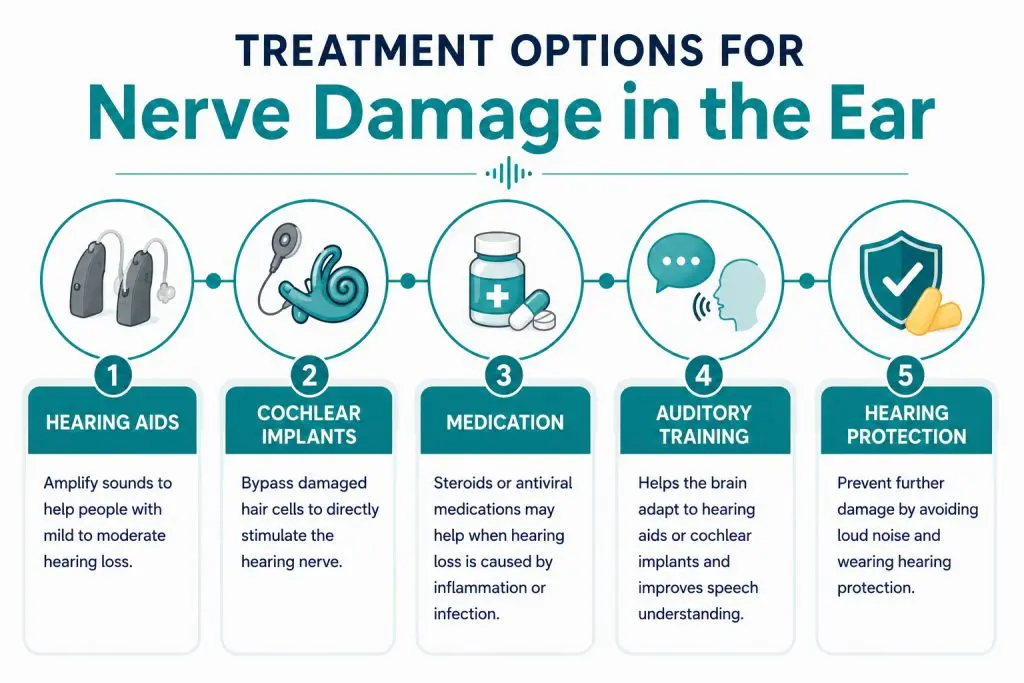
While complete recovery of damaged hair cells or auditory nerve fibers remains rare, treatment can significantly relieve symptoms and enhance day-to-day hearing. The most common treatment pathways include:
For mild to moderate sensorineural hearing challenges, hearing aids are often the front line of care. These devices amplify sound, making it easier for your inner ear and brain to interpret speech and other important noises. Today’s hearing aids are more discreet, comfortable, and advanced than ever, automatically adjusting to different listening environments. If you are curious about how they might help, explore the various styles and benefits at Hearing Aids. With proper fitting and ongoing support, many individuals enjoy an immediate sense of relief, improved awareness, and reduced listening effort.
Those with severe or profound nerve damage who see limited benefits from hearing aids might consider cochlear implants. Unlike hearing aids, which rely on residual hair cell function, cochlear implants bypass these cells altogether. They directly stimulate the auditory nerve, effectively substituting for some of the cochlea’s function. This approach can provide improved clarity for people who otherwise struggle to hear even with high-powered hearing aids. Although it is a more invasive solution requiring surgery, it has helped many people regain a more meaningful connection to the world of sound.
In cases where inflammation or infection underlies sudden hearing changes, certain medications could be beneficial. Steroids, for example, may help reduce swelling in the cochlea and occasionally restore some hearing capacity. Antiviral treatments might be considered if a viral infection is determined to be the culprit. However, these medications generally show the best results when administered soon after the onset of symptoms. Prolonged nerve damage or issues caused by aging and chronic noise exposure typically will not improve solely with medication.
Prevention is paramount, especially if you are already experiencing signs of nerve damage. Using custom earplugs in loud environments—like concerts, construction sites, or when operating power tools—can reduce additional harm. Turning down the volume of personal audio devices and opting for quieter surroundings when possible also helps safeguard the hair cells that remain healthy. Cultivating habits that protect your ears allows you to maintain whatever hearing capacity you have left.
Many people benefit from formal or informal auditory training programs that help stimulate the hearing pathways and improve speech understanding, even when some cells are damaged. Audiologists or registered hearing aid practitioners may direct you to therapies that involve exercises in listening to speech in noise, identifying different types of sounds, and practicing verbal communication strategies. Over time, these methods can sharpen your ability to distinguish words and enhance your confidence in social situations. When coupled with appropriate devices (like hearing aids or cochlear implants), auditory training can make a substantial difference in day-to-day communication.
While technology and treatments play an important role in addressing nerve damage, lifestyle changes also matter. A balanced diet, regular exercise, and avoiding smoking all contribute to better blood flow throughout the body, including the inner ear. Proper circulation helps nourish the delicate cells in the cochlea, promoting improved ear function. Additionally, managing conditions like diabetes or high blood pressure is essential, as these health issues can affect small blood vessels in the ear.
Being mindful of your listening habits is another key step. If you use headphones, try to keep the volume at moderate levels and take listening breaks. Over time, consistent noise at high decibels can accelerate inner ear damage. Maintaining overall body health can indirectly support your auditory system and boost any hearing rehabilitation efforts you undertake.
Nerve damage in your ear rarely follows a set path; your hearing can evolve over months or years, sometimes in small increments that are easy to miss. This constant change underscores the importance of scheduling regular check-ups. Ongoing appointments ensure that your hearing aids remain finely tuned and that any progressive changes are quickly identified and addressed. For older adults, free hearing tests may be available at some clinics, making it easier to keep up with regular screenings.
Beyond appointments, ongoing support refers to staying informed about new technologies and techniques that may further improve your quality of life. For instance, people who pair their hearing aids with assistive listening devices, such as Bluetooth streamers or TV amplifiers, often find it simpler to stay connected. Continued research in hearing healthcare frequently brings enhancements that make devices smaller, smarter, and easier to use.
Whether you are experiencing early-stage symptoms or have a more advanced level of hearing loss, professional guidance can help you make informed decisions about your care. If you have questions about symptoms or suspect you may have sensorineural hearing challenges, a registered hearing aid practitioner is well-placed to assess your unique situation. In some circumstances, the practitioner may recommend that you see an Ear, Nose, and Throat specialist (ENT) to investigate medical factors contributing to your hearing loss. Collaborating with the right professionals paves the way for a more positive hearing journey.
For those in the Edmonton area, or within reach of surrounding communities, a local hearing clinic can be an invaluable resource. Having expert care close to home minimizes the barriers to ongoing appointments, device adjustments, and overall peace of mind.
Even if nerve damage cannot be entirely reversed, you have options to improve clarity, confidence, and quality of life. From hearing aids and cochlear implants to custom ear protection and ongoing hearing tests, these strategies support you in staying connected to loved ones, engaging in social activities, and feeling more confident in everyday life. Whenever possible, aim to catch and address hearing challenges early. Treatments and protective steps tend to be more effective when introduced before extensive damage occurs.
For anyone looking to explore a hearing test, consider contacting a local registered hearing aid practitioner. By taking a proactive approach that includes regular check-ups and using protective measures for your ears, you can preserve as much hearing as possible. Even small lifestyle shifts—like lowering your headphone volume or wearing earplugs at loud events—can have a positive impact, especially over the long term.
Managing nerve damage in the ear is about more than just coping with symptoms. It’s an opportunity to reconnect with the sounds that matter most to you. While many people experience challenges with hearing at some point in life, surveys show that those who seek supportive, patient-focused care often report higher satisfaction and an enhanced sense of well-being. Through accessible, convenient, and custom-tailored solutions, it is possible for you to regain clarity, improve communication, and continue enjoying life’s everyday moments.
Most importantly, remember that each person’s relationship with hearing is unique. Your path to better hearing may involve careful assessment, consistent check-ups, and a personalized approach that accounts for your specific lifestyle and goals. Though complete restoration of nerve function might remain out of reach, you can still enjoy a richer auditory experience through hearing aids, cochlear implants, or other supportive options. Ultimately, the aim is to help you reconnect to the world of sound, ensuring your hearing journey is one of comfort, clarity, and renewed connection.
Aminoglycoside antibiotics, such as gentamicin, are most likely to cause damage to the ear, a condition known as ototoxicity. These antibiotics treat severe bacterial infections, including those caused by gram-negative bacteria. While effective, they have a high risk of causing hearing and balance problems. Ototoxicity occurs because these drugs can damage the hair cells in the cochlea, which are crucial for hearing, and the vestibular system, which is responsible for balance. Symptoms of ototoxicity include tinnitus (ringing in the ears), hearing loss, and balance disturbances such as vertigo or unsteadiness. The risk of ototoxicity increases with higher doses and prolonged use of these antibiotics. Patients with preexisting hearing or kidney issues are at greater risk, as are those receiving concurrent treatments that are also potentially ototoxic. Regular monitoring of hearing function is essential for patients on aminoglycosides, and if symptoms of ototoxicity occur, the medication should be discontinued or adjusted. Alternative antibiotics should be considered for patients with a high risk of hearing damage. In some cases, the hearing loss may be permanent, emphasizing the importance of early detection and intervention.
In many cases, damage to the inner ear cannot currently be reversed. The inner ear contains tiny sensory cells that help convert sound into signals the brain can interpret. Once these cells are damaged, they generally do not regrow. This type of hearing loss is often called sensorineural hearing loss, and it can be associated with aging, repeated noise exposure, certain illnesses or medications, genetics, or other health factors.
That said, “not reversible” does not mean there is nothing that can be done. A professional hearing assessment can clarify the type and degree of hearing change, identify practical next steps, and help you find ways to hear and communicate more comfortably. For many people, personalized hearing care, hearing protection, and appropriately fitted hearing aids can make a meaningful difference in daily life.
Hearing difficulty can also result from concerns in the outer or middle ear, such as earwax buildup, fluid, infection, or changes affecting the eardrum or middle-ear bones. Some of these causes may be temporary or medically treatable. This is why it is important not to assume that every change in hearing is permanent inner ear damage.
A hearing test is a helpful first step when you notice changes such as asking others to repeat themselves, struggling to follow conversations in background noise, turning up the television, or feeling that sounds are unclear. It measures how well you hear different tones and speech and helps establish whether further medical assessment may be appropriate.
Some hearing symptoms should be assessed promptly by a physician or other qualified medical professional. Seek timely medical care if you experience a sudden change in hearing in one or both ears, a rapid worsening of hearing, new severe dizziness, ear pain, drainage from the ear, or hearing loss after an injury. Sudden hearing loss can have causes that need urgent evaluation, and early assessment matters.
It is also worth discussing persistent one-sided hearing changes, new or worsening tinnitus, or a noticeable difference between your ears with a healthcare provider. A registered hearing aid practitioner can help assess your hearing needs and may recommend medical follow-up or collaboration with an ENT specialist when appropriate.
Although there is no proven way to restore damaged inner-ear sensory cells in routine hearing care today, there are effective ways to manage the effects of hearing loss. The right approach depends on your hearing results, communication needs, lifestyle, and personal preferences.
For people with hearing loss that could benefit from amplification, hearing aids are selected and programmed around the person rather than the device alone. Factors such as work, family conversations, hobbies, dexterity, comfort, phone use, and listening environments all matter.
It can. Age-related hearing loss often develops gradually, and ongoing exposure to loud noise can contribute to further hearing damage. The rate of change varies from person to person. Regular hearing assessments provide a baseline and make it easier to recognize changes over time instead of relying only on memory or day-to-day impressions.
If you already wear hearing aids and feel they are no longer helping as well as they used to, the issue may not always be a major change in your hearing. Hearing aid maintenance, cleaning, a fit adjustment, blocked microphones, worn parts, or programming updates may improve performance. A follow-up appointment can help determine what is contributing to the problem.
Preventing additional noise-related damage is an important part of long-term hearing health. Sound that is loud enough to require you to raise your voice to be heard, especially over an extended period, can be a concern. Common examples include power tools, concerts, sporting events, motorcycles, firearms, noisy workplaces, and loud personal audio devices.
Hearing protection should allow you to participate in work, music, sports, and hobbies more safely; it is not about avoiding the activities you enjoy. The best option is one you can wear comfortably and consistently.
A hearing assessment is designed to give you a clearer picture of your hearing, not pressure you into a particular solution. Your appointment may include a discussion of the situations where hearing is difficult, your health and noise-exposure history, and testing that looks at how you hear different sounds and speech.
The results can help explain why certain voices, environments, or conversations feel difficult. If hearing aids are appropriate, you can discuss options based on your needs and budget. If your results suggest that medical follow-up would be helpful, you can be guided toward the next appropriate step. Bringing a family member or communication partner can also be useful, since they may notice situations that are difficult for you.
If you are concerned about possible inner ear damage, avoid self-diagnosing based on symptoms alone. Start by understanding your current hearing. A professional hearing assessment can distinguish between different patterns of hearing loss, document a baseline, and help you make informed decisions about hearing aids, hearing protection, communication strategies, or medical follow-up.
Hearing care is about more than hearing individual sounds. It can support clearer conversations, confidence at work, connection with family and friends, and greater independence in everyday life. Whether your hearing change is new, gradual, or something you have been managing for years, getting answers is a practical first step toward reconnecting to the sounds and people that matter to you.
To avoid ear damage from loud music, it is essential to adopt a few key habits. First, use ear protection like earplugs, specially designed for music lovers or musicians. These earplugs reduce the volume without distorting the sound quality, allowing you to enjoy music safely. Another effective strategy is to follow the 60/60 rule: listen to music at no more than 60% of the maximum volume for no longer than 60 minutes at a time. This helps to minimize prolonged exposure to high decibel levels, which can cause permanent damage to your hearing. It’s also advisable to use noise-cancelling headphones, which allow you to listen to music at lower volumes by blocking out background noise. Try to stand further away from the speakers when attending concerts or music festivals. Regular breaks from loud environments can allow your ears to recover and reduce the risk of damage. Be mindful of signs of hearing damage, such as ringing in your ears or difficulty hearing after exposure to loud music. If these symptoms occur, it’s important to give your ears a break and consider consulting an audiologist. They can provide personalized advice and conduct hearing tests to ensure your ears are healthy. Implementing these strategies can significantly reduce the risk of ear damage while still allowing you to enjoy your favourite music.
Signs of inner ear damage can vary, but common symptoms often include hearing loss, tinnitus, and balance issues. Hearing loss due to inner ear damage can be sudden or gradual, affecting one or both ears. This type of hearing loss is often sensorineural, meaning it is caused by damage to the inner ear structures or the auditory nerve. Tinnitus, a ringing or buzzing noise in one or both ears, is another frequent sign of inner ear damage and can be persistent or intermittent. Balance issues, such as vertigo (a spinning sensation) or unsteadiness, are also common because the inner ear plays a crucial role in maintaining balance. People with inner ear damage may experience nausea or a feeling of fullness in the ear, similar to the sensation of being underwater. In some cases, individuals might find it difficult to hear high-pitched sounds or understand speech in noisy environments. If you notice any of these symptoms, it is important to consult an audiologist or an ear, nose, and throat (ENT) specialist. Early diagnosis and treatment can help manage symptoms and prevent further damage. Diagnostic tests such as audiometry, tympanometry, and vestibular evaluations can determine the extent of the damage and guide appropriate treatment plans.