
Frequently Asked Questions
Exposure to loud noise, whether from a concert, heavy machinery, or even a sudden blast, can take a toll on your ears. Often, people wonder if their ears can heal after enduring intense sound levels. In some cases, the ear can experience a temporary threshold shift, which is essentially a short-term reduction in hearing sensitivity. If you notice muffled hearing immediately after a loud event, your hearing may return to normal once the temporary shift subsides. However, repeated and prolonged exposure to excessive volume can cause permanent damage to the delicate hair cells within the cochlea. These cells do not regenerate, which is why it is crucial to protect your hearing whenever possible.
It is also possible to experience uneven or one-sided hearing issues, where only one ear seems impacted. This can happen if you have been exposed to strong sound primarily on one side, or there may be an underlying issue that needs evaluation. Whether one ear or both have been exposed, a thorough assessment is essential. A qualified professional can determine the extent of your hearing loss and discuss potential solutions or preventive measures. Protective strategies such as wearing earplugs or noise-canceling earmuffs during loud activities, taking regular breaks from high-volume settings, and monitoring noise thresholds can reduce the risk of ongoing damage.
If you suspect your overall hearing has worsened after noise exposure, scheduling a professional hearing test is a wise step. Early evaluation can help you understand if any harm has occurred and outline the best path forward. You can learn more about getting a comprehensive examination by visiting Hearing Test. In situations where permanent hearing loss has developed, hearing aids may be beneficial to restore as much clarity as possible. Modern devices are designed to be comfortable and discreet, giving you confidence in social settings. If you wish to explore potential solutions, visit Hearing Aids for more information. Even if complete healing of the ear is not always possible, taking proactive steps—like seeking early assessment and using protective gear—can make a significant difference in preserving your hearing health for the long run.
Yes, noise exposure can affect mental health over time. Ongoing exposure to loud or constant noise can increase stress levels and make it harder for the body and brain to relax. This may lead to irritability, anxiety, and difficulty concentrating, especially when noise exposure is frequent.
Noise-related hearing changes can also contribute to emotional strain. When hearing becomes less clear, conversations require more effort. This can cause frustration, listening fatigue, and withdrawal from social situations. Over time, these challenges may affect confidence and overall well-being.
People with noise-related symptoms such as tinnitus may feel especially affected. Constant ringing or buzzing in the ears can be distressing and interfere with focus, relaxation, and sleep. These ongoing symptoms can increase emotional stress and reduce quality of life.
Noise exposure may also worsen existing mental health concerns. Poor sleep, increased fatigue, and communication difficulties can combine to create ongoing emotional strain. When these issues are left unaddressed, their impact often grows.
Reducing noise exposure and addressing hearing symptoms early can help support both hearing health and mental well-being. Hearing care plays an important role in overall health.
Noise is often seen as a hearing issue, but its effects extend beyond the ears.
Yes, noise exposure can affect sleep. Loud or ongoing noise can make it harder to fall asleep, stay asleep, or reach deep, restful sleep. This includes noise from traffic, construction, loud neighbours, appliances, or late-night entertainment. Even noise that does not fully wake a person can disrupt sleep quality.
Noise exposure can overstimulate the nervous system, keeping the body in a more alert state. This makes it harder to relax at bedtime. People exposed to noise during the day may also notice increased ringing in the ears at night, when surroundings are quiet. Ringing in the ears can make falling asleep especially difficult.
Poor sleep linked to noise exposure can lead to daytime fatigue, irritability, and trouble concentrating. Over time, lack of quality sleep may affect mood, work performance, and overall health. People may not realize that noise exposure is contributing to ongoing sleep problems.
Managing noise exposure, especially in the evening, can support better sleep and overall well-being.
Poor sleep affects both physical health and daily functioning, not just hearing.
Noise exposure is one of the most common factors that can affect the delicate structures in your ears. Whether you attend a high-energy concert or work in a loud industrial environment, you may notice that voices and everyday sounds seem muffled afterward. In some cases, this muffled sensation gradually subsides, making you believe that everything has returned to normal. However, the road to hearing recovery is not always straightforward. While it is possible for your hearing to improve after noise exposure, complete recovery is never guaranteed. Understanding how noise affects your ears and the various factors involved in healing can guide you toward more proactive choices that protect your long-term hearing health.
One of the most common aftereffects of noise exposure is known as a temporary threshold shift. This happens because the sensory cells in your inner ear (called hair cells) become overstimulated when they encounter loud sounds. As a result, you might notice:
For many people, these changes are temporary. Within a few hours—or occasionally a few days—hearing returns closer to normal. But a temporary improvement can be misleading. The fact that muffled hearing or tinnitus fades does not automatically mean your ears emerged unscathed. Even if you feel like you can hear clearly again, microscopic damage to hair cells may have taken place. Over time, repeated stress on these cells can turn what initially seems temporary into a more permanent decline in hearing ability.
It is comforting to wake up the next day and find that you can hear your alarm clock clearly once again. However, a quick recovery does not necessarily indicate that no harm was done. The inner ear has limited ability to regenerate, meaning that once hair cells are damaged, they cannot fully repair themselves. A temporary threshold shift is often the ear’s way of telling you that it needs relief from loud environments.
Factors such as genetics, your age, and the intensity of the noise can all play a role in how well you recover. Younger individuals may rebound more quickly, but this should not be interpreted as complete immunity to long-term changes. Every incidence of intense noise exposure can compound any existing injury within the ear tissue, causing subtle but cumulative damage over the years.
Hearing recovery is influenced by several variables. Understanding these factors can help you make informed decisions about how to protect your ears and whether you need professional guidance. Here are some of the most critical considerations:
Repeated temporary threshold shifts may eventually turn into permanent hearing loss. Each time your hearing recovers from a loud event, a portion of your hair cells might still be damaged. Losing a small fraction of these cells may not manifest as noticeable hearing difficulty right away, but over months or years, the cumulative effect can become significant. You may find that you are constantly turning up the TV volume or asking friends to repeat themselves. Persistent tinnitus, where a ringing or buzzing sound lingers indefinitely, can also develop.
This process can be compared to “wear and tear” on your ears. If you rarely subject your hearing to extreme volumes, your ears have a better chance of maintaining a healthy baseline. On the other hand, frequent or daily exposure to loud noises, from industrial workplaces to headphones played at high volume, can accelerate the path from short-term to long-term hearing change.
Tinnitus is a common symptom that often comes hand in hand with noise exposure. Many people experience a ringing, buzzing, or humming sound in their ears after a loud concert or an evening at a busy restaurant. While tinnitus can disappear for some, others may find that it persists. In many cases, tinnitus is a sign that your auditory system has been overstimulated, and it may be an early warning sign of ongoing stress or damage.
Like any early indicator, tinnitus is worth paying attention to. If the ringing or buzzing shrinks over time, it might indicate your ears are recovering. However, tinnitus that continues unchanged or worsens is a clue that underlying harm may be more serious. Paying close attention to these signals can encourage more proactive intervention, such as seeking professional advice or implementing better hearing protection strategies.
If you notice that your hearing remains muffled or if your tinnitus does not diminish after a day or two, seeking professional help is crucial. A lingering loss of clarity or a constant ringing might signal more permanent damage. Registered hearing aid practitioners at Melody Hearing Clinic can perform a comprehensive hearing test to assess your current hearing thresholds and provide concrete information about any potential issues.
It is also wise to schedule a test if you frequently find yourself struggling to understand friends and family, especially in noisy environments. Sometimes, damage can be subtle and progressive. You might barely notice small changes until they have significantly impacted your ability to communicate. An early examination provides reassurance by confirming whether your hearing is on track or whether you should take preventive measures to avoid further decline.
Because hearing damage can be cumulative, prevention is always the best strategy. If you spend time in noisy environments—whether for work or leisure—take precautions to reduce the risk of further harm. By incorporating small changes into your daily routine, you can help safeguard your hearing for years to come.
Adopting these habits can not only reduce the risk of severe damage but also help you spot warning signs before they become larger problems. While not all hearing declines can be reversed, slowing the process and minimizing harm can have a meaningful impact on your overall quality of life.
For individuals concerned about ongoing hearing issues, there are multiple paths you can explore to maintain and support your hearing over the long term. In many cases, hearing solutions or assistive listening devices can reduce the strain your ears experience daily and improve your communication with others. Registered hearing aid practitioners can guide you through the available options and help you find a comfortable fit with technology designed to amplify speech, reduce background noise, and enhance everyday listening.
While some people are hesitant to seek solutions, modern hearing aids are more discreet and advanced than ever. Technology has progressed to the point where behind-the-ear or custom in-the-ear solutions are hardly noticeable, yet dramatically improve clarity and comprehension. If you or someone you care about is showing signs of permanent hearing changes—such as frequent requests to repeat conversation—consulting with a professional can open the door to better daily experiences and more fulfilling interactions.
Even if you have only experienced temporary hearing loss or mild ringing, the peace of mind that comes from a thorough evaluation can be priceless. At Melody Hearing Clinic, registered hearing aid practitioners rely on advanced diagnostic tools to provide a complete picture of your ear health. If a problem emerges, you can review possible solutions, such as targeted hearing aids or custom hearing protection, that address your unique situation.
Another advantage of seeking professional support is having a trusted partner to help you adapt as your hearing needs evolve. Whether you need minor adjustments to your devices, additional counseling, or updated tests in the future, having ongoing guidance ensures that you stay proactive. This level of patient-first care can make a big difference, especially when you need encouragement, reassurance, or tips to adapt to new ways of hearing the world.
Hearing health is not just about decibels and thresholds; it relates directly to the way you connect with friends, family, and everyday life. By taking a proactive approach, you retain more of those essential moments that rely on hearing clarity. Here are a few more steps you can take:
While your hearing may recover after noise exposure in some situations, it is never wise to rely on chance. Every episode of temporary threshold shift should serve as a reminder that your ears are signaling a need for respite from loud sounds. Chronic exposure to high decibel levels can create a slow but certain path toward permanent hearing loss.
Recognizing the warning signs and understanding the factors that influence recovery position you to take better care of your hearing health. If you notice that your hearing recovery seems slower than before or that tinnitus lingers longer, arranging a professional check can be a clear-sighted decision. Early detection and intervention can make a significant difference in preserving how well you hear for the rest of your life.
Living with up-and-down changes in hearing can be unsettling. However, you do not have to navigate this journey alone. If you are in the Edmonton area, Melody Hearing Clinic operates multiple accessible locations, including Downtown Edmonton, Mill Woods, South Edmonton, Sherwood Park, St. Albert, Calgary, and more on the horizon. Their registered hearing aid practitioners offer a reassuring, straightforward approach: from initial evaluation and strategy planning to ongoing care that helps you stay ahead of further changes.
Whether you have noticed only minor shifts or are experiencing constant muffled sounds and ringing, consider scheduling a full hearing assessment. By focusing on early detection and clear solutions, you give yourself the best chance of preserving the connections and lifestyles that matter to you. Remember, small protective steps taken today can yield significant benefits tomorrow. In many cases, hearing recovery after noise exposure is possible, but you remain the key driver in ensuring you do not rely on luck alone..
Yes, noise exposure can cause listening fatigue. Listening fatigue happens when the brain has to work harder to understand sound, especially after repeated or prolonged noise exposure. Even if hearing loss is mild or not yet noticeable, noise damage can make listening more tiring.
After loud noise exposure, sounds may be harder to process clearly. The brain must fill in missing information, which increases mental effort. This can lead to fatigue, headaches, difficulty concentrating, and a feeling of exhaustion after conversations or time spent in noisy environments.
Listening fatigue is common in people who are exposed to noise at work or through daily activities. Busy environments such as offices, restaurants, or social gatherings may feel overwhelming. People may withdraw from conversations or need frequent breaks from sound.
Noise exposure can also worsen existing hearing challenges. When hearing clarity is reduced, the brain compensates by working harder. Over time, this extra effort can affect productivity, mood, and overall quality of life.
Listening fatigue is often overlooked because hearing may still seem “good enough.” However, it is an important early sign of noise-related hearing stress and should not be ignored.
Mental strain from listening can affect work, relationships, and daily functioning.
Yes, noise exposure can cause distorted or fuzzy hearing. This happens when loud sound damages the inner ear’s ability to process sound clearly. Instead of sounds being sharp and defined, they may seem fuzzy, unclear, or warped. Speech may sound distorted, especially higher-pitched voices or certain consonants.
Distorted hearing often occurs after exposure to loud noise such as concerts, machinery, or power tools. It may appear along with other symptoms like ringing in the ears or muffled hearing. In some cases, distortion improves after rest, but repeated noise exposure increases the risk that it becomes long-lasting.
Noise-related distortion is usually linked to damage in the inner ear. When hair cells are injured, they may still send signals to the brain, but those signals are incomplete or inaccurate. This can cause sounds to seem harsh, unclear, or uneven. Background noise often makes distortion more noticeable.
Distorted hearing can make conversations tiring and frustrating. People may feel they can hear sounds but not understand words clearly. This symptom is different from simple volume loss and often points to noise-related inner ear damage.
Sound distortion interferes with clarity, not loudness, making speech harder to understand.
Yes, noise exposure can cause ear fullness or pressure. This sensation is often described as the ears feeling blocked, tight, or clogged. It may occur after exposure to loud sounds and can affect one or both ears. Ear fullness does not always involve pain, but it can be uncomfortable and concerning.
Loud noise can stress the inner ear and surrounding structures, leading to temporary changes in how sound and pressure are processed. This may result in a feeling of pressure or fullness, even when there is no physical blockage. In some cases, the sensation appears alongside muffled hearing or ringing in the ears.
Sudden loud noise can also affect the eardrum or middle ear, contributing to pressure changes. Repeated noise exposure may cause inflammation or irritation within the ear, making the sensation more noticeable over time. Ear fullness may come and go or persist for several days.
For some people, ear fullness is an early sign of noise-related hearing stress. It may indicate that the auditory system needs time to recover. If the sensation does not improve or worsens, it may be linked to inner ear changes rather than simple congestion.
Noise exposure may also trigger other symptoms at the same time, such as muffled hearing or balance changes. These combinations can suggest deeper inner ear involvement and should be evaluated by a hearing professional.
Ongoing ear fullness can signal stress or injury within the ear, even without pain.
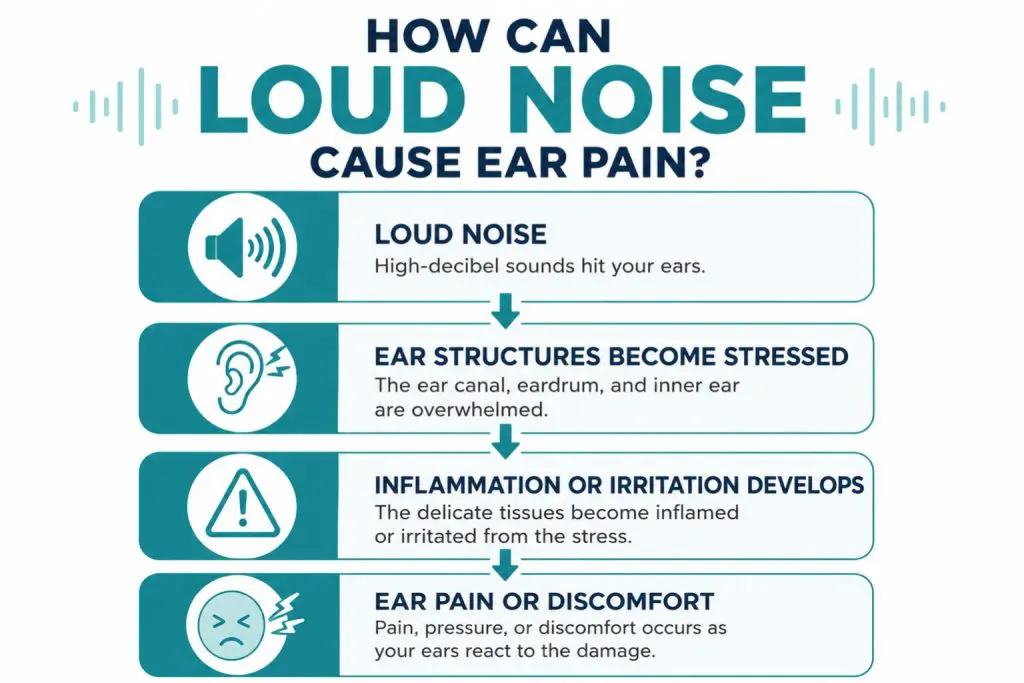
Our ears allow us to experience the sounds that shape everyday life—whether it’s the laughter of friends, the music we love, or the bustle of a busy city. Yet these intricate structures within the ear can also become vulnerable when exposed to loud noise. Many people wonder if loud noise can cause ear pain, and the short answer is yes, it certainly can. Ear pain from noise can result from a sudden explosive sound or a steady, high volume over time. Either way, it’s a sign the body is telling you something isn’t right.
Noise-related ear pain happens when high-decibel sounds irritate or injure the ear’s delicate internal components. The outer ear canal, eardrum, and inner ear all play a role in detecting and transmitting sound. But when the sound is too powerful, it may overwhelm the ear’s ability to handle safe levels of noise. This can lead to inflammation, fluid buildup, or micro-injuries in the tissues, which typically manifests as pain, pressure, or discomfort. In many cases, the immediate sensation is brief and sharp, though for some people it can turn into an ongoing ache.
It’s important to keep in mind that pain is the body’s way of signaling danger. In the context of hearing, pain often indicates that the ear is under stress. If loud sounds become a regular occurrence, repeated damage can affect hearing clarity. Over time, ongoing discomfort could be accompanied by reduced hearing capacity, ringing in the ears (tinnitus), or persistent ear fullness.
Certain sounds produce such a rapid and intense shock wave that the ear cannot adequately cope with it. These include explosions, fireworks, gunshots, or even alarms and sirens at very close range. In these situations, the loud sound wave can create pressure differences in your ear canal, sometimes powerful enough to damage the eardrum or sensitive cells in the inner ear. Consequently, you may feel an immediate sharp pain that can linger. You might also notice hearing changes or a ringing sensation in the ear afterward.
It is not uncommon for very loud, sudden sounds to lead to a perforated or ruptured eardrum. When this occurs, a person might observe a sudden change in hearing clarity, see fluid draining from the ear, or experience intense pain. In some cases, loud noise can even lead to a perforated or ruptured eardrum, which may cause additional concerns, from temporary hearing fluctuations to more lasting injury that calls for careful follow-up.
Not all cases of noise-induced pain begin with a single loud blast. Some develop over time as constant exposure slowly wears down the ear’s resilience. Think of workers in noisy industries, individuals who listen to prolonged loud music, or those who live in very loud urban areas. In these scenarios, the ear is continually straining to process incoming sound. That sustained pressure can cause the ear canal and eardrum to become inflamed, leading to discomfort or soreness.
Chronic noise exposure may also contribute to persistent ringing (tinnitus) or muffled hearing. While ear pain may come and go, it often overlaps with other signs your hearing has experienced stress. If you regularly have a dull ache in the ears after work or concerts, it’s worth considering ways to protect your hearing before minor discomfort turns into a more significant issue.
It’s a good habit to pay attention to any subtle hints that your hearing might be overstressed. Here are some common signs:
When ear pain or these symptoms persistently follow noise exposure, it serves as a warning that the ear might be struggling to cope. Some people may also feel ear fullness or discomfort when chewing or swallowing after loud noise exposure. Your best course of action is to take these signs seriously. Giving your ears time to recover and seeking support from a hearing care professional can help prevent further damage.
Occasional ear pain that fades within a few moments after a loud event can sometimes be managed by simply giving the ears a break. However, certain red flags point to the need for a professional evaluation:
In all these circumstances, consulting a registered hearing aid practitioner or another hearing health specialist is a wise decision. They have the tools and expertise to determine the root cause of the pain, evaluate the extent of any hearing changes, and recommend practical next steps. Early detection and personalized care make a significant difference when it comes to preserving healthy hearing and minimizing lasting damage.
While the ears are an amazing part of the body, they need to be protected to function at their best. If you’re regularly exposed to loud noise—on the job, at concerts, or during hobbies—it’s crucial to practice preventive measures. Here are some ways to keep your ears safe:
These seemingly small choices can drastically reduce the likelihood of noise-induced ear pain. They also help maintain your hearing health, enhancing your ability to enjoy everyday conversations, music, and more without discomfort.
One of the biggest mistakes people make is ignoring ear pain. Because the discomfort might subside on its own, individuals may assume the problem has resolved. Unfortunately, repeated stress can accumulate beneath the surface. In the long run, a pattern of ignoring symptoms may lead to progressive hearing issues, including difficulty engaging in conversations and issues with clarity in everyday communication.
By being attentive to early signals, you can avoid more serious complications. If you notice repeated bouts of ear pain or consistently require higher volume levels to hear well, consider making an appointment with a hearing professional. Early care helps identify possible injuries, inflammation, or other problems. Once you have clarity on your ear’s condition, it becomes much easier to explore effective solutions, such as customized hearing protection or hearing aid solutions if needed.
A comprehensive hearing test is an excellent way to assess your current hearing status—especially if you suspect that loud noise may have caused harm. During a hearing test, a registered hearing aid practitioner evaluates various aspects of your hearing health, including the softest sounds you can detect and your ability to comprehend speech in different environments. This helps pinpoint if there has been any noticeable decrease in hearing ability linked to noise exposure or other causes.
Once the test is complete, you’ll receive a detailed overview of your hearing profile. If signs of noise-induced hearing damage or ear stress are evident, you can discuss further steps. Sometimes, a professional might suggest techniques for healthy listening habits and ways to reduce the likelihood of future damage. In other cases, hearing technology could help you regain clarity and comfort if a more advanced level of impairment has set in. Above all, early testing leads to precise insights, ensuring you won’t be left guessing about how your ears are functioning.
Ear pain from loud noise isn’t just a single event—it can also be part of an ongoing issue if high decibel levels remain a constant in your life. In such situations, maintaining your hearing health takes consistent effort. Here are some useful tips to keep in mind:
By combining these steps with proactive monitoring of your hearing, you can reduce the risks linked to long-term noise exposure and improve your quality of life. Ear pain, while unpleasant, can serve as a valuable early-warning system to maintain your hearing health over the years.
Noise doesn’t just affect your ears; it also impacts the rest of your body and mind. Continuous, loud noise can contribute to increased stress levels, decreased concentration, and even disrupted sleep. Over time, these factors can chip away at your mental and emotional health. When ear pain is in the mix, it may exacerbate irritability or fatigue. This underscores the reality that protecting your hearing benefits your overall wellness, not just your eardrums.
While many people know to wear seat belts in cars or helmets when biking, ear protection remains an often-overlooked safety measure. Reflecting on the potential ripple effects of noise—spanning from immediate ear pain to overall mental strain—can motivate us to be more mindful. It’s a straightforward step toward a healthier, more balanced lifestyle.
For individuals who notice ongoing ear pain or struggle with hearing in everyday settings, it can be quite reassuring to know that solutions are within reach. Visiting a clinic for a hearing assessment or exploring custom protection options can restore a sense of confidence. Simply learning if your hearing is normal or if you need further evaluation can relieve anxiety about what might be happening behind the scenes.
Ultimately, seeking a professional opinion lets you make informed decisions about your hearing health. For instance, if your hearing test reveals mild stress or beginning stages of noise-induced damage, you might wear specialized earplugs that safeguard against further decline. Improvements in hearing technology mean that if hearing aids become necessary, modern devices are discreet, comfortable, and can greatly enhance your ability to pick up everyday conversations without strain.
While protecting your hearing might feel like an extra task, it aligns closely with maintaining your sense of connection to the people and experiences that enrich life. Sound is essential for many aspects of daily living, from hearing a friend’s laughter to enjoying the nuances of your favorite music. Allowing noise-induced ear pain to go untreated risks limiting your ability to fully appreciate these moments.
Comfortable, well-fitted hearing solutions—along with mindful noise management—help ensure you stay engaged in your environment and personal interactions. The key is striking a balance between enjoying the sounds you love and keeping noise at a moderate, manageable level. By doing so, you can safeguard your hearing and reduce the discomfort that often follows exposure to excessive sound.
Whether your ears recently started bothering you or you’ve dealt with chronic pain for a while, it might be time to reach out for help. A professional evaluation can answer questions you may have about your ear health, identify whether there is underlying damage, and guide you toward practical solutions that fit your lifestyle. Being proactive is always in your best interest, especially if there’s any sign of lingering pain or hearing fluctuations.
One potential route is to find a comprehensive hearing test at a reputable clinic. Such services often include thorough assessments and results interpretation. Once you receive supportive, clear information from registered hearing aid practitioners, it becomes considerably easier to preserve your hearing health today and into the future. Remember that while ear pain is uncomfortable, it can be effectively addressed with the right knowledge, tools, and attentive care.
Loud noise can undoubtedly cause ear pain, and it serves as an important warning sign that your ears are under pressure. Whether the pain arises from a sudden burst of sound or accumulates from daily noise exposure, paying close attention to your symptom is critical. By seeking professional evaluations, modifying your listening habits, and investing in protective measures, you can keep discomfort to a minimum and reduce the risk of long-term harm to your hearing.
Remember that ear pain is your body’s way of telling you to take action. Proactively managing your hearing health can benefit not only your ears but your overall well-being. Early attention to symptoms, coupled with routine check-ups, can help ensure you stay connected to the sounds of life, free from the worry of lingering or potentially escalating ear pain. Don’t overlook the value of consistent care—listen to your ears, treat them kindly, and safeguard your hearing for the future.
Yes, noise exposure can cause dizziness or balance problems in some cases. Very loud sounds can affect not only hearing but also the inner ear structures responsible for balance. The inner ear contains the vestibular system, which helps control balance and spatial awareness. When this system is disturbed, symptoms such as dizziness, unsteadiness, or a spinning sensation may occur.
Sudden exposure to extremely loud noise, such as explosions, gunshots, or industrial accidents, can disrupt the inner ear. This may lead to temporary or, in rare cases, long-lasting balance problems. Some people feel lightheaded, off-balance, or disoriented after loud noise exposure, especially if the exposure caused inner ear injury.
Noise exposure may also worsen existing balance conditions. People who already experience dizziness or vertigo may notice symptoms become more frequent or intense after loud noise. Dizziness and balance issues are sometimes linked with inner ear damage rather than hearing loss alone.
In some cases, balance problems occur alongside hearing symptoms such as ringing in the ears or muffled hearing. This combination may indicate deeper inner ear involvement and should be evaluated by a hearing professional.
While balance symptoms from noise exposure are less common than hearing loss, they should not be ignored. Ongoing dizziness or balance changes after loud noise may signal inner ear damage that needs professional assessment.
Balance problems can increase the risk of falls, affect daily activities, and reduce quality of life.
Long exposure noise reduction refers to steps taken to lower the impact of ongoing or repeated noise exposure over time. Instead of focusing on a single loud event, this approach addresses everyday or workplace noise that builds up and affects hearing gradually.
Noise reduction can involve changing the environment, changing behavior, or using protective equipment. In work settings, this may include quieter machinery, sound barriers, or limiting time spent in noisy areas. In daily life, it can mean lowering headphone volume, choosing quieter appliances, or avoiding constant background noise.
Personal hearing protection plays a major role in long exposure noise reduction. Earplugs, earmuffs, and custom hearing protection reduce the amount of sound reaching the inner ear. Consistent use is especially important for people who are regularly exposed to noise through work or hobbies.
Noise reduction also includes giving the ears time to recover. Quiet breaks between noise exposure help reduce stress on the auditory system. Without recovery time, the risk of long-term hearing damage increases.
People who experience symptoms such as listening fatigue or difficulty understanding speech may already be affected by long-term noise exposure. Listening fatigue is often linked to ongoing hearing stress.
Long exposure noise reduction focuses on prevention, not repair. Once hearing damage occurs, it cannot be reversed.
Avoiding all noise is unrealistic. Reducing exposure over time is the most practical way to protect hearing.
Noise exposure limits are set by health and safety organizations to reduce the risk of hearing damage and other health effects. These limits are based on research showing how sound levels affect hearing over time. Different organizations create guidelines for workplaces, public spaces, and everyday environments.
The World Health Organization (WHO) provides guidance on safe noise levels to protect public health. These guidelines focus not only on hearing loss, but also on sleep disturbance, stress, and overall well-being. The WHO recommends lower noise levels for long-term exposure, especially in homes, schools, and community settings.
Workplace noise limits are often set by national safety agencies and are designed to protect workers exposed to noise for many hours each day. These limits define when employers must take action, such as providing hearing protection, reducing noise levels, or monitoring employee hearing.
Even when noise exposure follows official limits, some people may still experience symptoms. Individual sensitivity varies, and repeated exposure over years can still affect hearing. Early signs may include listening fatigue or difficulty hearing in noisy environments.
Noise exposure limits are meant to reduce risk, not guarantee zero damage. Personal habits, hobbies, and cumulative exposure outside of work also play an important role in hearing health.
Exposure limits help set safety standards and raise awareness, even though individual risk can vary.
The upper exposure action value for noise is a level where noise exposure becomes high enough that strong protective steps are required. This term is commonly used in workplace hearing safety to indicate when noise poses a serious risk to hearing. When noise reaches this level, hearing protection and other controls should be in place to reduce exposure.
The upper exposure action value is typically set at a daily average of 85 decibels or higher. At this level, repeated or long-term exposure can cause permanent hearing damage. Without proper protection, noise at or above this level increases the risk of noise-induced hearing loss and tinnitus.
People exposed to noise above this level may notice early warning signs such as ringing in the ears, muffled hearing, or difficulty understanding speech. Ringing in the ears is often one of the first symptoms of inner ear damage.
Another common sign is trouble hearing in busy or noisy environments, even when sounds seem loud enough. The purpose of the upper exposure action value is prevention. It signals when action is needed to protect hearing before damage becomes permanent. Reducing exposure time, lowering noise levels, and using hearing protection all help limit risk.
Understanding this threshold helps workers and individuals recognize when noise levels are no longer safe and when hearing protection is essential.
Action values exist to prevent hearing damage before it becomes permanent and noticeable.
The noise exposure limit is the maximum level of sound a person can be around without a high risk of hearing damage. These limits are based on how loud the sound is and how long exposure lasts. In general, sounds below 70 decibels are considered safe, even for long periods. Once noise reaches 85 decibels or higher, the risk of hearing damage increases with time.
At 85 decibels, hearing damage can begin after about eight hours of exposure. As sound levels increase, safe exposure time drops quickly. Very loud sounds such as concerts, machinery, or sirens can cause hearing damage in minutes. Extremely loud sounds can cause immediate injury to the inner ear.
Noise exposure limits are used in workplaces, public health guidelines, and hearing safety recommendations. These limits help reduce the risk of permanent hearing loss caused by repeated or prolonged noise exposure. When exposure goes beyond these limits, hearing protection is recommended.
Exceeding noise exposure limits can lead to symptoms such as ringing in the ears, muffled hearing, and difficulty understanding speech. These are common signs of early hearing damage. Difficulty hearing in noisy environments often appears first.
Understanding noise exposure limits helps people recognize risk and make safer choices in daily life, work, and recreational settings.
Noise exposure limits are designed to prevent permanent hearing damage before symptoms appear.
Noise exposure comes in many forms, from attending loud concerts to working in busy industrial environments. Whether you spend a few hours at a music venue or work near machinery each day, prolonged or intense noise can lead to various forms of hearing damage. At first, the impact may not be obvious, but noticing subtle changes in your hearing or experiencing any ear-related discomfort can be important signs that it’s time to seek professional guidance.
Visiting a hearing professional doesn’t have to be intimidating. If you connect with a registered hearing aid practitioner, you can get clear, straightforward support that focuses on early detection, careful testing, and practical recommendations to protect and maintain your hearing. Here, we’ll explore why noise exposure affects your hearing, what symptoms to watch out for, and why an early checkup is so crucial for your long-term hearing health.
Everyday life can expose you to loud sounds more often than you might expect. Below are some common scenarios where your hearing might be at risk:
It’s easy to overlook these everyday noise sources, but each one can elevate your risk of hearing damage, especially when exposure is frequent or intense. Knowing these risks helps you take appropriate measures, such as wearing earplugs or limiting time spent in noisy environments.
After a single loud event or ongoing exposure over time, you may notice changes in how you hear. Often, these signs appear gradually or seem mild at first. Examples include:
These warning signs, whether they appear immediately or develop over hours or days, can clue you in that your hearing has been affected. The timing of symptoms varies, so be aware of how you feel for a day or two after prolonged or intense noise.
Booking an appointment with a hearing professional soon after noticing symptoms can make a real difference in addressing potential hearing loss. If hearing feels dull or unclear after loud noise and does not return to normal within a day or two, a thorough check is recommended. Even mild symptoms like faint ringing or slight difficulty discerning voices can be significant, particularly if the noise exposure happens repeatedly, such as at a daily job site.
Hearing professionals, including registered hearing aid practitioners, use various techniques to measure how sound travels through your ears, as well as identify frequency ranges that might be most affected. Early detection gives you a chance to:
In some cases, your hearing may bounce back after a brief period of dullness or ringing. Known as a temporary threshold shift, this form of hearing change usually improves once your ears have rested. However, repeated noise exposure over time may cause permanent threshold shifts, resulting in more lasting hearing loss. It’s not always easy to predict when short-term issues could turn into permanent damage.
A key reason for a professional assessment is that hearing specialists can detect subtle changes you might overlook. For instance, you might only notice trouble hearing certain high-frequency sounds at first, which can go undetected if you rely on everyday tasks as your gauge. By measuring hearing capacity across a range of pitches, hearing professionals provide deeper insights into whether your hearing truly recovered or if some degree of damage remains.
Not everyone reacts the same to noise exposure, but there are a few common guidelines about when to seek a comprehensive hearing test. Consider scheduling a visit if:
If any of these scenarios sound familiar, it’s wise to schedule a hearing test at your earliest convenience. An assessment can make sure that any potential losses are addressed early, keeping you proactive and informed about your hearing health.
Even if symptoms seem mild or temporary, each exposure to loud noise can have a cumulative effect. Think of your hearing capacity like a bank account that gradually depletes with each loud event. If your ears don’t fully recover between exposures—especially if you consistently work in a high-decibel environment or attend loud events often—you may be at higher risk for permanent hearing loss. This is why professionals advise wearing protective gear and scheduling routine hearing tests to monitor ongoing changes.
Over time, chronic noise exposure can affect not only your ability to hear certain pitches but also how you interpret sounds, especially in busy or noisy environments. Early intervention goes a long way toward helping your ears withstand repeated stress. With professional support, you can learn techniques, use protective devices, and adopt better listening habits to minimize further damage.
Waiting to see if your hearing returns to normal or hoping that symptoms will fade naturally can increase the risk of unknowingly developing long-term issues. By the time hearing difficulties become impossible to ignore, you may have already lost the chance to prevent or lessen further decline. Early evaluation allows a hearing professional to:
Hearing damage is easier to manage when identified early. Waiting can allow problems to worsen, making everyday activities challenging. Whether you experience slight ringing, mild ear discomfort, or difficulty understanding speech, it’s worth addressing as soon as you can.
Visiting a hearing professional often starts with a conversation about your noise exposure history and any symptoms you’ve noticed. You might share details of the loud environments you’ve encountered, such as concerts, workplaces, or even recreational activities like hunting. This discussion helps the professional understand your particular risks.
Next, you’ll typically undergo a series of hearing tests in a controlled environment. These exams measure your ability to detect tones at various pitches and volumes. You may also perform speech tests to evaluate how clearly you recognize spoken words. Once testing is complete, the professional will discuss the results, explain any patterns of hearing loss, and advise on the next steps. This could include follow-up visits to monitor changes, use of hearing protection devices, or a personalized care plan that suits your lifestyle.
Prevention is a significant part of preserving hearing. If you’ve noticed changes in your hearing after noise exposure, it’s a good idea to use protective measures consistently. Some strategies include:
Over time, these small steps reduce the cumulative toll of noise on your ears and support better hearing for many years to come.
Sometimes, noise exposure leads to a sudden hearing decline, severe ear pain, or noticeable balance issues. These red-flag symptoms warrant immediate attention from a hearing professional or an ear specialist. Issues like sudden hearing loss can indicate acute injuries to the inner ear, while ongoing dizziness might suggest that your inner ear’s balance function has been compromised. Quick intervention may improve your chances of stabilizing your hearing and reducing any lasting impact.
Hearing health isn’t a one-time assessment. If you’ve already experienced noise-related symptoms, it’s wise to check your hearing regularly, especially if your lifestyle or job continues to expose you to high levels of sound. By scheduling periodic evaluations, you create a recording of your hearing levels over time. These records help your hearing professional detect trends and suggest interventions before a mild issue becomes a bigger problem. Additionally, consistent follow-up ensures you always have the right guidance when it comes to protective measures, daily listening habits, or advanced solutions like hearing aids if they ever become necessary.
Noise exposure can significantly impact your hearing, but knowing when to see a hearing professional—and taking that step promptly—can preserve more of your hearing ability in the long run. Whether you’re dealing with ongoing ear ringing or simply want to ensure you stay connected to the sounds you love, a hearing test can lay the groundwork for proactive, personalized care. Early evaluation is a vital part of staying ahead of long-term hearing problems, helping you maintain clear sound and quality of life.
If you’ve experienced ringing in the ears, muffled hearing, or any other lingering symptoms after noise exposure, consider scheduling a comprehensive hearing test to check on your hearing health. Many individuals find that taking this simple step offers both peace of mind and practical strategies for better hearing protection. By acting early and staying informed, you can safeguard your hearing for the future and keep enjoying the everyday and extraordinary sounds that shape your life.
Protecting your ears from loud noise is one of the best ways to prevent hearing damage. The most effective step is to reduce how loud sounds are and how long you are exposed to them. Lowering volume levels, taking listening breaks, and moving away from loud sound sources can significantly reduce risk.
Using hearing protection is especially important in loud environments. Earplugs and earmuffs reduce the amount of sound that reaches the inner ear. They are helpful at concerts, sporting events, work sites, and when using power tools or loud equipment. Custom hearing protection can offer comfort and better sound reduction for regular use.
Limiting headphone and earbud volume is another key step. A good rule is to keep volume low enough that you can still hear what is happening around you. Long listening sessions should be broken up with quiet breaks to give your ears time to recover.
Being aware of early warning signs also helps protect hearing. Ringing in the ears, muffled hearing, or listening fatigue may mean your ears are under stress. Muffled hearing is a common sign that noise levels may be too high.
Protecting hearing early can prevent permanent damage and support long-term hearing health.
Once hearing damage occurs, it cannot be reversed. Prevention is the most effective protection.
Yes, everyday noise can damage hearing over time. Many common sounds are loud enough to harm hearing when exposure happens regularly. Traffic, lawn equipment, power tools, fitness classes, and personal music devices can all reach unsafe noise levels. Even if these sounds do not seem painful, repeated exposure can slowly damage hearing.
Everyday noise damage usually happens gradually. People often do not notice changes right away because hearing loss develops over months or years. Early signs may include difficulty understanding speech, especially in noisy places, or needing to turn up the volume on the TV or phone. Difficulty hearing in noisy environments is a common early symptom of noise-related hearing damage.
Listening to music through headphones at high volume is one of the most common sources of everyday noise exposure. Long listening sessions without breaks increase risk, especially when volume levels are high enough to block out surrounding sounds.
Over time, everyday noise exposure can lead to permanent hearing loss and tinnitus. Ringing in the ears may appear after noise exposure and become more noticeable in quiet settings. Because everyday sounds feel normal, many people underestimate their impact on hearing health.
Reducing everyday noise exposure is an important step in protecting hearing. Lowering volume, taking listening breaks, and being aware of noise levels can help limit long-term damage.
Familiar sounds feel safe, even when they slowly damage hearing over time.
Yes, noise exposure can affect children’s hearing. Children’s ears are still developing, which makes them especially sensitive to loud sounds. Exposure to loud noise during childhood can damage hearing and increase the risk of hearing problems later in life.
Children may be exposed to loud noise from many sources, including tablets and phones, headphones, video games, sporting events, concerts, and noisy toys. Even sounds that seem normal to adults can be harmful if they are loud or last a long time. Listening to music or videos at high volume through headphones is a common cause of noise-related hearing damage in children and teens.
Noise exposure in children can lead to early hearing loss, ringing in the ears, and difficulty understanding speech. Trouble hearing in noisy environments is often one of the first signs that hearing has been affected.
Hearing damage in children may affect learning, speech development, and attention. Children with hearing issues may struggle in school or appear distracted, when the real issue is difficulty hearing clearly. Because children may not recognize or report hearing problems, damage can go unnoticed.
Protecting children’s hearing early helps reduce the risk of permanent hearing loss. Lowering volume, limiting headphone use, and using hearing protection at loud events are important steps.
Noise damage during childhood can have lifelong effects on hearing and communication.
Long-term noise exposure happens when a person is regularly exposed to loud sounds over months or years. This can include noise at work, loud hobbies, traffic, music, or frequent use of headphones at high volume. Even if the noise does not seem extreme, repeated exposure can slowly damage hearing.
Unlike sudden loud noise, long-term exposure causes gradual hearing damage. Many people do not notice changes right away. Early signs may include trouble understanding speech, especially in noisy places, or feeling tired after listening for long periods. Difficulty hearing in noisy environments is a common early symptom.
https://melodyaudiology.com/symptoms/difficulty-hearing-in-noisy-environments/
Over time, long-term noise exposure can lead to permanent hearing loss. This often starts with high-frequency sounds, which are important for understanding speech. High-frequency hearing loss may make voices sound unclear or distorted.
Long-term noise exposure can also cause tinnitus, which is ringing or buzzing in the ears. This sound may become constant and interfere with sleep, focus, and daily activities. Because the damage builds slowly, people often delay seeking help.
Understanding long-term noise exposure helps people take prevention seriously. Reducing exposure, lowering volume, and using hearing protection can limit damage.
Hearing damage from ongoing noise is permanent and often unnoticed until communication becomes difficult.
Noise exposure is calculated by looking at how loud a sound is and how long you are exposed to it. Loudness is measured in decibels, or dB. The higher the decibel level, the greater the risk of hearing damage. Time matters because even moderately loud sounds can harm hearing if exposure lasts long enough.
In work settings, noise exposure is often calculated using sound level meters or personal noise dosimeters. These devices measure sound levels over a full workday and help determine whether exposure exceeds safe limits. Calculations take into account both the intensity of the noise and the total duration of exposure.
For everyday life, exact calculations are less common, but warning signs can indicate unsafe exposure. If you need to raise your voice to speak, experience ringing in the ears, or notice muffled hearing after noise, exposure may be too high. Muffled hearing is a common sign of hearing stress.
Noise exposure can also be assessed through hearing tests. Hearing professionals look for early signs of noise-related damage, such as high-frequency hearing loss, which often develops before other symptoms.
Understanding how noise exposure is calculated helps people recognize risk and take steps to reduce hearing damage.
Calculating exposure shows how quickly hearing damage can occur and why limits matter.
Occupational noise exposure refers to loud sounds that people are exposed to as part of their job. This includes noise from machinery, tools, engines, alarms, and equipment used in many workplaces. Jobs in construction, manufacturing, transportation, farming, and warehouses often involve regular noise exposure that can affect hearing over time.
When noise levels at work are high and exposure is repeated, the risk of hearing damage increases. Many workers experience gradual hearing loss without realizing it. Early signs may include muffled hearing, ringing in the ears, or difficulty hearing conversations in noisy settings. Difficulty hearing in noisy environments is often one of the first signs of noise-related hearing damage.
Occupational noise exposure can lead to permanent hearing loss if hearing protection is not used. Noise-induced hearing loss develops slowly and may not be noticeable until communication becomes challenging. Some workers also develop tinnitus, which causes ringing or buzzing sounds that can persist even in quiet spaces. Ringing in the ears, also known as tinnitus, is a common symptom linked to workplace noise.
Employers may provide hearing protection, but consistent and correct use is critical. Regular hearing tests help detect early changes and guide prevention. Understanding occupational noise exposure allows workers to take action and protect their hearing health.
Long-term exposure to job-related noise can cause lasting damage without obvious early warning signs.
Noise exposure limits at work are set to help protect employees from hearing damage caused by loud environments. These limits define how loud noise can be and how long workers can be exposed before hearing protection or other controls are required. In most workplaces, prolonged exposure to noise at or above 85 decibels can increase the risk of hearing loss.
Many jobs involve ongoing noise exposure, including construction, manufacturing, transportation, farming, and warehouse work. Machinery, tools, engines, and alarms can all exceed safe noise levels. Without protection, repeated exposure can lead to noise-induced hearing loss, tinnitus, and difficulty hearing speech, especially in busy environments.
Workplace noise exposure often causes gradual hearing damage. Employees may notice symptoms such as muffled hearing, ringing in the ears, or difficulty hearing coworkers over background noise. These symptoms are common signs of early hearing damage and may worsen over time. Difficulty hearing in noisy environments is often one of the first warning signs.
Employers may provide hearing protection such as earplugs or earmuffs, but proper use is essential. Regular hearing checks help track changes and identify damage early. Workers who notice ongoing symptoms may benefit from a professional hearing test to assess hearing health.
Understanding workplace noise exposure limits helps employees take hearing safety seriously and protect their long-term hearing.
Daily exposure, even at moderate levels, can slowly damage hearing without obvious warning signs.
The safe limit for noise exposure depends on how loud the sound is and how long you are exposed to it. In general, sounds at or below 70 decibels (dB) are considered safe, even with long exposure. Once noise reaches 85 dB, the risk of hearing damage increases, especially with repeated or prolonged exposure.
At 85 dB, which is similar to heavy traffic or a lawn mower, hearing damage can begin after about eight hours. For every increase in volume, safe exposure time is reduced. Very loud sounds such as concerts, sporting events, and machinery can cause damage in minutes. Sounds above 120 dB can cause immediate harm to hearing.
Many everyday environments exceed safe noise limits without people realizing it. Workplaces, gyms, public events, and personal listening devices often reach unsafe levels. Over time, this exposure can lead to symptoms such as muffled hearing, ringing in the ears, and difficulty understanding speech, especially in background noise. These are common signs of noise-related hearing damage and may progress into permanent hearing loss.
Safe noise limits are especially important for children and people who work in loud environments. Repeated exposure without hearing protection increases the risk of long-term hearing problems. Hearing protection, volume control, and regular hearing checks all help reduce this risk.
Understanding safe noise limits allows people to make better choices and protect their hearing over time.
Staying within safe noise limits helps prevent damage that builds slowly and often goes unnoticed.
How long you can safely be around loud noise depends on how loud the sound is. Louder sounds cause hearing damage much faster than quieter ones. Sound is measured in decibels (dB). Once noise reaches 85 dB or higher, it can damage hearing if exposure lasts too long.
At 85 dB, hearing damage can begin after about eight hours. As sound levels increase, safe exposure time drops quickly. At 100 dB, hearing damage can occur in as little as 15 minutes. Extremely loud sounds, such as sirens, fireworks, or gunshots, can damage hearing almost instantly.
Many people are exposed to unsafe noise levels without realizing it. Busy traffic, power tools, loud music, and workplace equipment often exceed safe limits. Wearing headphones at high volume for long periods is another common cause of hearing damage.
The risk increases when loud noise exposure happens repeatedly. Even if each exposure is short, daily or frequent noise adds up over time. This can lead to noise-induced hearing loss and symptoms such as muffled hearing, ringing in the ears, or difficulty hearing in noisy places.
Children, teens, and workers in noisy environments are especially at risk. Early hearing damage may not be noticeable but can affect hearing later in life. If you notice signs like difficulty hearing speech or ringing in the ears, it may be linked to ongoing noise exposure.
The longer the exposure, the higher the risk. Reducing time around loud noise is just as important as lowering volume.
Yes, loud noise can cause ringing in the ears. This ringing, buzzing, or hissing sound is called tinnitus. Tinnitus often begins after exposure to loud noise, such as concerts, power tools, machinery, or sudden explosive sounds.
Loud noise overstimulates the inner ear and damages the hair cells that help process sound. When these hair cells are injured, the brain may create phantom sounds to compensate for missing signals. This is why tinnitus can continue even when the environment is quiet.
In many cases, tinnitus after loud noise is temporary. It may last for a few minutes, hours, or days. However, repeated noise exposure increases the risk that tinnitus will become long-lasting or permanent. Once tinnitus becomes chronic, it can interfere with sleep, concentration, and daily activities.
Tinnitus can affect one ear or both ears. Some people notice it more at night or in quiet spaces. Stress and fatigue can make ringing in the ears feel worse. For people with ongoing noise exposure, tinnitus may worsen over time.
Ringing in the ears should not be ignored, especially if it appears suddenly after loud noise. It is often an early sign of hearing damage. Getting a hearing check can help determine if noise exposure has affected hearing.
Protecting hearing from loud noise is one of the best ways to reduce the risk of tinnitus. Using hearing protection and limiting exposure can help prevent ringing from becoming permanent.
Ringing in the ears often signals inner ear damage and should be taken seriously.
Yes, noise exposure can cause permanent hearing loss. This type of hearing loss is known as noise-induced hearing loss. It happens when loud sounds damage the inner ear. Inside the ear are tiny hair cells that help send sound signals to the brain. Loud noise can damage or destroy these hair cells. Once they are damaged, they do not grow back.
Permanent hearing loss can happen after one very loud noise or from repeated exposure to loud sounds over time. Sudden noises like explosions, gunshots, or fireworks can cause immediate and lasting damage. Ongoing exposure to moderately loud sounds, such as machinery, traffic, or loud music, can slowly wear down hearing without noticeable warning signs.
Many people do not realize they are losing hearing because the changes happen gradually. Early hearing loss often affects high-pitched sounds and speech clarity. People may hear voices but struggle to understand words, especially in noisy environments. This can lead to frustration and listening fatigue.
Permanent hearing loss from noise exposure can affect work, relationships, and quality of life. It may also increase the risk of tinnitus, which is ringing or buzzing in the ears that does not go away. Untreated hearing loss has been linked to social isolation and increased stress.
The good news is that noise-induced hearing loss is preventable. Using hearing protection, limiting exposure time, and lowering volume levels can greatly reduce risk. Early hearing checks help identify damage before it worsens.
Hearing damage often builds over years. By the time symptoms are noticed, hearing loss may already be permanent.
After loud noise exposure, the most important step is to give your ears time to rest. Avoid loud environments and keep sound levels low for the next several hours or days. This allows the ears to recover and reduces the risk of further damage.
If you notice ringing in the ears, muffled hearing, or ear discomfort, do not ignore these symptoms. These signs often mean the ears have been stressed. While some symptoms may improve on their own, repeated exposure can turn temporary problems into permanent hearing damage.
Protect your ears from additional noise by using hearing protection if you must be in a loud setting. Earplugs or earmuffs can reduce sound levels and help prevent more damage. Avoid using headphones or earbuds at high volume during recovery.
Pay attention to how your hearing feels over time. If hearing does not return to normal, or if ringing lasts more than a day or two, it is important to seek professional hearing care. Sudden hearing loss, severe ear pain, or dizziness should be checked as soon as possible.
Keeping track of noise exposure is also helpful. Knowing which sounds caused symptoms can help you avoid similar risks in the future. Many people underestimate how loud everyday sounds can be.
Taking action after loud noise exposure can reduce the chance of long-term hearing loss. Early care and prevention play a key role in protecting hearing health.
Knowing when to get professional help can prevent minor damage from becoming permanent hearing loss.
After exposure to loud noise, the ears may feel different right away. Many people notice muffled hearing, pressure in the ears, or ringing sounds. This ringing or buzzing is called tinnitus. These symptoms may last a few minutes, several hours, or even days after the noise has stopped.
In some cases, hearing returns to normal after a short time. This is known as temporary hearing loss. Even though hearing may seem to recover, this is a warning sign that the ears were stressed. Repeated episodes of temporary hearing loss increase the risk of permanent damage over time.
Exposure to very loud noise can cause immediate injury to the inner ear. This may result in sudden hearing loss, sharp ear pain, dizziness, or balance problems. Loud noise can also damage the eardrum, especially during explosions or extremely high sound levels.
Some people feel sensitive to sound after loud noise exposure. Everyday sounds may seem too loud or uncomfortable. This condition, called sound sensitivity, can make daily activities more challenging.
Symptoms after loud noise exposure are not always obvious. Hearing damage can occur without pain or clear warning signs. This is why people may not connect their symptoms to noise exposure right away.
If symptoms such as ringing, hearing loss, or ear pain do not improve within a short time, it is important to seek professional hearing care. Early evaluation can help identify damage and prevent further hearing loss.
Ignoring symptoms after loud noise exposure can allow hearing damage to worsen. Early action helps protect long-term hearing health.
Loud noise damages hearing by harming the delicate parts of the inner ear. Inside the ear are tiny hair cells that help turn sound into signals the brain can understand. These hair cells are very sensitive. When sound is too loud, it can bend or break them.
Short exposure to very loud noise, such as explosions, fireworks, or gunshots, can cause immediate damage. Longer exposure to moderately loud sounds, like machinery, traffic, or loud music, can slowly wear down the hair cells over time. The louder the sound, the faster the damage happens.
Once these hair cells are damaged, they do not grow back. This means noise-related hearing damage is permanent. At first, the damage may affect high-pitched sounds, making speech harder to understand, especially in noisy environments. As damage continues, hearing loss may worsen.
Loud noise can also affect the auditory nerve, which sends sound signals to the brain. When this pathway is damaged, sounds may seem distorted or unclear. This can make conversations feel tiring, even if sounds are still audible.
Another common result of loud noise damage is tinnitus. This is a ringing, buzzing, or hissing sound in the ears that can last long after the noise stops. Tinnitus may be temporary at first but can become permanent with repeated noise exposure.
Many people do not notice hearing damage right away. Because the changes happen slowly, hearing loss often goes untreated for years. This is why loud noise exposure is considered one of the leading causes of preventable hearing loss.
Hearing damage from noise builds gradually. Early signs are easy to miss, making prevention and regular hearing checks especially important.
Hearing damage depends on how loud a sound is and how long you are exposed to it. Sound is measured in decibels, or dB. Normal conversation is about 60 dB and is safe. Sounds at or above 85 dB can damage hearing if you are exposed for long periods of time.
At 85 dB, which is about as loud as heavy traffic or a lawn mower, hearing damage can begin after several hours. As sound levels increase, the safe listening time becomes much shorter. At 100 dB, such as loud music or sporting events, hearing damage can occur in as little as 15 minutes. Sounds over 120 dB, like sirens or fireworks, can cause immediate harm.
Many people do not realize how often they are exposed to unsafe noise levels. Listening to music through headphones at high volume, attending concerts, or working around loud machinery all increase risk. Even short bursts of loud noise can add up over time and lead to permanent hearing damage.
Children and teens are also at risk, especially when using headphones or earbuds. Prolonged exposure to loud sound at a young age increases the chance of early hearing loss later in life.
Hearing damage from loud noise is usually permanent. Once the inner ear is damaged, hearing cannot be restored. This is why understanding safe noise levels and limiting exposure is essential for long-term hearing health.
The louder the sound, the less time it takes to cause damage. Reducing volume and exposure time lowers risk.
Exposure to noise can affect hearing and overall health in both the short term and long term. Some effects happen right away, while others develop slowly over time. The risk depends on how loud the noise is, how long it lasts, and how often a person is exposed.
One common short-term effect of noise exposure is temporary hearing loss. After being around loud sounds, hearing may feel muffled or unclear. This is often a warning sign that the ears have been stressed. Another common effect is ringing or buzzing in the ears, known as tinnitus. This ringing may fade after a short time or continue long after the noise has stopped.
Repeated or long-term exposure to loud noise can lead to permanent hearing loss. This type of hearing loss usually happens slowly, making it hard to notice at first. Over time, people may struggle to hear high-pitched sounds or understand speech, especially in noisy places. Conversations may feel tiring or frustrating.
Noise exposure can also cause ear pain, pressure, or a feeling of fullness in the ears. Sudden loud sounds may damage the inner ear or eardrum, sometimes leading to dizziness or balance problems.
Beyond hearing issues, noise exposure can affect daily life. Loud or constant noise can increase stress, reduce sleep quality, and make it harder to focus. In work settings, noise exposure can lower productivity and increase safety risks if warning sounds are missed.
Many of the effects of noise exposure build over time. Even if symptoms seem mild at first, ongoing exposure can lead to lasting damage. Early awareness and hearing protection are key to reducing these risks.
Noise exposure is when your ears are exposed to loud sounds that can harm hearing. This can happen suddenly, such as from a very loud noise, or over time from repeated exposure to moderately loud sounds. Noise exposure can occur at work, at concerts, during hobbies, or through everyday activities like using power tools or listening to loud music.
Sound is measured in decibels (dB). Normal conversation is about 60 dB and is considered safe. Sounds at or above 85 dB can damage hearing if exposure lasts long enough. Common examples include lawn mowers, busy traffic, factory equipment, and loud headphones. The louder the sound, the less time it takes to cause hearing damage.
Noise exposure affects the inner ear, where tiny hair cells help send sound signals to the brain. Loud noise can damage these hair cells. Once damaged, they do not repair themselves. This is why noise-related hearing loss is permanent.
Many people do not realize how often they are exposed to unsafe noise levels. Short, repeated exposures can add up over time. Even if hearing seems normal now, damage may already be happening. Noise exposure can also lead to ringing in the ears, trouble hearing speech, and increased listening effort.
Understanding noise exposure is the first step in protecting hearing. Limiting time around loud sounds and using hearing protection can help reduce long-term hearing damage.