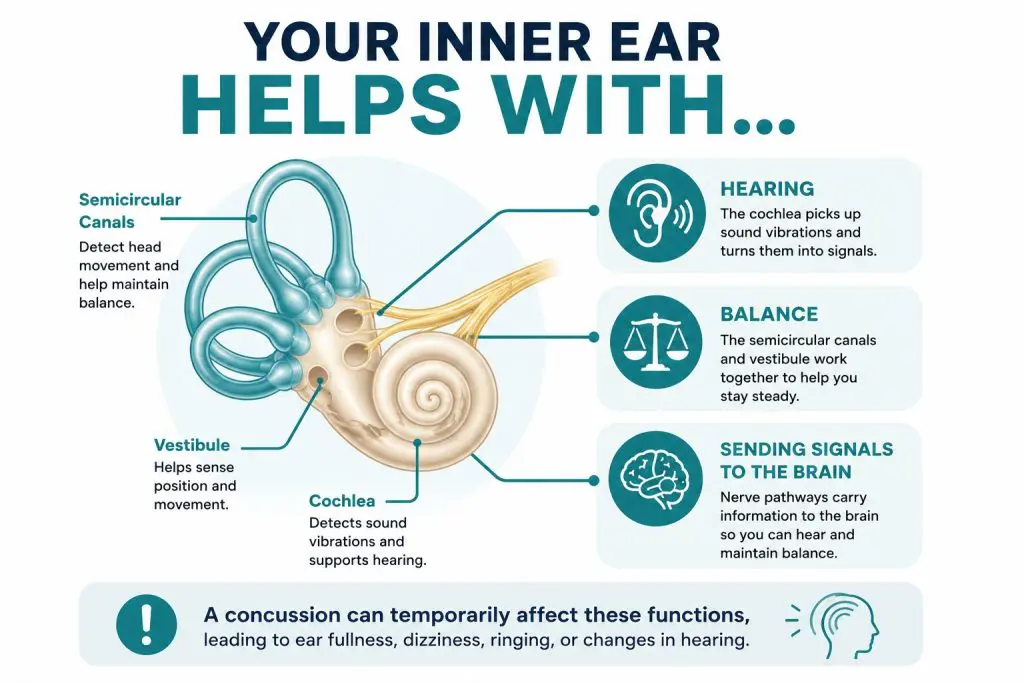
A concussion is a type of mild traumatic brain injury that can affect various parts of the body, including the sensory systems responsible for hearing and balance. Immediately following a concussion, some individuals notice an uncomfortable sensation of ear fullness or the feeling that their ears are “clogged.” This issue can be linked to changes in the inner ear or disruptions in the way the brain processes auditory signals. While every concussion is unique, it is not uncommon for people to experience ear-related symptoms such as tinnitus (ringing in the ears), heightened sensitivity to sound, or even temporary hearing loss. In most cases, these symptoms resolve within a few days or weeks, but they may persist or worsen if not properly addressed.
Ear fullness after a concussion may involve fluid buildup or inflammation in the middle ear, as the trauma could affect the Eustachian tube and lead to pressure imbalances. Additionally, the vestibular system—located in the inner ear—plays a key role in balance and spatial orientation. If the concussion causes swelling or damage in this area, you might notice dizziness, vertigo, or ongoing ear pressure that makes things sound muffled or distorted. These symptoms can significantly impact your day-to-day activities and may require individualized attention from a qualified healthcare professional.
If you suspect a concussion has led to ongoing ear congestion, it is essential to seek prompt evaluation. Beyond immediate medical care, a hearing assessment can be beneficial. A comprehensive hearing test may help identify whether the injury has impacted your hearing levels and provide insight into any temporary or lasting changes. Early detection of hearing issues can be vital, as it allows specialists to recommend possible treatments—ranging from simple ear pressure management techniques to more involved therapies—before the problem becomes more complicated.
If left unaddressed, persistent ear fullness and other post-concussion symptoms may make daily conversations challenging and reduce overall quality of life. By being proactive and discussing these concerns with a medical professional or hearing specialist, you increase your chances of a smoother recovery. While most cases of concussion-related ear clogging improve over time, staying informed and prioritizing follow-up care can ensure you receive the right guidance for long-term well-being.