
Ear infections can cause pain, temporary hearing loss, and, if untreated, may lead to long-term hearing damage. Common symptoms include ear pain, fluid drainage, and a feeling of fullness in the ear, all of which can disrupt daily activities and overall well-being. While ear infections are common, particularly in children, they require timely attention to prevent complications.
At Melody Hearing Clinic, our registered hearing aid practitioners provide comprehensive assessments and guidance to help address ear infections effectively. We work with patients to understand the cause of symptoms and recommend care strategies aimed at protecting and preserving hearing health.
Schedule an appointment today with Melody Hearing Clinic for support with ear infections.

Hearing Services

Hearing Services
Hearing Services

Hearing Assessments

Hearing Assessments

Hearing Assessments

FAQ
Ear infections, also known as otitis media, are fairly common. They happen when fluid builds up behind the eardrum, often due to a bacterial or viral cause. Inflamed tissue, swelling, or mucus inside the ear can block the normal flow of sound signals. This blockage can make it harder for you to hear well, leading to temporary hearing loss or muffled sounds. Some ear infections resolve quickly if treated early, but others may become recurrent and can impact your ear health over the long term.
When ear infections are ignored, they can lead to chronic problems. Although most infections result in only temporary hearing issues, leaving them untreated raises your chances for permanent complications. Because hearing is essential for clear communication and quality of life, it’s important to address any potential ear infection as soon as possible. Understanding early warning signs is useful, as it can motivate you to seek support and reduce the risk of permanent changes to your hearing.
Normally, sound travels through your ear canals and vibrates the eardrum. The middle ear conducts those vibrations through tiny ossicles, which then pass the signal on to your inner ear. However, when you have an ear infection, fluid may accumulate in the middle ear and cause inflammation. This fluid build-up hampers the normal path of sound. As a result, you might notice:
If fluid lingers in the middle ear for too long, it prevents the eardrum from vibrating correctly. This can lead to recurring bouts of hearing difficulty. Fortunately, most ear infections clear up, either on their own or with medical support, and hearing usually goes back to normal. But in more serious or repeated cases, the infection can damage parts of the ear, leading to lasting harm.
Ear infections might not be immediately obvious, especially in their early stages. For adults, discomfort in or around the ear is often the clearest warning sign, but other symptoms can include:
These symptoms can develop quickly, sometimes over just a few hours, or they can emerge more gradually over a couple of days. Identifying them early is key. If you or someone in your care has these symptoms, seek professional guidance so that you can get relief sooner, prevent complications, and preserve healthy hearing.
In many situations, ear infections last only a short time. They often clear up with rest, medication, or other medical care. However, repeated or severe infections can potentially damage the small bones of the middle ear, the eardrum, or the delicate tissues of the inner ear. When that occurs, the harm may be long-lasting and has the potential to erode your ability to hear certain sounds.
Permanent changes in hearing from ongoing ear infections can vary in extent. Some individuals might see only a slight reduction in hearing while others encounter more pronounced difficulties. If you have repeated ear infections or suspect your ear pain keeps returning, it’s wise to take a closer look. By finding an appropriate treatment plan, you reduce the risk of repeated middle ear fluid accumulation and preserve your hearing health for the future.
Children get ear infections more often than adults because their immune systems are still developing, and their eustachian tubes are shorter and more horizontal. This makes fluid drainage less efficient. Recurrent infections in kids can be troublesome, not only for their comfort but also for their speech and language growth. Children learn to speak by mimicking the sounds they hear around them. When their hearing is disrupted, it may lead to delays or difficulties in forming words, following conversations, or performing well in school.
When fluid builds up in the middle ear, children might miss key parts of what people say to them. Over time, that can add up to developmental issues. However, prompt action and routine follow-up can minimize these risks. Parents or caregivers who notice a child tugging at their ears, being unusually fussy, or not responding well to speech should consider consulting a healthcare provider. Proper intervention at an early age can significantly reduce the impact on a child’s long-term hearing and language progression.
Sometimes, ear infections mask a deeper hearing issue or cause changes that linger even when other symptoms vanish. That’s why it’s essential to get regular hearing checkups, especially if infections become a frequent occurrence. A comprehensive hearing test uncovers subtle shifts in how well you hear. It also helps you monitor whether an infection caused any structural problems or left a lasting impact on your eardrum and middle ear mechanisms.
If you suspect that ear infections have weakened your hearing in any way, a thorough hearing evaluation can give you clarity. It’s a proactive step toward protecting your ears. By consulting a registered hearing aid practitioner or a similar hearing professional, you can pinpoint the areas where you might be struggling. If further medical attention is needed, they can guide you on next steps, such as seeing an ear, nose, and throat specialist. Early detection and a clear diagnosis often reduce the severity of any future complications.
If you or your loved one may need more information about hearing assessments, you can consider booking a hearing test to check your ear health. Expert evaluation can uncover whether there’s lingering fluid or inflammation, and if any hearing changes have persisted following an infection. This proactive approach is beneficial to guard your long-term hearing abilities.
Although certain factors—such as genetics or a child’s age—are beyond your control, you can still do plenty to reduce your risk of repeat infections. Some preventive measures include:
Most importantly, pay attention to ear pain as soon as it starts. Early diagnosis can keep a small infection from escalating into a long-term problem. If an infection lingers, or if you get them often, ask about follow-up. Regular check-ups and hearing tests can confirm whether chronic infections have had any lasting impact on your ability to hear.
If you suspect an ear infection, a medical professional can evaluate whether medication or other steps are necessary. Often, antibiotics help if a bacterial issue is detected. For some viral infections, supportive care—like rest, hydration, and over-the-counter pain relief—might be all you need. Some individuals may benefit from warm compresses placed gently around the ear, as they can ease discomfort and reduce pressure.
In cases where fluid continually builds up, a specialist might suggest placing small tubes in the eardrum to keep the middle ear drained and ventilated. This procedure helps reduce the frequency of infections, particularly in children who get them often. If you experience persistent discomfort or hearing issues, it’s vital to let your care team know. That way, they can take further measures to protect your hearing.
While many ear infections are short-lived, untreated or severe ones can lead to complications in hearing development. Children may experience mild but consistent hearing difficulties that affect how they learn language. Adults might face partial or progressive hearing loss, particularly if infections become chronic and harm delicate structures in the ear. In extreme cases, scar tissue from recurring infections can thicken the eardrum or cause the middle ear bones to lose flexibility. This process might limit how well sound travels through the ear, making your hearing less sharp over time.
Still, it’s crucial to remember that these permanent changes are rare in individuals who receive prompt care. With timely intervention, medication, or minor procedures, the vast majority of ear infections clear up. That’s why it’s so important to take action at the earliest sign of infection. Whether it’s a child with repeated earaches or an adult with a lingering ache, being proactive about seeking professional evaluation can make all the difference.
Caring for your overall ear health doesn’t stop once an infection is gone. Sustaining healthy hearing habits can keep your ears functioning for as long as possible. Listening to music at a safe volume, using ear protection in loud workplaces, and scheduling regular check-ups all go a long way. If you often find yourself turning up the TV volume or struggling in conversations even when you don’t have an infection, it might be worthwhile to seek guidance. A professional evaluation can uncover causes and ensure you have the right tools to preserve your hearing.
People often assume that small changes in hearing are a normal part of life. While age-related shifts in hearing are common, abrupt changes or muffled sound can be a sign of an ongoing infection or fluid in your middle ear. Recognizing these differences early means you can intervene and get to the root cause faster. If you need support, connecting with a trusted hearing care provider can put you at ease.
If you or someone you know is dealing with ear pain, muffled sounds, or repeated infections, here are some scenarios where a professional check-up or hearing assessment might be crucial:
A comprehensive hearing test is a non-invasive and simple process that can reveal if your hearing is back to normal or if there has been any subtle damage from repeated infections. Taking prompt steps ensures you’re taking good care of your ear health.
At any age, no one wants to miss out on conversations with loved ones, important details at work, or the simple pleasure of listening to music. Ear infections can keep you from these everyday moments, but paying attention and getting professional support helps you remain connected to the sounds in your life. By prioritizing early detection, you’ll have peace of mind about your hearing health.
Should you notice signs that suggest a hearing change—whether tied to frequent ear infections or other causes—there are steps you can take to stay proactive. Booking a hearing test is a good place to start. Even if you find out that your hearing remains normal, it’s still reassuring to know you’ve ruled out possible damage. If the test shows mild changes or more extensive shortcomings, you can explore solutions that support your hearing needs, including protective strategies and, if necessary, specialized devices.
This approach puts you in control of your hearing health. Recognizing the serious impact of untreated ear infections is part of making informed decisions about your well-being. And by understanding how these infections affect hearing—especially in children who rely on clear speech input to grow and learn—you can help ensure everyone stays engaged with the world around them.
To summarize, ear infections can temporarily disrupt your hearing by obstructing sound transmission. If left unchecked, chronic or severe infections increase the risk of permanent hearing changes. Children face an added challenge due to their ongoing speech and language development, so early professional feedback is vital. For adults, even occasional infections can have lasting effects if they become frequent and go untreated.
Balancing medical treatment with support from hearing professionals provides the best outcome. A comprehensive hearing test can spot potential long-term complications, and ongoing care can help you maintain clear hearing for years to come. By staying aware of common symptoms, following up when discomfort arises, and prioritizing your ear health, you’ll be in the best position to protect your hearing.
If you believe an ear infection has led to hearing problems, or if you simply want routine assessment to ensure all is well, consider scheduling a check-up. Taking that first step toward clarity can help you reconnect with the sounds of your daily life—without the worry of untreated infection holding you back.
Ear infections can affect anyone, from young children to older adults. They arise when viruses or bacteria invade specific parts of the ear, most commonly the middle ear (known medically as otitis media), the outer ear (otitis externa), or even the inner ear (though less frequent and often linked to other conditions). These infections can cause discomfort, temporary hearing difficulties, and potential complications if left untreated. Understanding the common signs of ear infections and taking proactive steps toward prevention and treatment can help preserve your hearing health and overall well-being.
Ear Pain: One of the earliest, most noticeable signs of an ear infection is pain. This discomfort may start out mild—often described as a dull ache—but can escalate to sharp or throbbing pain. Infections in the middle ear can push fluid against the eardrum, causing pressure that translates into substantial discomfort.
Fullness or Pressure: Many people experience a stuffy sensation or a feeling of fullness in the ear. This sensation can sometimes be mistaken for a buildup of earwax but is often the result of fluid retention or inflammation inside the ear. It can lead to a sensation that your ear is blocked or needs to “pop.”
Fluid Drainage: Fluid or pus draining from the ear may be a sign that your eardrum has ruptured or that there is a more advanced infection present. This discharge can be clear, cloudy, or even slightly bloody, and it usually indicates that a medical evaluation is necessary. Even minor fluid leakage is best investigated by a hearing professional or a healthcare provider.
Temporary Hearing Loss: An ear infection can make everyday conversations sound muffled or distant. When fluid builds up, it limits the movement of the eardrum and the tiny bones responsible for transmitting sound. As a result, the ear can’t function at full capacity, and sounds become less clear. This is often reversible once the infection subsides and the fluid drains.
Fever: Ear infections, especially in children, can be accompanied by a fever. While a mild fever in adults is not uncommon with ear infections, higher fevers are reported more frequently in younger patients. The presence of fever indicates that the body is fighting an infection, so it’s worth keeping an eye on other symptoms and seeking medical advice.
Dizziness: Some infections, particularly issues affecting the inner ear, can lead to dizziness or vertigo. While less common than earache or fullness, dizziness is still significant. It can cause a feeling of spinning or unsteadiness, making it hard to walk or maintain balance. Furthermore, it can be linked to nausea, especially if the infection impacts the vestibular system, responsible for balance.
Itching: Itchiness inside the ear often appears in cases of external ear infections (also called “swimmer’s ear”). Moist or wet environments in the ear canal can lead to bacterial or fungal growth, resulting in itching. Scratching or using cotton swabs can aggravate this condition, potentially damaging the ear canal and worsening symptoms.
Ear infections often result from everyday viruses (like those causing the common cold), bacteria, or even fungal growth in certain conditions. Inflammation from allergies or sinus infections can also lead to fluid blockage in the middle ear. When fluid cannot properly drain, it creates a favorable environment for microbes to multiply. Additionally, factors such as smoking or exposure to secondhand smoke can irritate the Eustachian tubes and raise the likelihood of infection. Children tend to be more prone to middle ear infections because their Eustachian tubes are shorter, narrower, and more horizontal compared to adults, making fluid buildup easier.
No one is immune to ear infections, but certain factors can elevate your risk. Young age is one such factor due to anatomical and immune system differences. Seasonal changes can also play a role; many middle ear infections show up during late fall and winter when colds and flu cases surge. Other risk factors include:
Fortunately, there are actions you can take to reduce the chances of getting an ear infection:
An untreated ear infection may lead to complications such as persistent fluid buildup, spreading of the infection, or, in severe cases, damage to ear structures. Chronic ear infections can cause discomfort and fluctuations in hearing. Long-standing fluid retention can even increase the risk of minor hearing loss over time. Early intervention, conscientious monitoring, and consistent follow-up are essential to avoid these issues. If the infection is recurring or does not improve with standard home remedies or medication, you should see a health professional. Prompt care and ongoing monitoring can help preserve your hearing health.
Ear infections can be especially challenging when they affect your ability to hear clearly. Even a minor infection that causes mild hearing loss can have an impact on daily tasks like conversations, workplace communication, or enjoying leisure activities. Repeated episodes over your lifetime can increase the risk of long-term hearing challenges or complications such as damage to the eardrum or middle ear.
That said, most hearing changes triggered by an infection are temporary. Once the inflammation has cleared and fluid drains, hearing often returns to normal. For adults and children who experience recurring or chronic infections, it’s a good idea to keep track of any lingering hearing difficulties. If you or someone you know has noticed ongoing changes in hearing, seeking a professional evaluation can help detect and address any underlying issue.
While mild ear infections sometimes improve on their own, it’s important to recognize when you need professional help. If your symptoms persist for more than two or three days, worsen over time, or involve persistent fever, discharge, or hearing changes, seeing a healthcare practitioner can make a difference in your recovery. Children, in particular, may have trouble communicating exactly what they feel, so it’s wise to watch for any behavioral changes such as unusual fussiness, trouble sleeping, or difficulty hearing.
In many cases, a primary care physician or a dedicated ear health professional will perform an examination using an otoscope to look at the outer ear canal and the eardrum. Swelling, redness, and fluid buildup are typical signs that an infection is present. A test known as tympanometry can measure how well the eardrum reacts to slight changes in air pressure, offering additional insights into fluid buildup behind the eardrum.
Treatment will depend on the type of infection and the severity of your symptoms. Many ear infections respond well to conservative measures like rest, hydration, and over-the-counter medications to relieve pain and manage fever. If you have a bacterial infection, a healthcare professional may prescribe antibiotics. For a stubborn external ear infection, antibiotic eardrops or antifungal eardrops might be recommended.
Another key aspect of management is preventing further damage: avoid sticking anything into your ear canal, including cotton swabs and small objects, as these can worsen the injury or push debris deeper. If fluid remains trapped in the middle ear for an extended period, a doctor may recommend minor procedures like inserting ventilation tubes (ear tubes) to help drain fluid and equalize pressure.
Even though ear infections are sometimes unavoidable, there are steps you can take to help preserve or restore your hearing health:
Ear infections highlight how easy it is for hearing to become compromised. While most cases resolve without causing permanent damage, repeated or chronic ear infections can slowly wear down your hearing health. Regular assessments, especially as you age or if you experience recurring ear trouble, are crucial to identifying potential issues before they escalate. A thorough evaluation helps reveal how well you can pick up different pitches, whether you detect speech clearly, and if any underlying problems may be hindering your hearing.
If you have concerns that an ear infection might be affecting your ability to hear, you can schedule a comprehensive hearing test at an ear care clinic to receive clear, straightforward information about your hearing status. At Melody Hearing Clinic, for example, registered hearing aid practitioners work with advanced diagnostic tools and communicate results in an approachable way, ensuring you understand your hearing characteristics and any recommended solutions.
When hearing challenges arise, it’s often beneficial to consult a registered hearing aid practitioner. If ear infections have caused ongoing issues with hearing clarity, these professionals can perform or arrange appropriate tests and collaborate with other healthcare providers to confirm the status of your hearing. They can also offer education on proper ear care—something that’s particularly important for people prone to infections. These practitioners emphasize a supportive, solution-oriented approach designed to help you stay connected to the sounds of everyday life with less hassle or stress.
Children are more susceptible to ear infections than adults, largely because of anatomical differences and immune system factors. For parents and caregivers, recognizing typical signs of an ear infection in children—like frequent tugging at the ear, crying more than usual, or trouble sleeping—can prevent greater stress down the line. Addressing ear infections early decreases discomfort and may minimize any short-term hearing difficulties that could interfere with language development.
Keeping up with pediatric wellness visits and staying current on vaccinations can help reduce the frequency of childhood ear infections. If your child displays repeated infections, it might be prudent to check if any hearing issues linger after each episode. A simple screening or a more comprehensive hearing test can confirm if they’re hearing clearly.
While professional evaluation is key for infections that persist or worsen, you can take certain steps at home to ease discomfort:
You can also talk to your healthcare provider about safe eardrop options if your ear infection is mild, but it’s best to have a professional confirm the type of infection first. Using the wrong kind of drops could irritate your ear further if, for example, you have a perforated eardrum.
Since ear infections can strike at any age, a household approach to ear care can help maintain everyone’s well-being. This includes encouraging children to wash their hands frequently, avoiding secondhand smoke, using earplugs for swimming if needed, and ensuring common areas are kept clean, particularly during cold and flu season. Teaching the whole family about ear health fosters a proactive mindset that can save you visits to the doctor and potentially preserve hearing over the long term.
When your ears feel healthy, you stay more engaged with the world around you. Hearing difficulties—whether from an infection or another issue—can limit your ability to join conversations, pick up nuanced sounds, or enjoy favorite music. Addressing ear infections before they escalate ensures you can maintain clear hearing for the moments that matter most, such as time spent with loved ones, work commitments, and personal interests.
If you’ve found yourself saying “What? Can you repeat that?” a bit too often, or if you’ve experienced back-to-back ear infections, it may be worth talking to a registered hearing aid practitioner. These professionals can guide you or your family members through a thorough evaluation. They assess various elements of hearing, including how well different frequencies can be detected and how you process speech. Should the results show lingering issues attributable to ear infections, you can work together on a plan to improve your hearing comfort. If hearing aids are needed, practitioners can recommend solutions suited to your lifestyle and personal preferences, making it easier to get back to conversations and life’s key moments.
If you’re in the Edmonton area or nearby, you have the option of one of Melody Hearing Clinic’s convenient locations. With a commitment to clear, supportive, and educational hearing care, their registered hearing aid practitioners make understanding ear infections and hearing health less stressful. You’ll receive a practical explanation of your hearing assessment results and guidance on next steps, whether that means additional medical care or exploring hearing solutions for lasting clarity.
While an ear infection can cause discomfort and a short-term impact on hearing, addressing it with empathy and care ensures you can recover fully and maintain your connection to the world of sound. If you do experience recurring ear infections or notice persistent changes in hearing, consider scheduling a hearing test. Early detection and proactive management help you stay ahead of potential issues, allowing you to focus on living life to the fullest without missing a beat.
Ultimately, recognizing the signs of an ear infection—from ear pain to fluid drainage—empowers you to seek the right support at the right time. Whether you’re dealing with a mild, short-lived case or a more stubborn series of infections, professional evaluation can help mitigate complications and spot any lasting effects on hearing. Proactive ear care and regular checks go a long way in ensuring that you and your loved ones enjoy clear, comfortable hearing well into the future.
Properly used and maintained ear plugs typically do not cause ear infections. However, inadequate hygiene practices or using unclean plugs in unhygienic environments can lead to bacterial or fungal accumulation, raising the risk of infection. Regular cleaning of reusable plugs, proper disposal of disposable ones, and ensuring dry ears before inserting waterproof plugs can prevent infection risks.
Hearing aids themselves typically don’t cause ear infections. However, improper usage or poor maintenance of hearing aids can create an environment conducive to bacterial growth, potentially leading to ear infections. Moisture buildup, earwax accumulation, or wearing dirty devices can harbour bacteria, causing irritation or infection in the ear canal. Additionally, if hearing aids fit too tightly or block proper airflow, it can create a favourable environment for infection. Regular cleaning of hearing aids, proper hygiene practices, and ensuring a proper fit can significantly reduce the risk of ear infections associated with wearing hearing aids. If any discomfort, redness, or unusual discharge occurs in the ears while using hearing aids, it’s crucial to consult with a healthcare professional for proper evaluation and treatment.
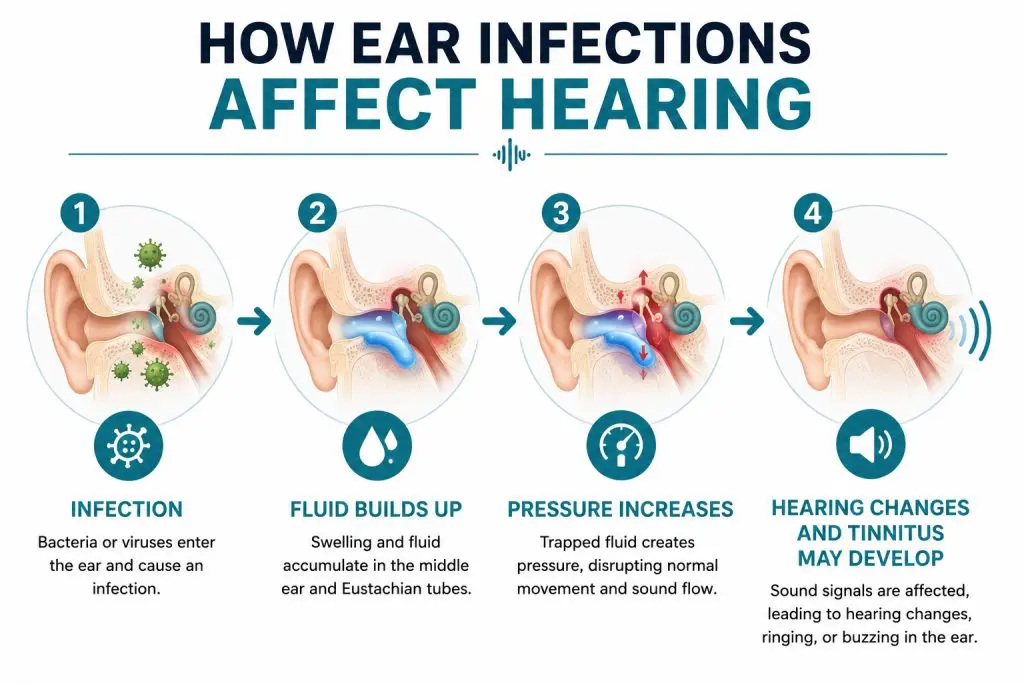
Yes, tinnitus can sometimes be caused by an infection. Tinnitus is the experience of hearing sounds like ringing, buzzing, or humming when no outside sound is present.
The ear is a complex organ that depends on healthy nerves and proper sound processing. When an infection affects the ear or nearby areas, it can disrupt how sound travels to the brain. This disruption may cause tinnitus.
Common ear infections such as otitis media (middle ear infection) or otitis externa (outer ear infection) can affect hearing and lead to temporary tinnitus.
Infections often cause swelling and fluid buildup in the ear. This can block normal sound signals and create pressure inside the ear.
The Eustachian tubes, which connect the middle ear to the back of the throat, help control pressure in the ear. When an infection blocks these tubes, fluid can become trapped. This pressure may lead to symptoms such as ear pain, hearing loss, and tinnitus.
In some cases, infections may also damage the tiny sensory cells inside the cochlea or affect the auditory nerve. This can cause tinnitus that lasts longer, even after the infection improves.
Both viral and bacterial infections can affect hearing and lead to tinnitus. These infections may involve the ear directly or cause inflammation that spreads to nearby areas.
Examples include:
Middle ear infections
Outer ear infections
Sinus infections
The common cold or respiratory infections
Lyme disease
Rare infections such as meningitis
Some viral infections may affect the auditory nerve, while bacterial infections may disrupt the ear’s normal structure and pressure balance.
If tinnitus appears suddenly and is combined with other symptoms, it may be linked to an infection that needs treatment.
Watch for symptoms such as ear pain, fluid discharge from the ear, hearing loss, dizziness, or pressure in the ear. These signs may suggest an ear infection or another medical issue.
Getting help early can prevent the infection from getting worse and may protect your hearing from long-term damage.
At Melody Audiology, we provide detailed evaluations to help determine the cause of tinnitus. If an infection may be involved, our team will assess your hearing and identify possible triggers.
Our Tinnitus Care Program focuses on personalized care. We work to find the underlying cause of your tinnitus and recommend treatments that support both hearing health and symptom relief.
Whether your tinnitus is related to an infection or another condition, our goal is to help you manage your symptoms and improve your quality of life.
Yes, vertigo can be caused by an infection, particularly infections that affect the inner ear or the vestibular nerve. One common type of infection leading to vertigo is labyrinthitis, where a viral or bacterial infection causes inflammation of the inner ear labyrinth, disrupting balance and hearing. Another related condition is vestibular neuritis, which specifically involves inflammation of the vestibular nerve, often following a viral infection such as the flu or a cold. These conditions can lead to sudden, intense episodes of vertigo, along with other symptoms like hearing loss (more common in labyrinthitis), nausea, and imbalance. Treatment typically involves managing symptoms and may include medications such as antiviral drugs, steroids, or anti-nausea medications, depending on the underlying cause and severity of the symptoms. It’s important for individuals experiencing vertigo, especially if accompanied by signs of an infection, to seek medical evaluation and treatment.