
Earwax might not be something you think about very often, but it plays an important role in keeping your ears healthy. It helps trap dust, dirt, and other particles while protecting the delicate skin inside your ear canals.
You may notice that your earwax changes colour or texture from time to time. Sometimes it’s pale yellow and soft, while other times it’s dark brown, sticky, or dry. Most of these variations are completely normal.
Understanding what healthy earwax looks like can help you recognize when a change might indicate a problem and when it’s worth seeking professional advice.
What Does Normal Earwax Look Like?
Normal earwax can range from off-white or pale yellow to dark brown, with a texture that varies from soft and sticky to dry and flaky. Its appearance depends on factors such as genetics, age, and how long the wax has been in your ear canal.
Earwax, medically known as cerumen, is produced naturally by glands in the outer portion of your ear canal. It combines with oils, dead skin cells, and other particles to form a protective substance.
According to the Cleveland Clinic’s medically reviewed guide to earwax, earwax helps lubricate the ear canal, trap debris, and protect against irritation and infection.
Most people don’t need to remove earwax regularly. Your ears have a natural cleaning process that gradually moves excess wax toward the outer ear.
Understanding Different Earwax Colours
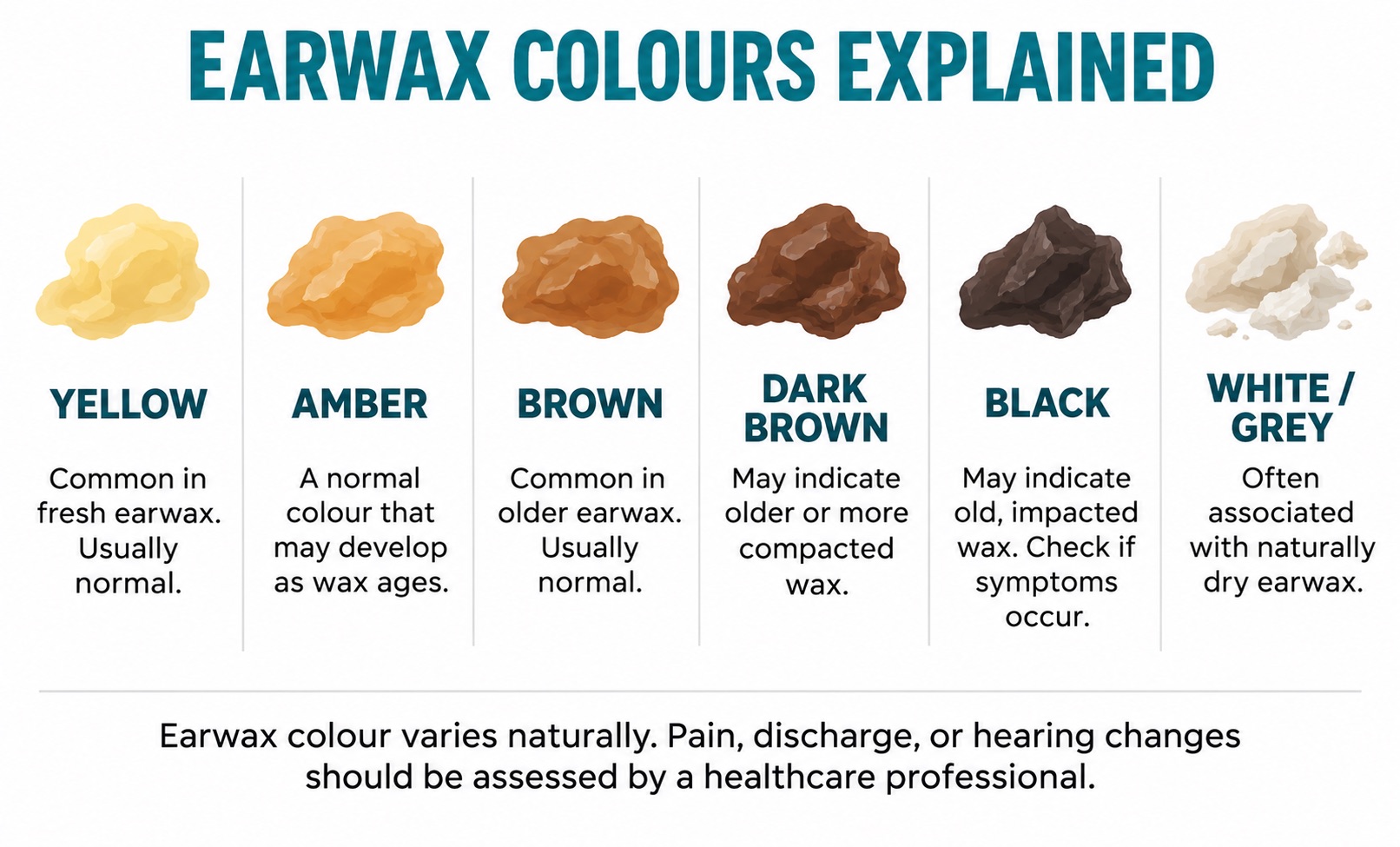
Earwax comes in several colours, and most are harmless. However, colour alone cannot determine whether your ears are healthy.
Yellow Earwax
Yellow earwax is common and generally considered normal.
Fresh earwax often appears pale yellow or golden, with a soft or sticky consistency. This is especially common in people who naturally produce wet-type earwax.
Yellow earwax doesn’t usually require treatment unless it builds up and causes symptoms.
Orange or Amber Earwax
Orange or amber earwax is another normal variation.
As earwax remains in the ear canal, it can gradually become darker and thicker. Orange or amber colouring often reflects this natural process.
If you’re not experiencing discomfort or hearing changes, there’s generally no reason for concern.
Brown or Dark Brown Earwax
Brown earwax is common, particularly when wax has been in the ear canal for an extended period.
Older earwax can darken as it collects dead skin cells and debris. It may also become firmer or drier over time.
Dark brown earwax isn’t necessarily a sign of infection or poor hygiene.
However, large amounts of hardened wax can sometimes block the ear canal and affect hearing.
Black Earwax
Very dark brown or black earwax may be older, compacted wax that has remained in the ear canal for some time.
Black earwax is often associated with earwax blockage, but unusual dark material can have other causes.
If you notice persistent black discharge, discomfort, itching, or hearing changes, seek medical advice rather than assuming it’s ordinary earwax.
White or Grey Earwax
White or grey earwax can be normal, particularly in people who naturally produce dry-type earwax.
Dry earwax often has a flaky or crumbly consistency rather than the sticky texture associated with wet earwax.
This difference is largely influenced by genetics.
However, unusual white or grey discharge accompanied by itching, pain, or irritation may indicate an ear condition requiring assessment.
Red or Bloody Earwax
Red or blood-streaked earwax may indicate irritation or injury inside the ear canal.
Minor scratches can occur when people insert cotton swabs or other objects into their ears. However, bleeding can also have more serious causes.
If you notice blood coming from your ear, particularly after an injury or alongside pain, dizziness, or hearing changes, seek medical attention.
Why Does Earwax Have Different Textures?
Earwax generally falls into two categories: wet and dry.
Wet earwax is usually sticky, soft, and yellow to brown in colour. Dry earwax is typically lighter, flaky, and crumbly.
These differences are strongly influenced by variations in a gene called ABCC11.
Research published in Nature Genetics in 2006 identified a genetic variation associated with wet and dry earwax types.
Source: A SNP in the ABCC11 Gene Is the Determinant of Human Earwax Type
Neither type is inherently healthier than the other. Both serve the same protective function.
Earwax can also become harder or drier with age, making it more difficult for the ear’s natural cleaning process to remove excess buildup.
When Does Earwax Become a Problem?
Earwax becomes a concern when it accumulates and blocks the ear canal. This is known as cerumen impaction.
Earwax buildup is more likely to occur in older adults, people with narrow ear canals, and people who regularly wear hearing aids or other devices that sit inside the ear.
According to the NHS guide to earwax buildup, symptoms may include:
- Muffled hearing or reduced hearing sensitivity.
- A feeling of fullness or pressure in the ear.
- Ringing or buzzing sounds (tinnitus).
- Earache or discomfort.
- Dizziness or vertigo.
These symptoms can have several causes, so it’s important not to assume earwax is responsible without an appropriate assessment.
Can Earwax Cause Hearing Loss?
Yes. Excessive earwax can cause temporary conductive hearing loss when it partially or completely blocks the ear canal.
Conductive hearing loss occurs when sound cannot travel efficiently through the outer or middle ear.
When impacted earwax prevents sound from reaching the eardrum normally, everyday sounds may seem quieter or muffled.
Hearing often improves after the blockage is safely removed. However, not all hearing loss is caused by earwax, and removing wax won’t resolve hearing difficulties related to the inner ear or auditory nerve.
If you’re experiencing persistent hearing changes, a professional hearing assessment can help identify whether additional evaluation is needed.
How to Clean Your Ears Safely
For most people, the safest approach is to leave the ear canal alone.
Your ears naturally move excess wax outward through normal jaw movements, including talking and chewing.
You can gently clean the visible outer ear with a soft, damp cloth, but avoid inserting objects into the ear canal.
Cotton swabs, hairpins, and other objects can push wax deeper, irritate the skin, or damage the eardrum.
Ear candles are also not recommended. They haven’t been shown to remove earwax effectively and can cause burns or other injuries.
If earwax is causing symptoms, a healthcare professional can recommend an appropriate removal method.
Some people may benefit from earwax-softening drops, but these aren’t suitable for everyone. Consult a healthcare professional before using them if you have ear pain, discharge, a known or suspected eardrum perforation, ear tubes, or previous ear surgery.
When Should You Seek Professional Help?
Changes in earwax colour aren’t always a reason for concern. However, certain symptoms deserve medical attention.
Contact a healthcare professional if you experience persistent ear pain, unusual discharge, bleeding, or repeated earwax blockages.
Sudden hearing loss requires urgent medical assessment, even if your ear feels plugged. Sudden sensorineural hearing loss can resemble an earwax blockage, and early treatment is important.
If your hearing remains muffled after earwax has been removed, further testing can help identify other possible causes.
Understand Your Hearing Health With Melody Hearing Clinic
Earwax is a normal and important part of ear health. Yellow, orange, brown, and even very dark earwax can be harmless, while differences in texture are often influenced by genetics.
The most important consideration isn’t simply the colour of your earwax, but whether you’re experiencing symptoms such as discomfort, blockage, or changes in hearing.
At Melody Hearing Clinic, our hearing care professionals help patients understand their hearing health through personalized assessments and guidance.
Take the next step toward better hearing health.
Book a hearing test with Melody Hearing Clinic and get answers about your hearing.