
Most hearing aids can last around five to six years, but there isn’t a fixed expiry date. How long yours lasts depends on the hearing aid, how often you wear it, how well it is maintained, exposure to moisture and earwax, battery performance, and whether the technology still meets your hearing needs.
Some hearing aids continue working well beyond five years. Others may need replacement sooner because your hearing has changed, repairs are becoming more frequent or newer technology would provide a meaningful improvement.
For example, Phonak identifies six years as a typical hearing aid lifespan, while user documentation for some models specifies an expected service life of five years. (Phonak)
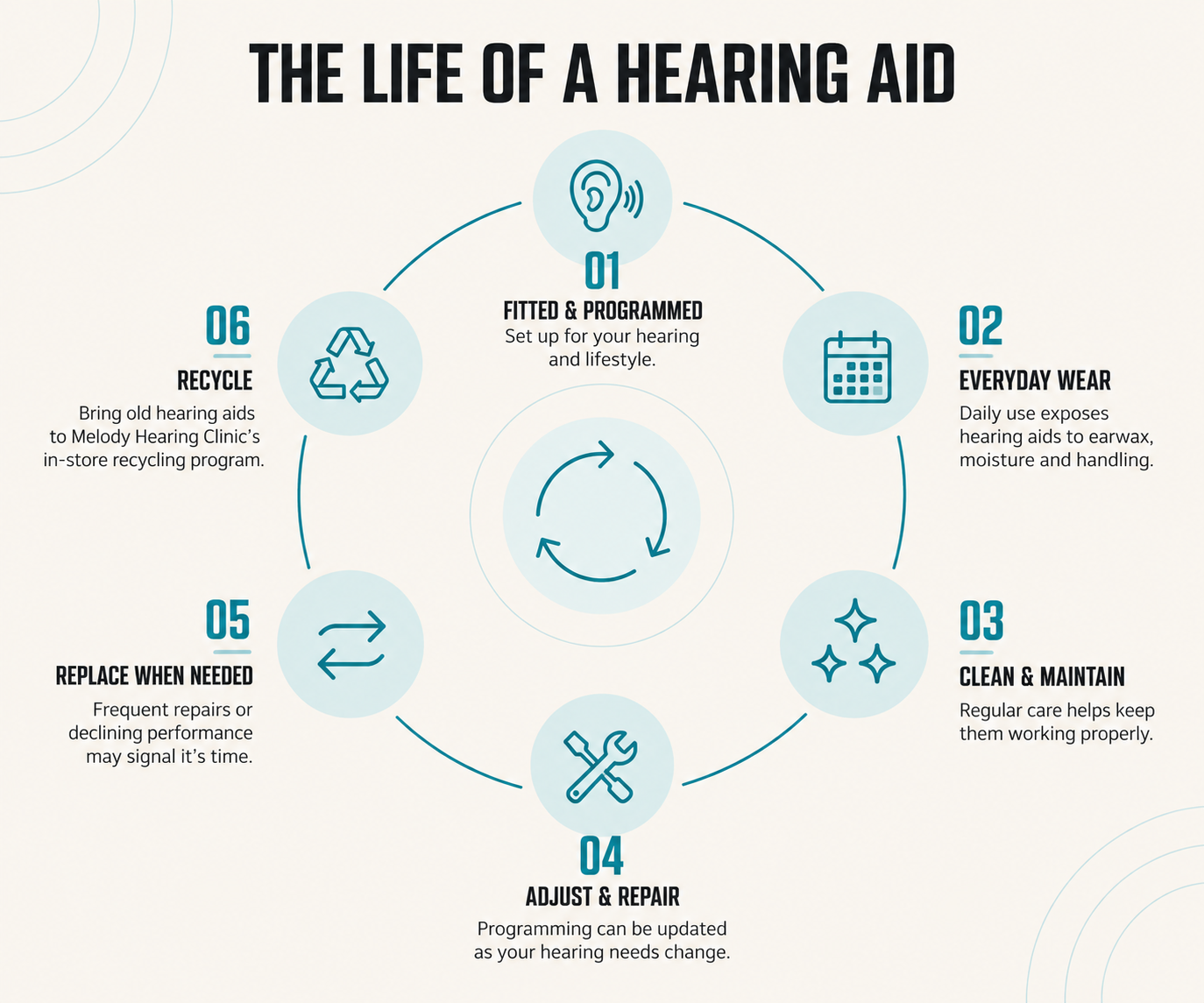
So, what actually happens during those five or six years, and what should you do with your hearing aids when they’ve reached the end of their useful life?
What Is the Average Lifespan of a Hearing Aid?
A hearing aid will commonly last around five to six years with proper care, although individual devices can last for shorter or longer periods.
Unlike a disposable electronic device, hearing aids are built for daily use. They may spend 12 or more hours each day exposed to body heat, moisture, sweat, earwax, dust and changing environments.
That’s a demanding job for something small enough to sit behind or inside your ear.
Phonak notes that hearing aids are working throughout the day and recommends considering their performance after several years of regular wear. Some Phonak rechargeable batteries are also designed and tested around a six-year operating life. (Phonak)
That doesn’t mean you automatically need new hearing aids when yours turn five.
A better question is whether they are still performing reliably and meeting your current hearing needs.
What Are Hearing Aids Actually Made Of?
Modern hearing aids are miniature electronic systems packed into a remarkably small space.
While the exact components vary by model and style, a typical digital hearing aid includes microphones, a processor, receiver or speaker, amplifier circuitry, battery or rechargeable power system and a protective casing.
The microphones capture sound around you. The processor analyzes and adjusts that sound based on how your hearing aids have been programmed. The processed signal is then delivered into your ear through the receiver.
Modern devices may also contain Bluetooth connectivity, directional microphone systems, automatic environmental adjustments and rechargeable lithium-ion batteries.
All of those components have to work together, day after day, while sitting directly beside your ear.
That’s one reason routine maintenance matters.
What Makes Hearing Aids Wear Out?
Moisture, earwax, physical wear and battery degradation are some of the biggest factors affecting the useful life of hearing aids.
Earwax can accumulate around receivers, microphone openings and other small components. Moisture from perspiration, humidity and everyday use can also find its way into and around the device.
Then there’s ordinary physical wear.
Hearing aids are handled every morning and night. They’re inserted, removed, cleaned and charged. They may be dropped occasionally, exposed to cold Alberta winters and hot summer days, or spend hours streaming audio from phones and televisions.
Rechargeable batteries also gradually lose capacity as they age, just like rechargeable batteries in other electronics.
Good maintenance can’t stop a hearing aid from aging, but it can help keep the device performing properly throughout its expected lifespan.
Melody Hearing Clinic has more practical advice in our hearing aid maintenance tips, including regular cleaning and proper storage.
Can Hearing Aids Last Longer Than Five Years?
Yes. A well-maintained hearing aid can sometimes continue working beyond five or six years.
Age alone isn’t necessarily a reason to replace a device that’s still performing reliably.
However, keeping an older hearing aid simply because it still turns on isn’t always the best measure of whether it is doing its job.
Your hearing may have changed since the device was originally programmed. Your lifestyle may also be different. Perhaps you’re spending more time in meetings, restaurants or group conversations, or you now rely more heavily on Bluetooth streaming and other connected technology.
The hearing aid itself may still function, but it may no longer provide the best solution for your current needs.
Regular hearing tests and professional hearing aid adjustments can help determine whether the device still matches your hearing.
How Do I Know When My Hearing Aids Need Replacing?
Consider replacing your hearing aids when they no longer provide reliable performance, require frequent repairs or don’t meet your current hearing needs.
Signs it may be time include:
- Your hearing aids frequently need repairs
- Battery life has noticeably declined
- You struggle more in conversations despite wearing them
- Your hearing has changed significantly
- The devices frequently cut out or perform inconsistently
- Parts or repairs for an older model are becoming difficult to obtain
- Newer features could meaningfully improve your everyday hearing
Sometimes the problem doesn’t require replacement at all.
A hearing aid that suddenly seems weaker may simply need cleaning, a new wax filter, maintenance or professional adjustment. Your hearing may also have changed enough that the device needs to be reprogrammed.
That’s why it’s worth having the hearing aids checked before assuming they’ve reached the end of their life.
You can also read our article on five signs you should replace your hearing aids for a closer look at when an upgrade may make sense.
Does New Hearing Aid Technology Make a Difference?
Newer hearing aids can offer meaningful improvements, but having an older device doesn’t automatically mean you need to upgrade.
Hearing aid technology develops continuously. Depending on how old your current devices are, newer models may offer improvements in rechargeable battery performance, Bluetooth connectivity, speech processing, background-noise management and automatic adjustments between different listening environments.
For someone whose current hearing aids still work well, those improvements may not justify replacing them immediately.
For someone struggling to understand speech in restaurants, meetings or other noisy environments, newer technology could make a more noticeable difference.
The decision should ultimately be based on your hearing and communication needs, rather than upgrading simply because a newer model exists.
Can You Make Your Hearing Aids Last Longer?
Consistent cleaning, proper storage and regular professional maintenance can help protect your hearing aids and keep them performing reliably.
Keep your hearing aids clean and dry, and follow the care instructions provided for your specific model. Earwax should be removed from accessible areas regularly, and wax guards, domes and other replaceable components should be changed when required.
If you use rechargeable hearing aids, follow the manufacturer’s charging and storage recommendations rather than treating them exactly like a phone or another consumer device.
Professional maintenance is useful too. A hearing care professional can inspect components that are difficult to assess at home and determine whether declining performance is being caused by maintenance, programming or the hardware itself.
As one Phonak user guide puts it, “Routine and diligent care” contributes to hearing-aid performance throughout the device’s expected service life. (Phonak)
What Should You Do With Old Hearing Aids?
Don’t automatically throw old hearing aids into the garbage.
Hearing aids are electronic medical devices containing small electronic components, metals, plastics and batteries. Health Canada classifies hearing aids as Class II medical devices, and hearing-aid-specific batteries are also regulated as medical devices.
More broadly, the Government of Canada recommends keeping unwanted electronics out of household garbage and using appropriate reuse or recycling channels instead.
Electronic equipment can contain materials that shouldn’t end up in landfill, while useful materials including copper, aluminum, plastics and precious metals can potentially be recovered through proper electronics recycling. (Government of Canada)
As the Government of Canada advises:
“Don’t throw electronic devices in the garbage!”
Instead, repair, reuse and responsible recycling can help extend the value of electronic products and reduce unnecessary electronic waste.
Can I Recycle My Old Hearing Aids at Melody Hearing Clinic?
Yes. Melody Hearing Clinic offers an in-store recycling program for old hearing aids.
If you’ve upgraded your hearing aids or have old devices sitting unused in a drawer, bring them with you when you visit Melody Hearing Clinic. Our team can help ensure they enter an appropriate recycling pathway rather than simply being thrown into the household garbage.
It’s a small final step in the lifecycle of a device that may have been part of your everyday life for years.
And if you’re considering recycling your current hearing aids because they aren’t performing as well as they used to, bring them in first. The issue may be something that can be addressed through cleaning, maintenance or adjustment rather than replacement.
Are Your Hearing Aids Reaching the End of Their Life?
Five or six years is a useful benchmark, but the best time to replace a hearing aid depends on the condition of the device, changes in your hearing and whether it still helps you communicate comfortably in everyday life.
If your hearing aids aren’t performing the way they used to, Melody Hearing Clinic can assess your hearing and help determine whether your current devices can be cleaned, adjusted or reprogrammed, or whether it makes sense to explore something newer.
And when your old hearing aids really have reached the end of the road, bring them into Melody Hearing Clinic for our in-store hearing aid recycling program rather than throwing them away.
Your old hearing aids may be finished helping you, but that doesn’t mean they belong in the garbage.