
Modern hearing aids can handle everyday weather surprisingly well, but rain, snow, wind, moisture and extreme temperatures can still affect how they perform. You generally don’t need to take your hearing aids out every time the weather turns, but a few precautions can protect the electronics and keep your hearing clear.
That’s particularly relevant in Alberta, where a winter morning can mean freezing temperatures, snow and strong winds, while summer brings heat, thunderstorms and sudden downpours.
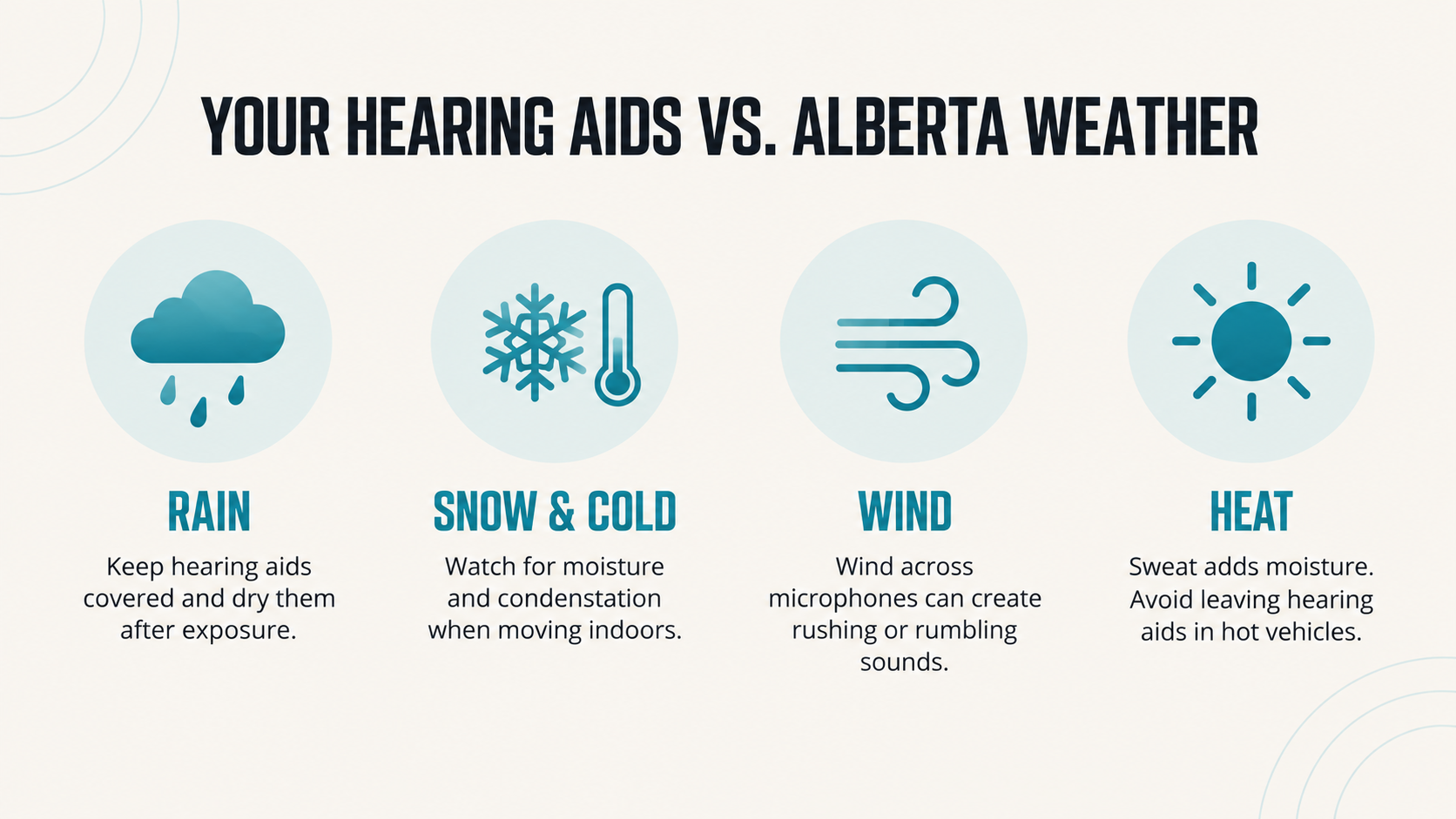
The biggest thing to watch isn’t necessarily the temperature itself. It’s often moisture, including rain, snow, sweat and condensation caused by moving between cold outdoor temperatures and warm indoor environments.
Here’s what hearing aid wearers should know before heading outside.
Can You Wear Hearing Aids in the Rain?
You can usually wear modern hearing aids during light rain, but hearing aids are not automatically waterproof.
Many newer hearing aids have water-resistant casings and protective coatings designed to withstand everyday moisture. Exactly how much protection you have depends on the make and model of your hearing aids.
Water-resistant and waterproof aren’t the same thing.
A few drops of rain are very different from getting caught outside in a heavy Alberta thunderstorm. Likewise, a hearing aid designed to withstand incidental moisture shouldn’t automatically be considered safe for swimming, showering or complete submersion.
If rain is in the forecast, an umbrella or hood provides an easy extra layer of protection.
If your hearing aids do get wet, gently wipe the exterior with a clean, dry cloth. Don’t try to speed up the drying process with a hair dryer, radiator or other direct source of heat.
Melody Hearing Clinic recommends keeping hearing aids dry and using a hearing-aid dehumidifier or drying system when moisture is a recurring concern.
What Happens If My Hearing Aids Get Wet?
A small amount of moisture doesn’t necessarily mean your hearing aids are ruined, but excessive water can interfere with their electronics and sound performance.
You may notice that the hearing aid sounds weaker, distorted or intermittent after getting wet. In other cases, there may be no obvious change at all.
Start by drying the outside of the device with a soft cloth. Follow the manufacturer’s instructions for your particular hearing aid before attempting anything beyond routine drying or cleaning.
A hearing-aid drying system or dehumidifier can help remove moisture that accumulates through everyday wear. This can be particularly useful if you spend a lot of time outdoors, perspire heavily or regularly move between environments with very different temperatures.
If your hearing aid isn’t working normally after getting wet, don’t assume it’s permanently damaged. Bring it to your hearing clinic so it can be inspected.
You can also read Melody’s hearing aid maintenance tips for everyday care between professional cleanings.
Can You Wear Hearing Aids in the Snow?
Yes. Hearing aids can generally be worn in snowy conditions, but melting snow creates the same moisture concerns as rain.
A few snowflakes landing on your hearing aid are unlikely to be the same problem as soaking the device. The bigger concern is allowing accumulated snow to melt around or inside the hearing aid.
A toque, hood or other winter head covering can provide useful protection, provided it doesn’t interfere with the hearing aid’s microphones or cause uncomfortable feedback.
Snow can also create a less obvious issue: condensation.
When you walk from a freezing Edmonton or Calgary winter day into a warm building, the sudden temperature change can allow moisture to form. Over time, repeated moisture exposure can affect delicate electronic components.
After spending significant time outside in cold or snowy conditions, check your hearing aids when you get home. Wipe away visible moisture and use your normal drying or storage routine.
Does Cold Weather Affect Hearing Aids?
Cold temperatures can affect hearing aids and their batteries, but that doesn’t mean you need to stop wearing them during an Alberta winter.
The more important issue is protecting the device from extreme conditions and sudden changes between cold and warm environments.
Melody Hearing Clinic recommends avoiding exposure to extreme heat and cold as part of good hearing-aid care. Proper storage is especially important when the devices aren’t being worn. (Melody Hearing Clinic)
That means you shouldn’t leave hearing aids sitting in a freezing vehicle overnight or somewhere exposed to extreme temperatures.
Keeping them in your ears can actually provide some protection because they’re close to your body and partially sheltered from the elements.
When you’re finished wearing them, store your hearing aids somewhere clean, dry and at a stable indoor temperature.
Does Wind Affect Hearing Aids?
Wind won’t necessarily damage your hearing aids, but it can make listening more difficult.
Anyone who has tried to have a phone conversation outside on a windy day knows the problem. Wind moving across a microphone creates noise, and hearing aid microphones can experience a similar effect.
Depending on your hearing aids, the result may sound like rushing, rumbling or buffeting that competes with the voices or other sounds you’re trying to hear.
Modern hearing aids may include wind-noise management features that identify this type of noise and reduce its impact. Directional microphones and automatic environmental programs can also help hearing aids adapt as your surroundings change.
If wind noise consistently makes outdoor conversations difficult, mention it at your next hearing aid appointment.
Your hearing aids may be capable of handling the situation better with adjustments to their programming.
Melody’s article on how to fine-tune a hearing aid explains why adjustments should reflect the real environments where you actually spend your time.
If “walking outside on a windy day” is one of those environments, tell your registered hearing aid practitioner.
What About Wearing Hearing Aids in Hot Weather?
Heat itself isn’t the only concern during summer. Sweat and humidity can expose hearing aids to additional moisture.
A hot day spent walking, gardening, golfing or attending an outdoor event can mean hours of perspiration around your ears.
That moisture can accumulate around a hearing aid, particularly if you wear a behind-the-ear model.
Get into the habit of checking your hearing aids after spending a long period outdoors. Wipe away perspiration with a clean, dry cloth and use an appropriate drying system if recommended for your devices.
Never leave your hearing aids somewhere extremely hot, such as inside a parked vehicle in direct sunlight.
And although your hearing aids may tolerate perspiration, don’t assume that makes them suitable for the pool. Remove your hearing aids before swimming unless the manufacturer specifically states that your particular device is designed for that use.
Should You Wear a Toque Over Hearing Aids?
Yes, you can wear a toque, earmuffs or other winter headwear with hearing aids, although you may need to experiment with the fit.
A toque can actually provide useful protection from snow, wind and cold.
The problem occurs when fabric rubs against the microphones or pushes the hearing aids out of position. You may hear rustling, scratching or even feedback.
If this happens regularly, try a slightly looser toque or adjust how it sits around your ears.
Be careful when taking winter hats, scarves and earmuffs off as well. It’s surprisingly easy to catch a behind-the-ear hearing aid and accidentally pull it loose.
Before walking away, make sure both devices are still securely in place.
Can Changing Temperatures Cause Condensation?
Yes. Moving quickly between cold and warm environments can create condensation, making moisture management particularly important during winter.
Think about glasses fogging when you step inside on a cold day. Hearing aids are also moving rapidly between two very different environments.
You may not see obvious droplets inside the hearing aid, but repeated exposure to moisture isn’t ideal for sensitive electronics.
A hearing-aid drying system can be useful during winter for this reason, even though winter air itself may feel dry.
We recommend storing hearing aids in a safe, dry place and using a dehumidifying case when appropriate to help remove residual moisture and sweat.
How Can I Protect My Hearing Aids From Bad Weather?
You don’t need an elaborate weatherproofing routine. A few habits can make wearing hearing aids outdoors much easier:
- Use a hood, umbrella or hat when it’s raining or snowing.
- Wipe your hearing aids dry after exposure to rain, snow or sweat.
- Don’t leave them in a freezing or extremely hot vehicle.
- Store them somewhere clean and dry when you’re not wearing them.
- Consider a hearing-aid dehumidifier or drying system if moisture is a recurring problem.
- Keep a protective case with you when travelling or spending long periods outdoors.
- Have persistent sound or performance problems professionally inspected.
Regular maintenance matters because weather exposure is only one source of wear. Earwax, natural skin oils, sweat and everyday handling all affect hearing aids over time.
If you’re curious about the bigger picture, read How Long Do Hearing Aids Actually Last? to learn what determines the lifespan of a hearing aid and what to do when yours reaches the end of its useful life.
What If My Hearing Aids Don’t Perform Well Outdoors?
If wind, moisture or changing temperatures consistently interfere with your hearing aids, the problem may be something that can be addressed through maintenance or programming.
For example, struggling with wind doesn’t necessarily mean you need different hearing aids. Your registered hearing aid practitioner may be able to adjust how your devices respond to wind and background noise.
Likewise, intermittent or weak sound after exposure to moisture could indicate that your hearing aids need cleaning or professional attention.