
Tinnitus—the persistent ringing, buzzing, or hissing sound in the ears—was once considered a condition that primarily affected older adults. However, in recent years, more young adults and millennials are experiencing tinnitus symptoms than ever before. With constant headphone use, exposure to loud environments, and increasing stress levels, tinnitus is becoming an unwelcome reality for many in their 20s and 30s.
If you’ve noticed a persistent ringing in your ears, you’re not alone. Understanding the causes, risk factors, and prevention strategies can help manage tinnitus before it worsens.
Why Is Tinnitus on the Rise in Young Adults?
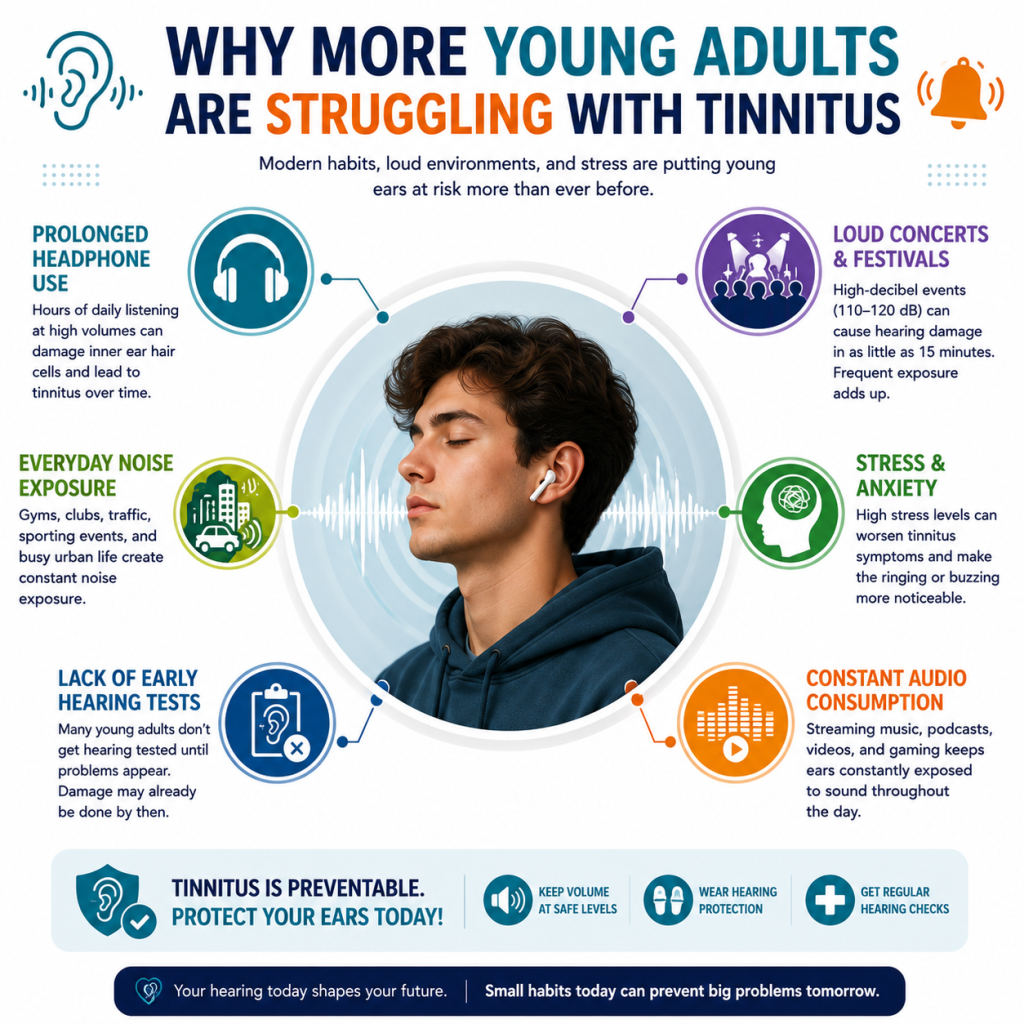
Several factors have contributed to the increasing prevalence of tinnitus among young people, including:
1. Prolonged Headphone and Earbud Use
- Millennials and Gen Z are the “headphone generation”, spending hours daily listening to music, podcasts, and videos at high volumes.
- Listening at more than 85 decibels (dB) for extended periods can permanently damage the delicate hair cells in the inner ear.
- Many young people unknowingly listen at dangerous volume levels, especially in noisy environments, where they raise the volume to compensate for background noise.
Prevention Tip: Follow the 60/60 rule—listen at 60% volume for no more than 60 minutes at a time. Consider noise-canceling headphones to reduce the need for high volume.
2. Concerts, Festivals, and Loud Social Settings
- Exposure to high-decibel environments, such as concerts, clubs, and sporting events, can cause immediate or long-term hearing damage.
- Some events reach 110-120 dB, which is enough to cause hearing damage in just 15 minutes.
- Unlike previous generations, young adults now attend loud social events more frequently, increasing their cumulative exposure.
Prevention Tip: Wear high-fidelity earplugs that reduce dangerous noise levels while preserving sound quality. Take breaks from loud environments to give your ears time to recover.
3. Increased Stress and Anxiety Levels
- Chronic stress and anxiety are known to worsen tinnitus symptoms.
- Many young adults experience high stress from work, finances, and social pressures, which can intensify the perception of ringing in the ears.
- Tinnitus caused by stress is often temporary, but if left unmanaged, it can become chronic.
Prevention Tip: Managing stress through meditation, breathing exercises, and regular exercise can help reduce tinnitus severity.
4. Lack of Awareness and Early Prevention
- Many young people don’t take hearing loss seriously until symptoms appear.
- Unlike eye exams, hearing tests are not part of routine health checkups, leading to late detection.
- By the time tinnitus becomes noticeable, some level of permanent hearing damage may have already occurred.
Prevention Tip: Regular hearing tests can help detect early signs of damage. Schedule a hearing test today.
Signs of Tinnitus in Young Adults
Tinnitus symptoms can vary, but the most common include:
- A ringing, buzzing, or hissing sound in one or both ears
- Sensitivity to loud sounds or difficulty tolerating noise
- Hearing difficulties in quiet settings or conversations
- Increased awareness of ringing at night when trying to sleep
If you experience frequent or worsening tinnitus, seeking professional help can prevent further hearing issues.
How to Protect Your Hearing and Manage Tinnitus
1. Protect Your Ears in Loud Environments
- Use custom earplugs at concerts, nightclubs, and sporting events.
- Keep your distance from speakers and amplifiers in venues.
2. Monitor Your Headphone Use
- Reduce headphone volume to safe levels (under 60% max volume).
- Take listening breaks every hour to prevent overexposure.
3. Manage Stress and Anxiety
- Try relaxation techniques such as meditation and deep breathing.
- Reduce caffeine and alcohol, as they can worsen tinnitus symptoms.
4. Get a Hearing Test
- Even if your hearing seems fine, a baseline test can detect early changes.
- Early intervention with hearing protection and therapy can prevent tinnitus from worsening.
When to Seek Professional Help
If tinnitus is persistent, worsening, or interfering with daily life, consulting a hearing specialist is essential. At Melody Hearing Clinic, we offer:
- Comprehensive hearing and tinnitus evaluations
- Tinnitus management strategies
- Custom hearing protection for concerts, work, and daily life
Don’t Ignore the Signs—Take Control of Your Hearing Health
Young adults often assume hearing loss and tinnitus are problems for older generations, but this is no longer the case. If you or someone you know is experiencing tinnitus, early intervention is key. Protecting your hearing today will preserve it for years to come.