
White noise is often recommended for better sleep, improved concentration, and tinnitus relief, but how does it actually work? Many people use white noise machines, apps, or fans to create a consistent sound environment, but few understand the science behind its benefits.
From masking background noise to helping with hearing-related conditions, white noise plays a unique role in auditory health. Let’s explore how it works, why it helps, and whether it’s right for you.
What Is White Noise?
White noise is a constant sound that combines all audible frequencies at equal intensity. It’s similar to how white light contains all colors of the spectrum. Because it covers a wide range of sound frequencies, white noise can help mask other noises, creating a more stable auditory environment.
Examples of white noise include:
- The steady hum of a fan
- The static sound of an untuned radio
- The gentle rush of a waterfall
There are also variants of white noise, including:
- Pink noise – Emphasizes lower frequencies, creating a deeper, softer sound (e.g., rainfall, rustling leaves).
- Brown noise – Even deeper and richer, with more bass-like qualities (e.g., distant thunder, deep ocean waves).
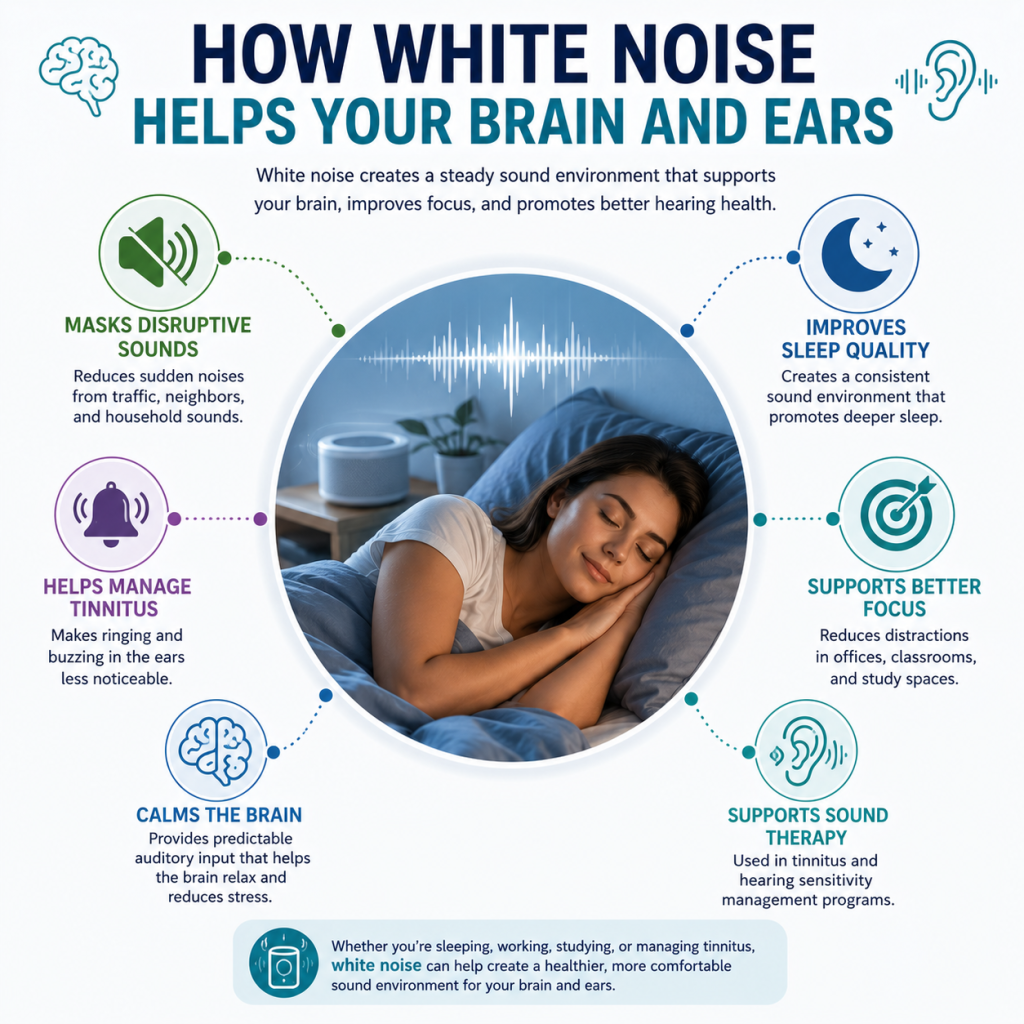
How White Noise Affects the Brain and Hearing
White noise interacts with your auditory system and brain in several key ways, making it beneficial for sleep, focus, and tinnitus relief.
1. White Noise Helps Mask Disruptive Sounds
One of white noise’s most well-known benefits is noise masking. Because it plays a steady sound across all frequencies, it reduces the contrast between background noises and sudden interruptions.
- If you live in a noisy area, white noise can help drown out street sounds or loud neighbors.
- It’s frequently used in offices and study spaces to improve concentration.
Research suggests that background white noise can improve cognitive performance by helping the brain focus on important sounds while ignoring distractions.
2. White Noise Can Improve Sleep Quality
For people who struggle with falling or staying asleep, white noise provides a consistent sound environment that helps the brain relax. Studies show that:
- White noise can help people fall asleep faster by reducing sensitivity to background noise.
- It may improve deep sleep cycles, making sleep more restorative.
- Some babies and toddlers find white noise soothing, as it mimics sounds heard in the womb.
If you wake up frequently due to traffic, snoring, or house creaks, white noise can create a stable auditory backdrop to minimize disturbances.
3. White Noise Can Help Manage Tinnitus
Tinnitus—the perception of ringing, buzzing, or humming in the ears—can be worsened by silence. Without external sounds, the brain amplifies internal noise, making tinnitus more noticeable.
White noise can:
- Mask the perception of tinnitus, making it less bothersome.
- Provide relief during sleep, helping individuals with tinnitus rest better.
- Be used in sound therapy, a treatment approach for tinnitus sufferers.
Some hearing aids even include built-in white noise generators to help reduce tinnitus awareness throughout the day. If tinnitus affects your daily life, book a consultation to explore tinnitus management options.
4. White Noise and Hearing Sensitivity Disorders
For individuals with hyperacusis (increased sensitivity to sounds), white noise can help by gradually desensitizing the auditory system. It’s also used in therapy for conditions like misophonia, where certain sounds trigger strong emotional reactions.
Does White Noise Have Any Downsides?
While white noise is generally safe, some considerations should be kept in mind:
- Listening at high volumes for long periods may impact hearing. It’s best to keep white noise at a comfortable, moderate level.
- Some people find it distracting rather than soothing, so results vary by individual.
- Prolonged exposure at night may reduce the brain’s ability to adapt to silence, though more research is needed.
How to Use White Noise Effectively
To get the most benefit from white noise, consider the following tips:
- For sleep: Use a white noise machine or app set at a soft, steady level.
- For focus: Experiment with different noise types (white, pink, brown) to find what works best for your concentration.
- For tinnitus relief: Try low-volume white noise throughout the day to reduce tinnitus perception.
If you’re struggling with tinnitus or hearing-related concerns, white noise could be part of your treatment plan. At Melody Hearing Clinic, we specialize in personalized hearing solutions to improve your daily comfort and well-being.